Stress isn't a character flaw or a problem to muscle through. It's your body doing exactly what it evolved to do, just more often than modern life makes comfortable. And natural stress relief? It's less about one magic fix and more about a handful of small, repeatable habits that nudge your nervous system back toward calm. Stack a few together and the difference across a week can be noticeable.
You'll find 10 ways here to relax and reset without leaning on anything harsh. We've sorted them into four practical buckets so you can grab what fits your life: things you do with your body, things you do with your time and surroundings, things you cut back on, and small rituals that signal the day is winding down. A calming GÜD Tonics moment lives inside that last bucket as one supportive ritual among many. One quick note before we start: none of this replaces medical care. If everyday stress tips into something heavier or persistent, please reach out to a qualified healthcare provider.
Table of Contents
- TL;DR: Your Calm Toolkit
- Body-Based Resets
- Environment and Connection
- What to Dial Back
- Wind-Down Rituals
- Where GÜD Tonics Fits In
- Final Thoughts
- Frequently Asked Questions
TL;DR: Your Calm Toolkit
- Natural stress relief works best as a stack of small habits, not a single fix.
- Body-based resets like slow breathing and movement calm your nervous system fast.
- Your surroundings matter too: nature, real social connection, and a tidier space all lower background tension.
- Dialing back caffeine, alcohol, and doomscrolling clears out some of the biggest hidden stressors.
- Wind-down rituals such as journaling, a steady sleep routine, and a single calming drink cue your body that the day is done.
- A chilled, alcohol-free GÜD Tonics elixir can be one of those evening rituals for adults 21 and over. It contains kava and mitragynine, so it's not for anyone pregnant or breastfeeding.
Body-Based Resets
Some of the most effective ways to calm down are physical, because stress lives in the body as much as the mind. When your heart is pounding and your shoulders are up by your ears, talking yourself out of it rarely works. Giving your body a different signal does. These three resets are free, always on hand, and often work within minutes.
1. Slow, Deliberate Breathing
Breathwork is the fastest lever you have for natural stress relief, and it asks for nothing but a few quiet moments. Slow your exhale so it runs longer than your inhale, and you gently switch on the part of your nervous system responsible for rest. That effect shows up across a growing body of peer-reviewed research on slow breathing and relaxation. Try this: breathe in for a count of four, hold briefly, then breathe out for a count of six. Repeat for a minute or two. People use it before a meeting, in traffic, or in bed when the mind won't switch off. It's the most portable calm tool there is.
2. Movement You Actually Enjoy
Exercise is one of the most consistently recommended ways to reduce stress naturally, but the key word is enjoyable. You don't need a punishing workout. A brisk 20-minute walk, a bike ride, a dance break in your kitchen, some gentle stretching: all of it helps your body burn off the physical charge that stress builds up. Movement also shifts your focus outward and gives your mind a break from the loop it's been stuck in. The best routine is the one you'll come back to, so pick something that feels more like play than punishment. Breaking it into small pieces works fine too. A few minutes of stretching in the morning, a walk at lunch, a slow evening stroll, and it adds up without ever feeling like a chore. Aim for consistency over intensity. Your nervous system doesn't care whether the movement happened at a gym or in your living room.
3. Progressive Muscle Relaxation
Underrated, and perfect for the end of a tense day. Progressive muscle relaxation means slowly tensing and then releasing each muscle group, starting at your feet and working up to your face. By deliberately clenching and letting go, you teach your body the contrast between tension and ease, which makes the relaxed state easier to find on demand. It pairs beautifully with the slow breathing above, and it's a quiet, screen-free way to release stress you've been carrying without noticing. Most people are surprised by how much tension they were holding in the jaw, shoulders, and hands once they scan for it. Five to ten minutes is plenty. You can do the whole thing lying in bed, which makes it a natural bridge into sleep.
Environment and Connection
Where you are and who you're with shape your stress levels more than most people realize. You can do all the breathing in the world, but if your surroundings keep your guard up, calm stays out of reach. This category is about adjusting the world around you so relaxation has room to happen.
4. Time in Nature
Spending time outdoors is one of the most reliable natural ways to relax, and you don't need a national park to feel it. A walk through a leafy neighborhood, ten minutes in a backyard, even sitting near a window with a view of trees can take the edge off feeling keyed up. Natural light also helps regulate your internal clock, which supports better sleep down the line. Pair a short outdoor walk with your slow breathing and you turn two good habits into one strong reset. Morning light is especially useful, because catching some sunshine early helps anchor your body's rhythm and can make the evening wind-down come more easily. Stuck inside? Even tending a few plants on a windowsill or opening the blinds wide offers a smaller version of the same calming effect.
5. Real Social Connection
Stress shrinks when it's shared, and real connection is a strong buffer against everyday pressure. That doesn't mean venting endlessly. It means spending unhurried time with people who put you at ease, whether that's a long phone call, a meal with friends, or a low-key hangout. This is also where alcohol-free social options earn their keep, because you can connect and unwind without the next-day fog. A relaxed gathering with a feel-good drink in hand can be a social win and a stress-relief win at once.
6. A Calmer Physical Space
Clutter is a quiet stressor. A constantly messy room or an overflowing inbox keeps a low hum of "unfinished business" running in the back of your mind. No need to overhaul your whole life. Clearing one surface, making the bed, or closing a dozen browser tabs can spark a surprising sense of relief. Lighting helps too. Softer, warmer light in the evening tells your body the day is winding down, while harsh overhead light keeps you alert. Picture it as clearing friction so the rest of your stress-relief tips have a calmer backdrop to work against. You're not chasing a magazine-perfect home, just a space that lets your shoulders drop the moment you walk in.
What to Dial Back
Sometimes the most effective move isn't adding a new habit. It's removing something that quietly winds you up. These three adjustments target common stressors hiding in plain sight, and trimming them often pays off bigger than any single relaxation technique.
7. Rethink Caffeine Timing
Caffeine isn't the enemy, but its timing can sabotage your calm. That late-afternoon coffee can linger in your system for hours, leaving you wired when you're trying to wind down and undercutting your sleep without you noticing. The fix is easy: set a personal cutoff in the early afternoon and switch to caffeine-free options after that. Better sleep is one of the strongest forms of natural stress relief, and protecting it starts earlier in the day than most people expect.
8. Be Honest About Alcohol
Alcohol feels like it takes the edge off, but over time it often makes stress worse, disrupting sleep and leaving you flat the next day. That's a big reason the sober-curious movement has grown so fast. Recent surveys found nearly half of Americans are trying to drink less, with the trend especially strong among younger adults. Cutting back, even a little, can steady your mood and your mornings. The win is finding alcohol-free ways to relax and socialize so you're not white-knuckling it. That's exactly the gap calming functional drinks have stepped into.
9. Set Boundaries with Your Phone
Endless scrolling is a stress amplifier disguised as a break. That constant stream of news, comparison, and notifications keeps your stress response gently switched on, especially at night when the screen's light also disrupts sleep. You don't have to quit your phone. Park it in another room during meals, kill the non-essential notifications, and give yourself a screen-free buffer before bed. That buffer is one of the simplest stress relief tips, with an outsized effect on how rested you feel.
Wind-Down Rituals
The end of the day deserves a clear signal that work is over. Rituals are how you hand your brain that cue. Done consistently, they train your nervous system to start downshifting on schedule, which turns calm into a habit rather than a hope. This final category is where a GÜD Tonics moment naturally fits.
10. A Consistent Evening Ritual
A wind-down ritual can be a short sequence you repeat most nights: dim the lights, jot a few lines in a journal to empty your head onto paper, do a few minutes of stretching or breathing, and sip something calming. Journaling helps because it gives swirling worries a place to land so they stop circling. The specific steps matter less than the consistency. Once your body learns that this sequence means "the day is done," slipping into a relaxed state gets easier night after night.
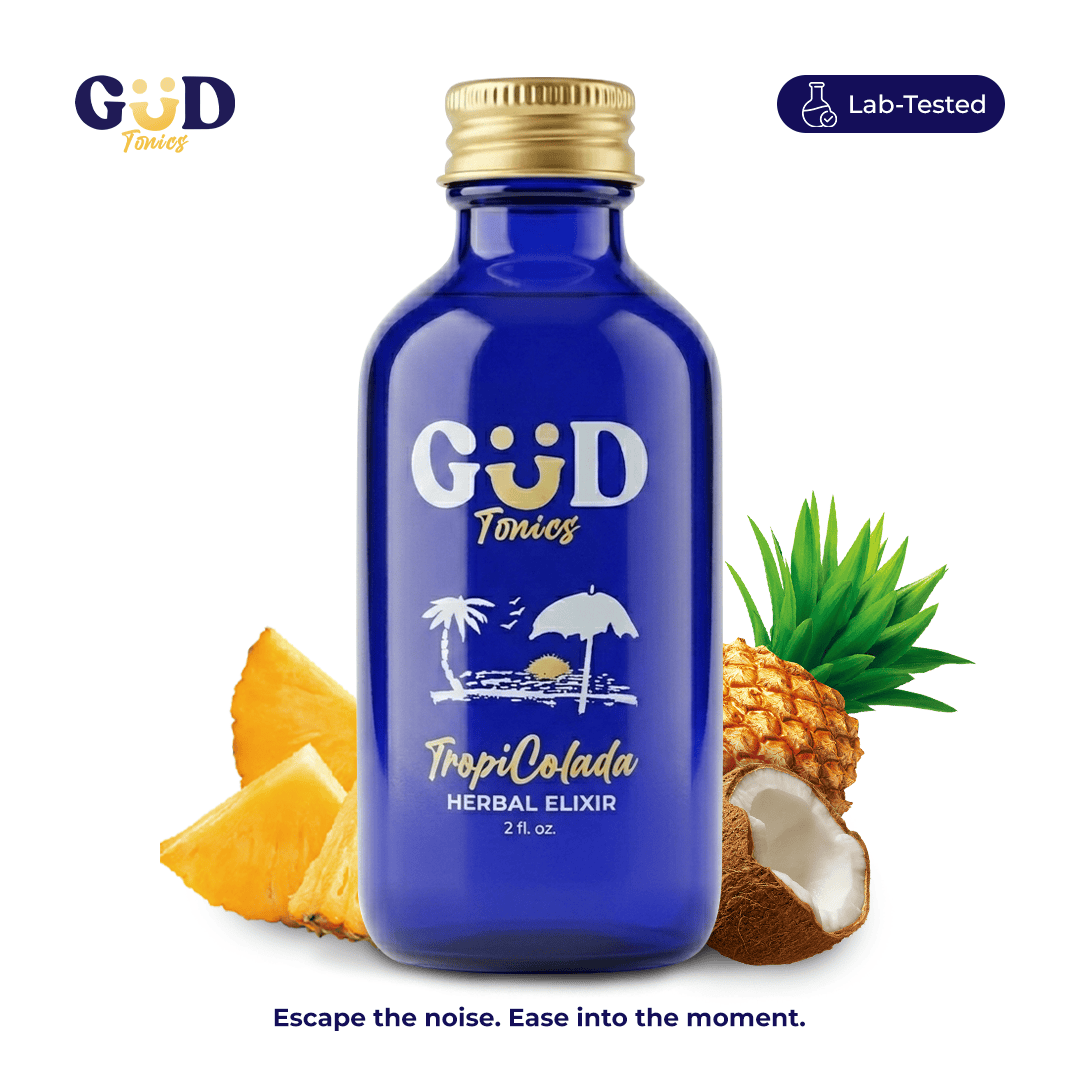
For the calming-sip part of that ritual, plenty of adults are reaching for alcohol-free options. A chilled GÜD Tonics elixir, built on kava that's been used across the South Pacific for centuries, is one such choice. Kava's traditional relaxing reputation is covered in plain language by the NIH's kava overview, a level-headed place to learn what the plant is and isn't. Because it contains kava and mitragynine, it is strictly for adults 21 and over, is not for anyone pregnant or breastfeeding, and should never be mixed with alcohol. Kava also carries a real safety note: the U.S. Food and Drug Administration issued a consumer advisory in 2002 about rare liver effects linked to kava products, so it is worth reviewing the agency's guidance on dietary supplements and checking with your healthcare provider if you have liver concerns or take medication.
Where GÜD Tonics Fits In
Out of all 10 habits above, the evening ritual is where GÜD Tonics earns its place, and only as one option among many. We make alcohol-free herbal elixirs that blend premium kava extract with mitragynine and botanicals, built to support a sense of calm and clarity without the crash that follows alcohol or a sugary energy drink. Effects usually settle in within about 15 to 30 minutes, and the tonics taste best chilled over ice, which makes them an easy fit for a wind-down routine or a relaxed evening with friends.
The brand grew out of the same shift you've probably noticed yourself: more people want to slow down and socialize without alcohol. Our lineup spans flavors like the crisp Baja Bliss lime, the tropical TropiColada, and the easygoing Pink Sunset. None of it is medicine and none of it is a cure for stress. It's a feel-good ritual that can sit alongside your breathing, your walks, and your sleep habits. If a calming alcohol-free sip sounds like a good addition to your routine, you can browse the full GÜD Tonics range and find the flavor that suits your kind of evening. Just remember it's for adults 21 and over, and keep it well away from alcohol.
Final Thoughts
Real, lasting natural stress relief doesn't arrive in a single dramatic move. It builds quietly from the small choices you make across a day: the long exhale before a hard conversation, the walk you take instead of one more scroll, the caffeine you skip in the afternoon, the steady ritual that tells your body the day is finally over. Each habit on its own is modest. Together, they shift the baseline.
Start with one or two that feel doable rather than overhauling everything at once. Maybe it's breathwork on Monday and a phone-free dinner by Friday. As those stick, layer in another. And if a calming, alcohol-free drink helps mark the end of your day, let it be one small piece of a much bigger toolkit. You're not after a perfectly stress-free life, which doesn't exist, but a life where you have reliable ways to come back to calm. If your stress feels constant or overwhelming, treat that as a signal to talk with a healthcare provider, because some things deserve more support than habits alone.
Frequently Asked Questions
What is the fastest way to relieve stress naturally?
Slow, deliberate breathing is the quickest tool. It works in minutes and you can do it anywhere. Lengthen your exhale so it runs longer than your inhale, and repeat for a minute or two. Pair that with a short walk or a few minutes outdoors and the effect grows. These body-based resets are the closest thing to an on-demand calm button you've got.
How can I reduce stress naturally without medication?
Most natural stress relief comes from stacking habits: regular movement, time in nature, real social connection, better sleep, and trimming stressors like late-day caffeine, excess alcohol, and endless scrolling. Add a steady evening wind-down ritual and you give your nervous system repeated cues to downshift. None of this replaces professional care, so see a healthcare provider if stress becomes persistent or severe.
Can a drink really help with stress relief?
A calming drink can support relaxation mainly through the deliberate pause the ritual creates, not as a cure. Alcohol-free options are popular because they let you unwind and socialize without wrecking your sleep. For adults 21 and over, a kava-based tonic is one such option, though it carries real safety considerations and should never be combined with alcohol.
Is kava a safe natural way to relax?
For many healthy adults, kava has a long traditional history as a relaxing beverage. It's not risk-free, though. The FDA issued a consumer advisory in 2002 about rare liver effects associated with kava-containing products. Keep it to adults 21 and up, avoid it if you're pregnant or breastfeeding, never mix it with alcohol, and check with your healthcare provider if you have liver concerns or take medication.
How long does it take for stress relief habits to work?
Some give immediate relief. Breathing, movement, and time outdoors can shift how you feel within minutes. Others compound over days and weeks as your baseline stress drops: consistent sleep, reduced caffeine, a steady evening routine. Consistency beats intensity, so a few small habits repeated daily will outperform a single big effort you can't sustain.