
Last revised 1 October 2026. See how we revise this guide at the end of the page.
Walk down any drink aisle and you'll see cans and bottles promising "focus," "clarity" or "brain fuel." Some of those drinks are made with real, well-known ingredients. Some lean much harder on the marketing than on what's inside. This guide covers the common herbal ingredients you'll see on focus drink labels, what's actually known about them, and how to read the claims on the can.
Quick note: this is a shopping and label-reading guide. It isn't medical advice, and nothing here treats, cures or prevents anything. If concentration is a real ongoing struggle for you, that's a conversation for your doctor.
Table of Contents
- The Short Version
- Common Ingredients on Focus Drink Labels
- Five Phrases Worth a Second Look
- The Basics No Drink Replaces
- Where GÜD Tonics Fits
- Frequently Asked Questions
- How We Revise This Guide
The Short Version
- The best-known ingredient in most "focus" drinks is plain caffeine, often from green tea, yerba mate or guayusa.
- Herbs like ginseng, lemon balm, peppermint and rosemary have long traditional histories, but research on most of them is still limited.
- Be wary of labels that say "clinically proven" without showing the study, or that hide amounts inside a "proprietary blend."
- Sleep, water and regular breaks matter more for a clear head than anything in a can.
- GÜD Tonics doesn't sell a focus drink, and we don't claim our tonics improve focus.
Common Ingredients on Focus Drink Labels
Caffeine From Plants
Most focus drinks get their kick from caffeine. On an herbal label it usually shows up as green tea, matcha, yerba mate, guayusa or guarana. These are all caffeine sources, so check the milligrams per can and count them alongside your coffee.
L-Theanine
L-theanine is an amino acid found naturally in tea leaves. It's often added to focus drinks alongside caffeine. Look for the amount on the label rather than just its name in the ingredient list.
Ginseng
Ginseng has a long history in East Asian wellness traditions. "Ginseng" covers several different plants, and Asian and American ginseng aren't the same thing, so a good label tells you which species it uses.
Lemon Balm and Peppermint
Both are members of the mint family and both have been brewed as teas for centuries. In focus drinks they mostly show up for flavor and for their traditional reputation.
Rosemary
Rosemary is best known as a kitchen herb. Some drinks and diffuser blends use it for its bright, piney smell, which has a long folk link to alertness.
For almost every herb on this list, the honest answer is the same: there's a long tradition and a lot of interest, but limited research. If you want to know how the FDA handles these kinds of products, its dietary supplements page explains what a label can and can't promise.
Five Phrases Worth a Second Look
- "Clinically proven." Ask which study, on which product, at what amount. If the brand doesn't show you, treat it as marketing.
- "Proprietary blend." This lets a brand list ingredients without saying how much of each is in there.
- "Superior," "maximum" or "ultimate." Words like these describe the marketing, not the drink.
- A citation that doesn't match its label. If a link says it's from a government health agency, check where it actually goes. We found this mistake in some of our own older posts and have been fixing it.
- No lab report. A brand that tests its products can show you the report for the batch you're holding.
The Basics No Drink Replaces
Whatever you drink, the basics do most of the work: enough sleep, enough water, real breaks away from the screen, and working on one thing at a time. They're free, and no ingredient on a label stands in for them.
Where GÜD Tonics Fits
We'll be straight with you: GÜD Tonics doesn't sell a focus drink, and we don't claim our tonics help you focus. We make alcohol-free kava tonics for evenings, dinners and get-togethers.
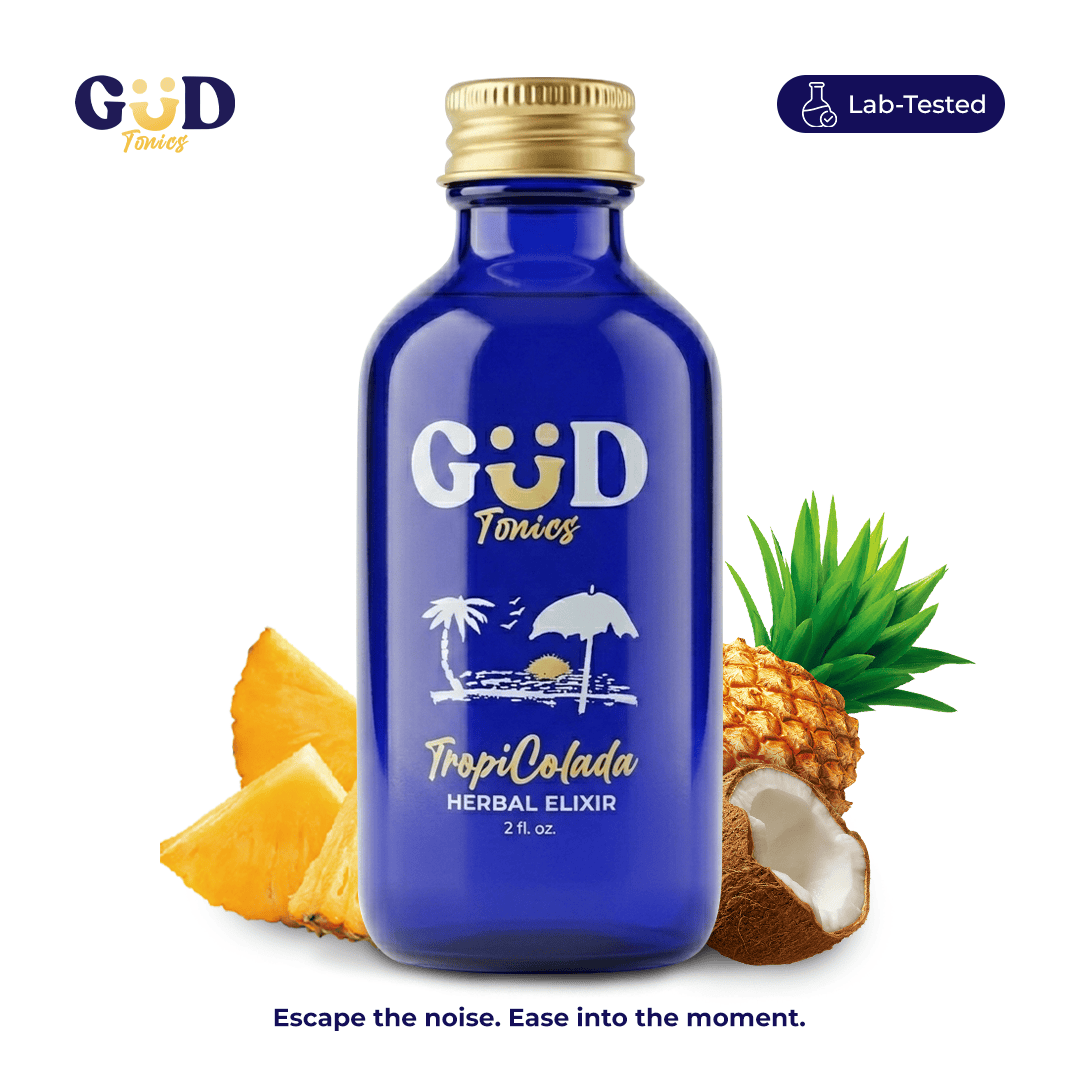
Each of our three ready-to-drink tonics is made with noble kava root extract and Mitragyna speciosa (kratom), lightly sweetened with stevia: Baja Bliss (guava), Pink Sunset (cherry, strawberry and lime) and TropiColada (pineapple and coconut). Every lot has its lab report on our Lab Results page, and our guide to reading the lab report on a kratom drink walks through what those reports show.
Because they contain kratom, our tonics are for adults 21 and over only. They're not for anyone pregnant or breastfeeding, and they shouldn't be mixed with alcohol or paired with driving. Kava products have been linked to rare cases of liver injury, so talk to your doctor first if you have a liver condition or take medication.
Frequently Asked Questions
Do herbal focus drinks actually work?
For most herbal ingredients, the research is limited, so nobody can honestly promise a result. The ingredient with the clearest effect in most focus drinks is caffeine. Read the label, check the caffeine amount, and be skeptical of big promises.
What should I look for on a focus drink label?
Clear amounts for every ingredient, the caffeine content per serving, the species for herbs like ginseng, and a lab report you can actually find. Skip products that hide amounts in a proprietary blend.
Do GÜD Tonics help you focus?
We don't make that claim. GÜD Tonics are alcohol-free kava tonics made for social evenings and quiet nights in, and we describe them by what's in the bottle, how they taste and what the lab report shows.
Are GÜD Tonics caffeine-free?
Our ready-to-drink tonics don't list caffeine as an ingredient. Check each product page for the full ingredient list.
How We Revise This Guide
We revise our guides a little at a time as we learn more, rather than publishing once and leaving them alone. That's why every guide carries the date it was last revised. If you spot something that's wrong or out of date, tell us and we'll fix it.
Revision history
- 1 October 2026: Rewrote the whole guide and gave it a new title and web address. The earlier version promised results from herbs and described our tonics as a focus aid, which isn't something we can promise. This version explains common focus drink ingredients and how to read their labels. We also corrected Baja Bliss to guava, removed a product that's no longer sold, and replaced citations that pointed to the wrong sources.