
Listen to this page
Read by an AI voice. The full article is read aloud, top to bottom.
Anywhere in the United States: the 988 crisis lifeline, by call or text. Poison Control on 1-800-222-1222 for a question about a product in your hand. 211 for information and referral. The federal treatment locator is findtreatment.gov, and the state by state helplines are on our page about why kava is not a treatment for kratom withdrawal.
Every clinical question this article raises belongs with a clinician who can actually see you. Not with us. We make drinks for a living, which is a completely different job.

The published answer is: probably not, with two caveats that matter. Evidence to date suggests kava itself has a low potential for dependence, harmful heavy use is documented, and reports of withdrawal are rare. That is the careful version of what the health authorities say, and we quote them below so you can see exactly how careful they are being.
The sharper answer, for anyone drinking kava in the United States, is that it depends what else is in the bottle. A lot of what is sold as kava here also contains mitragynine, the main alkaloid of the kratom plant. All three of our drinks do. Mitragynine has its own dependence profile, it is not kava's, and a kava company that answers this question without saying so is answering a question you did not ask. So this article does both: the evidence on kava, and then the honest bit about the label.
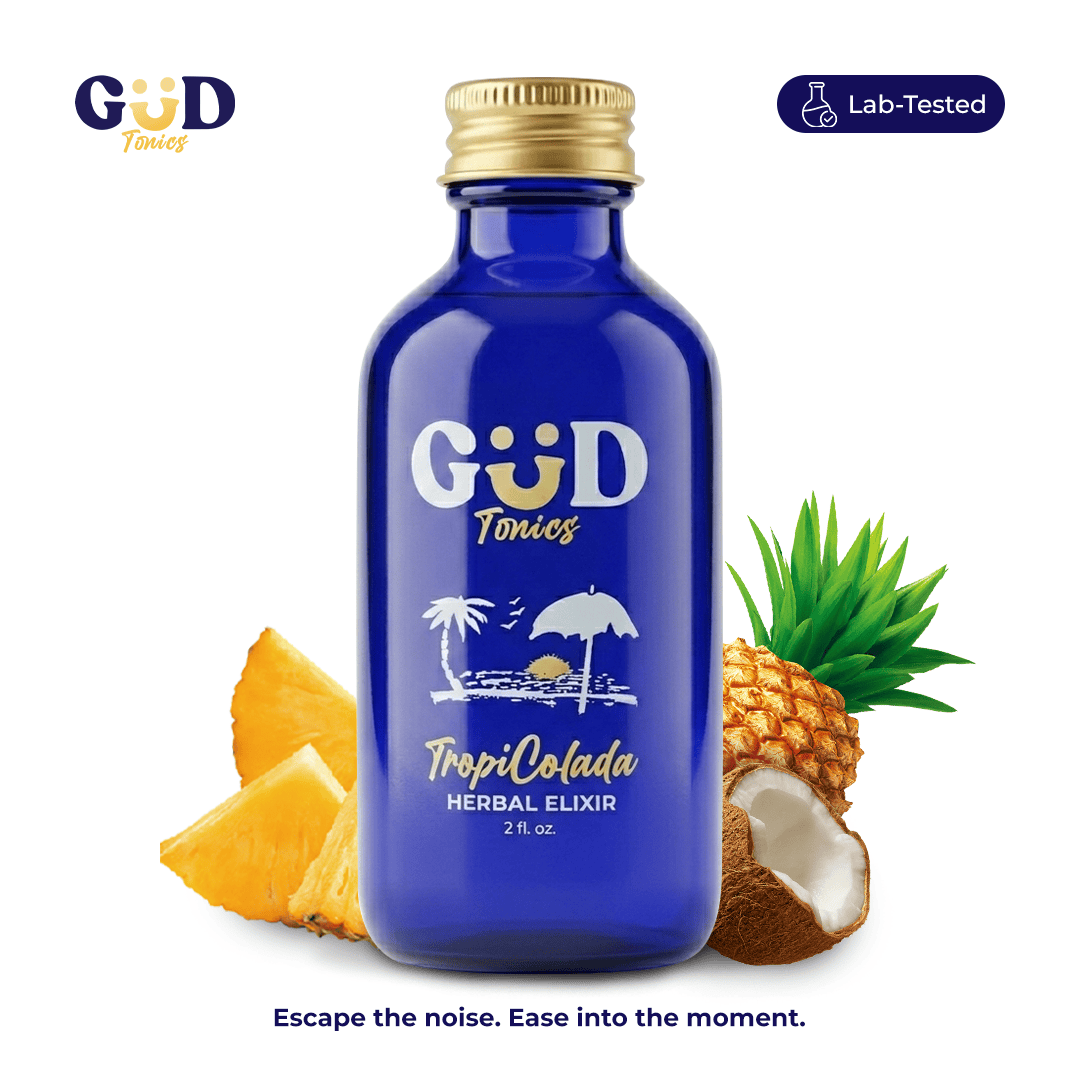
Our own products. All three of our drinks list Mitragyna speciosa, the kratom plant, on the ingredient panel. Our kava powder is sold as kava root extract, but its ingredient panel is not published yet, so we are not calling it kratom-free here. This page carries no product links, for reasons the article explains.
Next review 21 December 2026, or the day any of the sources above changes.
What the health authorities actually say, word for word
The clearest statement comes from the health department of New South Wales, in Australia, which has a longer regulatory history with kava than any agency in the United States. Its kava clinical factsheet, current as of December 2022, says under the heading Addiction/Dependence:
Evidence suggests that kava is not addictive. However, harmful use of kava, including ongoing, high-level consumption, has been known to occur in certain contexts.
Read the second sentence as carefully as the first. The same factsheet also says something about its own foundations that you will not find on most kava websites: "The safety profile of kava is mostly based on traditional use and descriptive studies, and as such, there is an absence of robust clinical evidence concerning kava's impacts on human health." That is a health department saying its reassurance rests on tradition and observation rather than trials. It is still the best sentence available.
The Alcohol and Drug Foundation, an Australian charity whose page was updated in March 2026, puts it in plainer language: "Evidence suggests it is unlikely that a person will become dependent on Kava. However, ongoing and frequent use of kava that causes harm has been known to occur in certain contexts." On withdrawal it goes further than NSW does: "There is no evidence that people who regularly use kava become dependent on the drug, so if you stop taking it, you are unlikely to experience withdrawal symptoms." One thing to know about that page: its dependence line cites the NSW factsheet as its source. So these are not two independent findings. They are one finding, stated twice.
Two more, from the clinical side. A 2026 paper in Clinical Toxicology, which we come back to below for a different reason, states as background that "Kava is not typically associated with physical dependence." And a survey published in November 2025 by Hill, Boyer and Smith, in Drug and Alcohol Dependence Reports, put an actual number on it for the first time that we know of: among 367 adults who used kava or kratom, "Meeting SUD criteria for kava was uncommon among those reporting past-year use (7.5 %), regardless of past-year kratom use."

Put the four together and you get the answer at the top of this page. Not "kava is non-addictive", flat, because no document says that without a qualifier. Evidence suggests low dependence potential; harmful heavy use is real; a small minority of past-year users met criteria in the one survey that asked. If a kava bar or a bottle tells you kava is "non-habit-forming" with no hedge, they have read less than you now have.
Why the trials say "at the dosage and time used"
The most thorough recent review of kava, by Soares, Dinis-Oliveira and Oliveira in the Journal of Clinical Medicine in July 2022, reports that kava "has been compared to standard anxiolytic drugs, such as oxazepam, to determine if it may have any withdrawal or addiction issues", and that "According to these studies, kava displays no addiction or withdrawal events at the dosage and time used, unlike classical anxiolytics."
That qualifier, "at the dosage and time used", is doing real work. The two studies behind the sentence are both acute, single dose designs: one asked whether a medicinal dose of kava impairs driving, the other compared a single dose of kava with oxazepam. Nobody in either study drank kava every evening for a year. So the sentence tells you that a controlled dose, once, did not produce dependence, which is a true and small thing. It does not tell you about the person having four shells a night at a kava bar, and the review knows it, which is why it is worded the way it is.
There is also a plainly contradictory sentence in the literature, and we would rather you heard it from us. Dr Robert Ashley's Ask the Doctors column for UCLA Health, updated in December 2023, says kava "binds to a different GABA receptor than benzodiazepines" and that "This aspect may make kava less addictive than these other medications", and then, in the very next sentence: "That being said, consistent users of kava have withdrawal symptoms when they stop taking this supplement." No study is cited for it. It sits on a university health system's website, written by a physician, and it says the opposite of the ADF. We cannot resolve that for you. We can tell you it exists, that it is uncited, and that the peer reviewed withdrawal cases we could find all have something else in common, which is the next section.
The withdrawal cases, and what was actually in the bottle
Severe kava withdrawal has been reported in the medical literature. A case report in the American Journal of Emergency Medicine in 2025 describes a 45 year old man who arrived at an emergency department "with auditory and visual hallucinations, anxiety, insomnia, and diffuse muscle jerking" and was treated with phenobarbital. A case series in the Journal of Addiction Medicine in March 2026 adds two more patients to the two previously published, all four male, all with "underlying histories of psychiatric illness and alcohol use disorder", all of whom "consumed more than the recommended amounts".
Here is the detail that gets left out when those papers are summarized as "kava withdrawal". The 2025 patient "had been heavily using a supplemental beverage containing both kava and kratom". The 2026 series is titled, in full, "Kava-potentiated Withdrawal in Persons Using Multiple Substances: A Case Series of Kava and Kratom Co-ingestion", and its authors write that "the involvement of polysubstance complexes the exact etiology of symptoms". Every documented severe case we could find involved a product that contained kratom alkaloids as well as kava. That does not make kava innocent. It makes the question "is kava addictive?" the wrong question to ask about those bottles.
Then, in October 2025, it got stranger. The Alabama Poison Information Center and local addiction clinicians identified, in the words of a paper in Clinical Toxicology published in August 2026, "a cluster of cases involving liquid products marketed as containing kava associated with opioid-like withdrawal symptoms." When the products were tested, "Qualitative GC-MS detected both mitragynine and kavalactones in one product, while another contained mitragynine with no detectable kavalactones." The title of the paper is "Unlabeled kratom alkaloids detected in products marketed as kava." Unlabeled. People were drinking what they thought was kava, going into opioid type withdrawal, and the reason was on no ingredient panel anywhere.
The federal poison center data tells the same story at scale. A CDC report in April 2026 found that kava related calls "have risen steadily since 2011, reaching 203 reported exposures in 2025", that "Since 2017, reports involving combined use of kava and kratom have increased, reaching 30% (61) of all kava reports in 2025", and that the combination calls carried more serious outcomes, with "neurologic effects included seizures and tremor, and cardiovascular effects included hypertension". Kratom overtook alcohol and benzodiazepines as the most common thing found alongside kava in those calls by 2019. In the CDC's own words, "This coincided with increasing availability of products containing kava and kratom."
The part about our own bottles
This is where we have to stop describing the category and describe ourselves. All three of our drinks contain mitragynine, and the ingredient panel on each of them says so, under its botanical name, Mitragyna speciosa. Our kava powder is sold as kava root extract, but its ingredient panel is not published yet, so we will not call it kratom-free until it is. We are not naming or linking any of them here, because a person who arrived at this page worried about dependence should not leave it holding a product recommendation from the company that was worried about them.
What that means for the question in the title is simple and a little uncomfortable. If you drink one of our mitragynine drinks, the kava evidence above is only half your answer. The other half is the evidence on mitragynine, which is a compound with a documented dependence profile of its own. The Hill survey mentioned earlier found that among its 367 participants, "Past-year SUD diagnostic criteria for kratom were met by 38.1 % of participants", against 7.5 percent for kava, and that people who used both were more likely to report "using more kratom than intended" and "needing to use larger amounts to feel the same effect" than people who used kratom alone. That is a convenience sample, not a census, but the direction of it is not ambiguous, and we sell the combination.
So the rule we would give a friend is: turn the bottle around. If the ingredient panel lists mitragynine, MIT, Mitragyna speciosa or kratom, you are drinking a mitragynine product that also contains kava, and the dependence question you should be asking is the kratom one. If it lists only kava, kava root or kavalactones, the kava evidence applies. If the panel is vague, that vagueness is the answer, and after the Alabama cluster it is not a small one. The laboratory certificates for every one of our batches are on our lab results page; they state what is in the bottle by measurement rather than by label, which is the only way a sentence like "unlabeled kratom alkaloids" gets caught.
The liver, alcohol, and four numbers that get blended into one
The reason kava has a regulatory history at all is the liver, not dependence, and the two get confused. In March 2002 the FDA issued a consumer advisory on kava and liver injury. It did not ban kava. That advisory, as FDA's own 2020 scientific memorandum puts it, expressed "concern about liver damage in individuals who have ingested kava products", and "currently, kava is still available for sale in the U.S. as dietary supplements". What the 2020 memo did conclude is narrower and sharper than a ban: "indiscriminate use of kava either as a 'recreational' or 'relaxation' beverage is not safe for human consumption", and kava is "an unapproved food additive when used as an ingredient in conventional foods". The bans were elsewhere. The memo names Germany, Switzerland, France and Canada, and the 2022 review notes Germany's decision "was altered in 2014".
The case counts you will see quoted are not interchangeable, so here they are with their owners. The 2002 advisory referred to over 25 reports abroad and four transplants. The 2020 memo cites a World Health Organization review of "93 case reports with presumed kava related hepatotoxicity", in which "7 patients died and 14 had liver transplants". The 2022 review gives "41 reports of liver injury in Germany and 73 cases worldwide" behind the German ban. UCLA says "more than 100 cases". Four different counts from four different exercises. Quote one, with its source, and never add them up.
The CDC's 2026 numbers are the most recent and, for a social drinker, the most useful: moderate liver enzyme elevations "were reported in 29 of 1,754 (1.7%) single-substance exposures", and "no cases of acute liver failure were identified". The memo also lists the risk factors, and they read like a description of a bad night rather than a plant: "the use of organic extracts, excessive dose, heavy alcohol intake, pre-existing liver disease, and genetic polymorphisms". On alcohol, every source lines up. NSW: kava with alcohol "can cause intoxication, increased drowsiness, impaired reflexes, and increased risk of liver damage". The ADF: "can make you feel more drunk and increase risk of liver damage". The FDA memo: alcohol "may potentiate the hepatic injury". If you take one rule from this page to a kava bar, it is that one.
Dose: every number with its owner

There is no FDA dose limit for kava, because FDA has never set one. Every number you see is somebody else's, and they are worth keeping apart. NSW Health: "There is no well-established toxic dose for kava." Traditional use, per the same factsheet, runs from "750 to 8,000 mg of kavalactones per day", while "Most capsule formulations range from 50 to 100 mg, with a recommended maximum daily dose of 250 mg." That 250 mg figure is an Australian regulatory ceiling for water based extracts, with "a limit per dosage of 125 mg kavalactones for any individual tablet or capsule", as the FDA memo describes it. UCLA's physician suggests "using doses less than 240mg". The trials in a 2003 review that UCLA cites "used varying levels of the kavalactones, from 60 milligrams to 280 milligrams."
Now the American shelf. The CDC report says that "kava and kava-kratom combination products sold in the United States are unregulated and advertised to contain >250 mg kavalactones per serving (30 ml), often with multiple servings per container", and that commercial products can carry kavalactones at "2 to 10 times the concentrations present in traditional preparations". So a single serving of a typical US shot can exceed the entire daily ceiling that Australian regulators allow, and the container holds several servings. Nobody has to tell you what to do with that. We would just rather you knew it before the second bottle than after.
The ADF's harm reduction list is short and we will repeat it because it is the whole practical answer: "have regular breaks from kava use", "do not use kava if you have liver disease", "avoid using kava and alcohol together", and drink it "in moderation as drinking large quantities may produce dry, itchy, and scaly skin". NSW adds two we would underline: "Kava use by young people is not recommended", and not before driving.
What we would tell a friend
Kava itself, on the evidence that exists, is at the low end of the dependence scale, and we are comfortable saying that because a state health department said it first and hedged it properly. What you are drinking in the United States may not be kava alone, and often is not. The dependence question about a mitragynine drink is a kratom question, and it deserves the same honesty from us that the kava question got. If you are noticing that you need more for the same effect, that you feel rough on a day you skip, or that you are drinking more than you meant to, those are the three signs the surveys use, and they are worth a conversation with someone qualified, which is not us. If you think we have got a number wrong on this page, tell us; it gets corrected with the next review date on it.
Questions people ask alongside this one
Can you build a tolerance to kava?
The two government fact sheets we rely on, NSW Health and the Alcohol and Drug Foundation, do not say. The word tolerance appears on the ADF page only as a heading with nothing under it, and not at all on the NSW page. The 2022 review in the Journal of Clinical Medicine reports no tolerance data either. That is an honest gap, not a reassurance. If you notice yourself needing more kava for the same effect, treat that as information and take a break, which is what the ADF recommends anyway.
Does kava cause withdrawal?
The sources disagree, and we say so. The Alcohol and Drug Foundation says that if you stop taking kava you are unlikely to experience withdrawal symptoms. A UCLA Health column says consistent users do have withdrawal symptoms when they stop, without citing a study. The peer reviewed reports of severe withdrawal that do exist, in 2025 and 2026, all involved heavy use of products containing both kava and kratom, and one of the case series says the mix makes the exact cause hard to pin down. Kava alone: rare and thinly documented. Kava plus mitragynine: a different question with a different answer.
Is kava like a benzodiazepine?
Similar effect, different mechanism, on the evidence FDA reviewed. Its 2020 memorandum says kava's effects are achieved through GABA receptors but that the exact mechanisms are not known, and that kavain did not enhance GABA-A receptors via the classical benzodiazepine binding site. A 2026 case series describes kava as having effects similar to benzodiazepines. Similar effects do not mean identical dependence risk, and the sedative interaction is real: NSW Health says kava may potentiate benzodiazepines, barbiturates and alcohol.
Is kava safer than alcohol?
That is not the question the authorities answer, and it is not the one that matters most on a night out. What they answer is what happens when you combine them. NSW Health says drinking kava and alcohol at the same time can cause intoxication, increased drowsiness, impaired reflexes and an increased risk of liver damage. The ADF says the pair can make you feel more drunk. FDA's 2020 memo says alcohol may potentiate the liver injury. If you drink kava, the one rule every source agrees on is not to drink it with alcohol.
Disclaimer: this article summarizes publicly available material as of 21 September 2026 and links to primary sources so you can check them. It is general information, not medical advice, and no substitute for a clinician. Survey figures quoted here come from self-selected samples and are not population estimates. Statements about botanical products have not been evaluated by the Food and Drug Administration, and no product is intended to diagnose, treat, cure or prevent any disease.