News & Updates


🎨 Unleashing Creativity: How It Strengthens Our Social Lives
Think about the last time you made something with other people. Maybe it was a messy painting class, a playlist you built with a friend, or a half-baked recipe you improvised together on a slow Sunday. Odds are you remember the conversation more than the result. That's the quiet power behind creativity and social connection: the act of making something tends to pull people closer, lower their guard, and give them a reason to keep showing up for each other. Creativity is rarely a solo sport for long. The more we make, the more we want to share, and the more we share, the more our social lives tend to grow. This guide looks at why creative expression and human connection feed each other so naturally, how creative hobbies build real friendships, and how you can use small, low-pressure projects to deepen the relationships that matter to you. It's a practical one. By the end, you'll have a handful of ideas you can try this week, whether you live with a full house or are looking to meet new people from scratch. Table of Contents TL;DR: The Quick Version The Link Between Making and Belonging The Bond Between Creativity and Social Connection Creative Hobbies That Bring People Together How to Turn Solo Projects Into Social Ones Hosting a Creative Night Without the Pressure Common Roadblocks and How to Move Past Them Making Room for a Calm, Social Ritual Final Thoughts Frequently Asked Questions TL;DR: The Quick Version Creativity and social connection reinforce each other. Making things gives people a shared focus, an easy topic, and a reason to gather, which is why creative time so often turns social. Shared projects tend to build trust because you are doing something side by side rather than performing for one another, and talking about the work can feel safer than talking about yourself. Creative hobbies like cooking, music, crafting, photography, and writing all scale up beautifully into group activities and clubs. You can convert almost any solo hobby into a social one with small moves: invite one person, join a class, or share your progress out loud. A relaxed environment helps. A calm, alcohol-free social ritual can set the tone for an evening built around conversation rather than chaos. Keep the bar low. The point is connection and play, not a polished masterpiece, so favor projects where everyone can join in. The Link Between Making and Belonging Humans have always made things together. Long before art was something you bought in a gallery, it was something a community did, around a fire, at a harvest, during a celebration. Songs, stories, woven cloth, shared meals, painted walls. They were group efforts as much as individual ones. That history is worth remembering because it points to something we sometimes forget in an age of headphones and solo scrolling: creativity has deep social roots, and tapping into it can satisfy a real need to belong. Make something with other people and you create a small shared world. You're working toward the same loose goal, reacting to the same surprises, laughing at the same mistakes. That shared focus does a lot of quiet work. It gives conversation somewhere to go, removes the awkward pressure to fill every silence, and lets everyone feel like they're contributing to something together. Researchers who study creative work have noted that the creative process can foster social connection and help combat loneliness, which lines up with what most of us feel instinctively. You can read a look at how the creative process fosters connection through the peer-reviewed literature if you want the deeper background. Then there's identity. The things we make say something about who we are, and sharing them is a small act of trust. Cook a dish you love for a friend, hand someone a song you wrote, show a photo you're proud of, and you're letting them see a piece of you. That vulnerability, offered in a low-stakes setting, is exactly the kind of thing that turns acquaintances into friends. Creativity and social connection grow together because making and sharing are two halves of the same human impulse. The Bond Between Creativity and Social Connection It's one thing to say creative time brings people together. It helps to understand why, because once you know the mechanics, you can set up your gatherings to take advantage of them. You Are Side by Side, Not Face to Face A lot of socializing puts people in a face-to-face spotlight, where the whole interaction is the conversation itself. That can feel like a lot, especially for anyone who finds small talk draining. Creative activities flip the arrangement. You sit shoulder to shoulder, eyes on the project, and the talk flows around the work rather than being the entire point. That side-by-side setup lowers social anxiety and lets conversation happen more naturally, which is why so many strong friendships form over shared hobbies. The Work Gives You Something Safe to Talk About Talking about a painting, a recipe, or a piece of music can feel easier and more accessible than talking directly about ourselves. The creative object becomes a friendly middle ground. You can discuss color, sound, flavor, or meaning without putting anyone on the spot, and those conversations often drift into more personal territory once everyone's comfortable. The project acts like a warm-up that opens the door to deeper exchange. Shared Effort Builds Shared Memory There's a particular kind of closeness that comes from having made something with someone. Years later, people remember the band they were in, the garden they planted, the zine they stapled together at midnight. Joint creative endeavors build bonds and a sense of shared purpose, and those memories become part of the relationship's foundation. The thing you built together is also a small story you now share. Play Resets the Mood Creativity is, at heart, a form of play, and play loosens people up. When a group is busy improvising, building, or experimenting, the usual social hierarchies soften. People laugh more, take themselves less seriously, drop the performance. That playful energy is contagious, and it leaves a room warmer than it was when everyone walked in. Creative Hobbies That Bring People Together Almost any creative pursuit can become social with a little intention, but some lend themselves to groups more easily than others. Here are several creative hobbies that pull people in, along with simple ways to make them shared rather than solitary. Cooking and Mixing Drinks The kitchen might be the most social creative space of all. Cooking together gives everyone a role, a built-in reason to stay in one room, and a delicious payoff at the end. Host a themed dinner where each guest brings one dish, run a friendly bake-off, or spend an afternoon learning a new cuisine together. Building a round of nonalcoholic drinks is part of the fun too. Mixing flavors, garnishing, and tasting is its own small creative ritual, and it keeps everyone involved. A chilled, alcohol-free base like a crisp lime kava elixir gives the group an easy starting point to build mocktails around. Music and Sound You don't need to be a trained musician to make music social. Group playlists, casual jam sessions, karaoke nights, even collaborative song-guessing games all tap into the bonding power of sound. If a few people in your circle play instruments, an informal living-room session can become a standing tradition. If not, building a collaborative playlist for a road trip or a party is a low-effort, high-connection creative project anyone can join. Crafting and Making Crafting in a social setting brings people together in a relaxed, hands-on way. Knitting circles, pottery classes, candle making, scrapbooking, DIY workshops. They all give people something to do with their hands while they talk. The repetitive, low-pressure nature of many crafts is part of the appeal. It keeps anxious minds occupied just enough that conversation flows freely, and everyone leaves with something they made. Photography and Visual Projects Photography turns an ordinary outing into a shared mission. A photo walk through a neighborhood, a themed scavenger hunt with cameras, or a collaborative photo album gives a group a reason to explore together and compare what each person noticed. Visual projects like making a collage, decorating a space, or filming a short clip work the same way. They point everyone's attention outward and spark the kind of conversation that comes from seeing the world through someone else's eyes. Writing and Storytelling Writing sounds solitary, but it has social forms too. Book clubs, storytelling circles, collaborative writing games, even group journaling prompts give people a structured way to share their inner worlds. Talking about a story or a character can feel safer than talking about your own life directly, which makes writing-based gatherings surprisingly intimate once the group warms up. Movement and Performance Dance classes, improv groups, and community theater blend creativity with the natural bonding that comes from moving together. These activities ask everyone to be a little brave and a little silly at the same time, and that shared vulnerability forges fast friendships. If a class feels like too big a leap, even a casual living-room dance session can lighten the mood and bring a group together. How to Turn Solo Projects Into Social Ones Plenty of creative people already have a hobby they love but practice alone. Good news: turning a solo passion into a source of social connection rarely requires abandoning what you enjoy. It usually just takes a few small adjustments. Invite one person in. You don't need to launch a club. Ask a single friend to join your next painting afternoon, cooking session, or photo walk. One-on-one creative time is often where the deepest conversations happen. Join an existing group. Classes, workshops, and local meetups remove the hard part of finding people who share your interest. When you create alongside others, meeting new people becomes a natural part of the activity rather than a separate task. Share your progress out loud. Posting a work in progress, sending a friend a draft, or just talking about what you're making opens the door for others to engage. People love being asked for their opinion on something you care about. Teach what you know. Showing someone the basics of your hobby is a generous, connective act. Teaching a friend to bake bread or take a better photo gives you focused time together and a shared sense of accomplishment. Make a gift of it. Creating something for a specific person, then giving it to them, builds connection on both ends. The making becomes an act of care, and the giving becomes a moment of closeness. The thread running through all of these is intention. Creativity becomes social the moment you decide to let someone else into the process. You keep the part you love and gain the connection on top. Hosting a Creative Night Without the Pressure If you want to be the person who brings people together, hosting a creative night is one of the easiest ways to do it. The key is keeping it relaxed enough that nobody feels they need talent to show up. A few principles make these gatherings work. Pick a project everyone can do. The best creative nights use an activity with a low skill floor, like decorating cookies, building collages, painting simple canvases, or assembling a group playlist. When the bar to entry is low, people relax and the conversation takes over, which is the real goal. Save the ambitious masterpieces for solo time. Set up the space for talking. Arrange seating so people can face each other a little, keep the lighting soft, and lay the materials out so nobody is hunting for supplies mid-conversation. Put on some background music and let the room settle into an easy rhythm. The environment does a surprising amount of work. Feed people and offer something nice to sip. A few snacks and a thoughtful, alcohol-free drink keep everyone comfortable and give hands something to hold during lulls. A calming, alcohol-free option also makes the night inclusive for friends who are cutting back on drinking or skipping it altogether, which is increasingly common and worth planning for. Take the pressure off the result. Say it out loud at the start: this is about hanging out, not about making something good. When the host frames the night as play rather than performance, everyone exhales and the creativity flows more freely. The friendships, not the finished projects, are the point. Common Roadblocks and How to Move Past Them Even people who love the idea of creative connection run into the same few obstacles. Naming them makes them easier to clear. "I'm not creative." This belief stops more people than any actual lack of talent. Creativity is not a fixed gift reserved for artists. It is a way of engaging, experimenting, and playing, and everyone has access to it. Start with something forgiving, like cooking or a group craft, where there is no wrong answer, and let yourself be a beginner. "I don't have time." Creative connection doesn't require a weekly commitment. A single evening a month, a shared playlist you build over time, or a quick photo walk on a Saturday morning all count. Aim for regular enough to matter, not so frequent that it becomes a chore. "I don't know who to invite." Begin with one person who already feels easy to be around, then let the circle grow naturally. You can also join an existing class or group, where the social connection is built into the structure and you don't have to assemble anything yourself. "It feels awkward to suggest." Most people are quietly hungry for exactly this kind of low-pressure, screen-free time together. Framing it casually helps. An invitation to "come mess around with watercolors and order takeout" lands easier than a formal plan, and almost everyone is relieved to be asked. Making Room for a Calm, Social Ritual The setting around a creative gathering shapes how it feels, and more people than ever are looking for ways to socialize that don't revolve around alcohol. A calm, feel-good ritual can give a creative night its rhythm without the downsides of drinking. That's the space GÜD Tonics was made for. Our herbal elixirs blend premium kava extract with mitragynine and botanicals into an alcohol-free social drink built for calm, clarity, and easy conversation, with effects many people begin to notice in roughly 15 to 30 minutes. Kava itself comes from a South Pacific plant traditionally used to help people relax and feel sociable, and the National Center for Complementary and Integrative Health offers a grounded overview for the curious. Served chilled over ice, something like TropiColada can set a relaxed tone for an evening of making and talking, and if your group is split on flavors, the 3-Bottle Flavor Sampler lets everyone find their favorite. A quick note before you pour. These drinks are for adults 21 and over, they are not for anyone who is pregnant or breastfeeding, and you should talk with your healthcare provider first, especially if you have a liver condition or take medication. Kava has been associated in rare cases with liver effects, which is why the U.S. Food and Drug Administration issued a consumer advisory in 2002, and you can review the agency's dietary supplement information for context. Never mix kava with alcohol, and skip it if you plan to drive later, since it is calming. If a relaxed, alcohol-free pour fits the vibe of your next creative night, browse the full GÜD Tonics lineup and pick a flavor or two to share. Final Thoughts Creativity rewards us twice. Once for the joy of making something, and again for the connection that grows when we make it with other people. The link between creativity and social connection is no happy accident. It runs through our history and our wiring, which is why a shared project so reliably turns into a shared bond. You don't need to be an artist to tap into it. You just need a low-pressure activity, an open invitation, and a willingness to let someone into the process. Start small this week. Invite one person to cook, craft, play, or make something with you, and watch how the conversation opens up. The masterpiece is optional. The connection is the whole reward, and creativity is one of the most reliable ways to build it. The deeper your creative life becomes, the richer your social life tends to follow. Frequently Asked Questions How do creativity and social connection actually feed each other? Creativity gives people a shared focus and a reason to gather, which takes the pressure off conversation and lets it flow naturally. Working side by side on a project tends to lower social anxiety, and talking about the work can feel safer than talking directly about yourself. Shared creative effort also builds lasting memories and a sense of common purpose, all of which deepen relationships over time. What are the best creative hobbies for meeting new people? Hobbies with a built-in group setting work best, including cooking classes, pottery and craft workshops, music jams and karaoke, photo walks, book clubs, and dance or improv classes. These activities make meeting new people a natural part of the experience rather than a separate effort, since everyone is already focused on the same shared creative task. I don't think I'm a creative person. Can I still do this? Yes. Creativity is a way of engaging and playing rather than a fixed talent reserved for artists. Start with forgiving activities like group cooking, simple crafts, or collaborative playlists, where there is no wrong answer. The goal is connection and fun, not a polished result, so let yourself be a beginner and focus on enjoying the company. How do I host a creative night that doesn't feel intimidating? Choose a project with a low skill floor, set up the space for easy conversation, offer snacks and a nice alcohol-free drink, and say out loud at the start that the night is about hanging out, not about making something impressive. When the host frames it as play, everyone relaxes and the connection happens on its own. Why offer an alcohol-free drink at a creative gathering? More people are cutting back on alcohol, so a calming, alcohol-free option keeps your gathering inclusive and sets a relaxed, conversational tone. A drink like a GÜD Tonics herbal elixir gives guests something pleasant to hold and sip without the downsides of drinking. Just remember these drinks are for adults 21 and over, are not for anyone pregnant or breastfeeding, should never be mixed with alcohol, and warrant a chat with your healthcare provider first.
Learn more
🌥 Living Under the Cloud: How Boredom Affects Our Social Lives & How to Break Free
Boredom gets treated like a harmless gray mood, the kind of thing you wait out until something more interesting comes along. The reality is a little heavier than that. When boredom settles in and stays, it doesn't just make the hours drag. It quietly reshapes how we show up for other people, how often we reach out, and how present we feel when we do. The connection between boredom and social life runs deeper than most of us realize, and ignoring it can leave us feeling stuck under a cloud that never quite lifts. This guide unpacks how a dull, flat stretch of life can shrink your social world, why that happens, and what you can do about it. We're not here to pretend boredom never visits. It visits everyone. We're here to help you recognize when it has overstayed its welcome and to give you concrete, doable ways to reconnect with the people and activities that bring color back. Consider it a practical map out from under the cloud and toward a fuller, more connected stretch of days. Table of Contents TL;DR: The Quick Version What Boredom Really Is How Boredom and Social Life Pull Each Other Down The Feedback Loop You Want to Avoid Practical Ways to Break Free Rebuilding a Social Routine That Sticks Making Time Together Feel Worth Showing Up For Setting the Scene for an Easy Hangout Final Thoughts Frequently Asked Questions TL;DR: The Quick Version The relationship between boredom and social life is two-way: chronic boredom can pull you away from people, and isolation can deepen the boredom, creating a loop worth interrupting. Boredom is more than a lack of things to do. It often signals a gap between how engaged you feel and how engaged you want to be, which is why distraction alone rarely fixes it. When boredom lingers, it tends to flatten motivation, making it harder to plan, reach out, or stay present in conversations. Beating boredom usually starts with novelty and meaning, not more screen time. New activities, fresh settings, and shared experiences reset your attention. Reconnecting with people is one of the most reliable ways out, since social support and engagement counter the flatness boredom brings. A relaxed, low-pressure hangout, made easy with a calm, alcohol-free social drink, lowers the barrier to gathering when motivation is running thin. What Boredom Really Is We tend to define boredom as simply having nothing to do, but that explanation falls apart the moment you remember scrolling endlessly with a thousand options at your fingertips and still feeling restless and flat. Boredom is less about an empty schedule and more about an empty sense of engagement. It's the uncomfortable state of wanting to be absorbed in something meaningful while feeling unable to connect with anything around you. Psychologists describe boredom as a signal rather than a flaw. It's your mind's way of telling you that your current situation isn't satisfying a need for stimulation, challenge, or meaning. Seen that way, boredom is useful information. It's nudging you toward change. The problem is that we often respond to that nudge with quick distractions that numb the feeling without addressing it, which is why the relief never lasts and the restlessness returns. For a clear, accessible explanation of why this emotion shows up and what it's asking of us, the overview of why we get bored from the NIH-backed health library is a grounded place to start. Understanding boredom as a signal changes how you respond to it. Instead of asking "how do I kill time," ask "what am I actually missing right now." Often the honest answer involves connection, novelty, or a sense of purpose, and those are exactly the things that get harder to chase the longer boredom has you in its grip. Naming the feeling accurately is the first step toward breaking free from it. How Boredom and Social Life Pull Each Other Down Here's where boredom does its most underrated damage. Left unchecked, it doesn't just make your own days feel gray. It slowly thins out your social life, often so gradually that you don't notice until your calendar has gone quiet and your group chats have stalled. A few patterns explain how social boredom takes hold. It Drains the Motivation to Reach Out Chronic boredom tends to flatten motivation across the board, and reaching out to people takes motivation. Sending the text, making the plan, suggesting the outing. All of it requires a small spark of initiative. When boredom dulls that spark, the path of least resistance becomes doing nothing, and "nothing" rarely involves other people. Plans you would have happily made start to feel like too much effort. It Makes You Less Present in Conversations When you're stuck in a bored, flat headspace, it gets harder to concentrate and stay engaged. You might find yourself zoning out mid-conversation, checking your phone, or feeling oddly irritable with people you actually like. That distance is felt on both sides. The other person senses you're not really there, and the interaction feels less rewarding for everyone, which makes the next one less likely. It Narrows What You Say Yes To Boredom has a way of making everything sound underwhelming in advance. The invitation to dinner, the suggestion of a weekend trip, the casual "want to come over." All of it can feel like more trouble than it's worth when you're under the cloud. Saying no becomes a habit, and every declined invitation quietly signals to friends that you may not want to be included, even when that's not how you feel at all. It Feeds a Sense of Disconnection Persistent boredom is often tangled up with a feeling that things lack meaning, and meaning is something we draw heavily from our relationships. As the bored stretch drags on, the disconnection can deepen into something that feels lonelier and harder to shake. Researchers studying the emotion have linked frequent boredom with worse social relationships and lower wellbeing, which underscores why it's worth taking seriously rather than waiting out. The Feedback Loop You Want to Avoid The reason boredom and social life are so tightly wound together is that they feed each other. Understanding this loop is what makes it possible to step out of it. It usually starts small. A flat, uninspired week leaves you with little energy to make plans, so you skip a gathering or two. With fewer social touchpoints, your days get even more monotonous, which deepens the boredom. The deeper boredom further saps your motivation to reach out, so you cancel or decline the next thing too. Round and round it goes, each turn making the next one easier to slide into. What began as an ordinary dull patch hardens into real isolation, and isolation is fertile ground for even more boredom. The encouraging part is that the loop runs in both directions. Just as withdrawal deepens boredom, connection lifts it. A single good conversation, one outing that actually lands, or a shared experience that pulls you out of your own head can interrupt the cycle and start it spinning the other way. Cognitive flexibility and social support help restore a sense of meaning and reduce boredom, which means reaching out isn't just a nice idea. It's one of the most effective tools you have. The hardest step is the first one, because that's the step boredom is actively working against. Once you take it, momentum tends to build on its own. Practical Ways to Break Free Breaking free from boredom is less about finding the perfect activity and more about reintroducing novelty, meaning, and connection into your routine. Here are concrete moves that work, especially when motivation is low and the cloud feels thick. Start with the smallest possible step. When boredom has flattened your energy, a grand plan will feel impossible. Aim tiny instead. Text one friend, suggest a walk, or say yes to the next low-stakes invitation. Small actions break the inertia that boredom relies on. Chase novelty, not just stimulation. Endless scrolling stimulates without satisfying. Real novelty, a new neighborhood to explore, an unfamiliar restaurant, a hobby you've never tried, resets your attention in a way passive entertainment can't. Newness is one of boredom's natural antidotes. Change your setting. A surprising amount of boredom is tied to staring at the same four walls. Simply relocating, to a park, a cafe, a friend's porch, can shift your mood and create natural opportunities to interact with people. Make plans you can't easily cancel. Boredom makes solo plans easy to bail on. Plans involving other people, especially ones with a set time and place, create healthy accountability that gets you out the door even when initiative is low. Find the meaning, not just the activity. Ask what would actually feel worthwhile, whether that's helping someone, learning something, or deepening a friendship. Activities tied to a sense of purpose beat boredom far more durably than ones chosen only to pass time. Reflect before you react. When boredom hits, pause and ask what you're really missing, almost like a curious observer of your own mood. Naming the gap, often connection or challenge, points you toward a fix that actually works instead of a distraction that fades. None of these require a personality overhaul. They're small redirections that, repeated, pull you out from under the cloud and back into a life with more texture and more people in it. Rebuilding a Social Routine That Sticks One-off outings help, but the most reliable defense against social boredom is a routine that keeps people in your life on a regular basis. When connection is built into your week, you no longer have to summon fresh motivation every single time, which matters enormously during low stretches. Anchor a recurring gathering. A standing Sunday dinner, a weekly walk with a friend, a monthly game night with a shared round of tropical kava tonics, or a regular coffee meetup removes the constant decision-making that boredom makes so draining. Because it repeats, it survives the weeks when you wouldn't have organized anything from scratch. The rhythm carries you when your motivation can't. Lower the bar for what counts as social time. A great deal of connection doesn't require an event. A phone call while you cook, an invitation to run errands together, a friend joining you for an otherwise dull chore. They all count. When you stop reserving socializing for special occasions, you build far more of it into ordinary life, which is exactly where boredom likes to creep in. Diversify how you connect. Different kinds of interaction meet different needs. Some days call for a deep one-on-one talk, others for the easy energy of a group, others for a low-key parallel hangout where you're simply in the same space. A varied social diet keeps things fresh and guards against the monotony that lets boredom take root. Be honest with the people you trust. If you've been feeling flat and withdrawn, saying so to a close friend can be a relief and an invitation. Most people have lived under the same cloud and will happily be the reason you get out of the house. Connection often starts with admitting you could use more of it. Making Time Together Feel Worth Showing Up For Beating boredom isn't only about doing more. It's about making your time with people feel engaging, so that showing up is its own reward rather than another obligation. A few habits make shared time more vivid and harder to feel bored by. Build in a little novelty. Rather than defaulting to the same restaurant or the same routine every time, occasionally try something new together. A new spot, a new activity, a spontaneous detour. Shared novelty creates fresh memories and gives the relationship new texture, the opposite of the sameness that breeds boredom. Be fully present. The quality of time together matters more than the quantity. Putting phones away, asking real questions, actually listening. It turns an ordinary hangout into one that leaves everyone feeling more connected. Presence is the antidote to the half-there, zoned-out quality boredom brings to social time. Embrace a slower kind of fun. Not every gathering needs to be a big production. Some of the most restorative time together is unhurried and low-key, a long conversation, a relaxed evening with no agenda, the kind of hangout where nobody is rushing anywhere. That ease gives people room to actually connect, which is what makes the time feel worthwhile rather than dull. Follow up afterward. A quick message after a good hangout, a note that says you had fun and want to do it again soon, keeps the momentum alive and makes the next gathering more likely. These small threads woven between meetups are what turn isolated outings into an ongoing social life that holds boredom at bay. Setting the Scene for an Easy Hangout When motivation is low and you're trying to coax yourself back into socializing, the easiest wins are the low-pressure ones. A relaxed evening at home, a few friends, no big plan, just good company. More people are also choosing to gather without alcohol at the center, which makes a calming, alcohol-free social drink a natural fit for these kinds of nights. That's where GÜD Tonics comes in. Our herbal elixirs blend premium kava extract with mitragynine and botanicals into a feel-good, alcohol-free social drink built for calm, clarity, and easy conversation, with effects many people start to notice in roughly 15 to 30 minutes. Served chilled, a flavor like Baja Bliss gives a quiet hangout a relaxed, sociable rhythm, and the newest option, Pink Sunset, is made for exactly these easygoing evenings. A few notes before you pour. These drinks are for adults 21 and over, they are not for anyone who is pregnant or breastfeeding, and you should talk with your healthcare provider first, especially if you have a liver condition or take medication. Kava has been associated in rare cases with liver effects, and the U.S. Food and Drug Administration has issued a consumer advisory tied to those reports, so it's worth understanding how these products fit into a broader picture of botanical and dietary supplements. Never mix kava with alcohol, and skip it if you plan to drive later, since it is calming. If a relaxed, alcohol-free pour sounds like the right backdrop for reconnecting, explore the GÜD Tonics collection and pick something to share at your next low-key gathering. Final Thoughts Boredom is easy to dismiss, but the cloud it casts over our social lives is real. Left alone, it dims motivation, pulls us inward, and quietly thins the connections that give our days meaning. The good news threaded through all of this is that the same loop runs in reverse. Reaching out, adding novelty, building a routine, and showing up with real presence all interrupt the cycle and let the light back in. You don't have to overhaul your life to break free from boredom. You just have to take one small step toward connection, then another, and let the momentum build. Text the friend. Suggest the walk. Say yes to the easy invitation. The relationship between boredom and social life cuts both ways, and you get to decide which direction it runs. Choose connection, and the cloud has a way of lifting faster than you expect. Frequently Asked Questions How do boredom and social life affect each other? Chronic boredom tends to drain the motivation needed to reach out, makes it harder to stay present in conversations, and leads to declining more invitations than you mean to. Over time this withdrawal can thin your social circle and deepen a sense of disconnection. Because boredom and social life feed each other, less connection often makes the boredom worse, which is why it is worth addressing early. What is the fastest way to start breaking free from boredom? Start with the smallest possible step rather than a grand plan, since boredom drains the energy big efforts require. Text one friend, suggest a short walk, change your setting, or say yes to a low-stakes invitation. These small actions interrupt the inertia boredom relies on, and connection tends to build its own momentum once you take that first step. Why doesn't scrolling on my phone cure boredom? Endless scrolling provides stimulation without genuine engagement or meaning, which is what boredom is actually signaling you lack. That is why the relief fades quickly and the restlessness returns. Real novelty, purposeful activity, and human connection address the underlying need far more effectively than passive screen time, which often leaves you feeling just as flat. How can I make time with friends feel less boring? Add a little novelty by occasionally trying new places or activities together, stay fully present by putting phones away and listening, and embrace slower, low-key hangouts where nobody is rushing. Following up after a good time keeps momentum alive. Quality and presence matter more than scale, and they turn ordinary gatherings into ones worth showing up for. Can a calm, alcohol-free drink really help a hangout? It can set a relaxed, inclusive tone, which lowers the barrier to gathering when motivation is low. A calming, alcohol-free option like a GÜD Tonics herbal elixir gives guests something pleasant to sip without the downsides of drinking. Keep in mind these drinks are for adults 21 and over, are not for anyone pregnant or breastfeeding, should never be mixed with alcohol, and warrant a chat with your healthcare provider first.
Learn more
🚀 Conquering Workplace Boredom: Fun Solutions for a More Engaging Workday
You glance at the clock. Seven minutes since the last time you looked. The task in front of you feels mechanical, your inbox has gone quiet, and the afternoon stretches ahead like a long, flat road. Sound familiar? Then you're dealing with workplace boredom, and you're far from alone. It's one of the most common and least talked about drains on a workday, and it responds well to a handful of deliberate, enjoyable changes. This guide digs into why the dull stretches happen and what you can do about them. We'll look at the real causes behind being bored at work, then move into practical, fun solutions that make the hours feel lighter. Nobody's promising every minute will be thrilling. What you can build is steadier workday engagement, a few more moments of momentum, and a routine that works with your attention instead of against it. A quick honest note before we begin, because GÜD Tonics will come up later as one small part of a healthy break. Our tonics contain kava and mitragynine (MIT, from the kratom leaf), so they are for adults 21 and over only, never for anyone pregnant or breastfeeding, and never to be combined with alcohol or used before driving. They are a feel-good social drink, not a productivity medicine, and nothing here is a treatment for any condition. With that settled, let us dig into what is really going on when the workday goes flat. Table of Contents TL;DR What Workplace Boredom Actually Is The Common Causes Behind a Dull Workday Fun Solutions to Re-Energize Your Day Building Small Habits That Stick When Boredom Is a Signal Worth Listening To A Mindful Break With GÜD Tonics Final Thoughts Frequently Asked Questions TL;DR Workplace boredom is usually a mismatch between the work in front of you and the stimulation, challenge, or meaning your brain is looking for, not a personal failing. The most common causes include repetitive tasks, unclear purpose, too little or too much challenge, low autonomy, and a stale environment. Fun solutions that help include gamifying routine tasks, redesigning your space, batching dull work, and adding short, intentional breaks. Small, repeatable habits beat one-time fixes. A two-minute reset, a quick walk, or a change of scenery can restart a stalled afternoon. Persistent boredom can be useful information, pointing toward a role or workload that needs an honest conversation with a manager. A mindful break can include a chilled, alcohol-free tonic for adults 21 and over, enjoyed responsibly and never before driving or anything that needs full alertness. What Workplace Boredom Actually Is Workplace boredom is more than a passing dull moment. It's a state where your attention has nowhere satisfying to land, so time feels heavy and slow. Researchers who study attention and motivation describe boredom as an uncomfortable signal that the current activity isn't engaging enough to hold you, even when you want it to. That mismatch is the heart of the problem, and naming it accurately is the first step toward fixing it. Separate boredom from simple tiredness or burnout. Tiredness is depleted energy, and it usually responds to rest. Burnout is a deeper exhaustion tied to chronic stress and overload. Being bored at work tends to show up when you have plenty of capacity but nothing meaningful to point it at. You might feel restless, distracted, or oddly drained despite barely doing anything. Recognizing which state you're in changes the remedy, since rest helps fatigue while stimulation and structure help boredom. A social dimension matters here too. Plenty of people feel bored at work partly because the day lacks variety or connection. This guide stays focused on the workday itself: the tasks, the environment, the routines you can control. The fixes below are built around the hours you spend on the clock, where small adjustments pay off fastest. The Common Causes Behind a Dull Workday You can't solve a problem you haven't diagnosed, so it pays to understand what's fueling the flat stretches. Most cases of being bored at work trace back to a few recurring causes, and you'll often recognize more than one in your own routine. Repetition Without Variety The most familiar culprit is repetition. When tasks become predictable and you can do them on autopilot, your brain stops getting the novelty it craves. Data entry, routine reporting, the same meeting format week after week. They all chip away at engagement. The work may be necessary, but without variety it stops feeling like anything at all, and the hours blur together. A Missing Sense of Purpose People stay engaged when they understand how their work matters. When the line between your daily tasks and a larger goal goes fuzzy, motivation slips and boredom moves in. You can be busy and still feel bored if you can't see the point. A clear connection from your effort to a real outcome is one of the strongest antidotes to a dull workday, and its absence is one of the most common causes of disengagement. Too Little or Too Much Challenge Engagement lives in a comfortable middle zone. Work that's far too easy leaves you understimulated and restless, while work that's overwhelming pushes you toward stress and avoidance, which can also read as boredom. Finding the right level of challenge, sometimes called working in your stretch zone, keeps attention engaged because the task is demanding enough to be interesting but not so hard that you shut down. Low Autonomy and Rigid Routines Feeling micromanaged or boxed in is a quiet driver of disengagement. When you have little say over how, when, or where you do your work, the day starts to feel like a series of obligations rather than choices. Even small amounts of control, like reordering your task list or choosing how to approach a project, can restore a sense of ownership that makes the work feel more yours and far less tedious. A Stale Environment Your surroundings shape your mood more than most people realize. A cluttered desk, harsh lighting, the same view for months, a space that never changes: all of it can flatten your energy. The sensory sameness of an unchanging environment quietly reinforces the feeling that nothing new is happening, which feeds straight back into workplace boredom. Fun Solutions to Re-Energize Your Day Now for the part that changes your afternoon. These solutions are practical, low cost, and built to be enjoyable rather than another item on a to-do list. Try a few, keep what works, drop what doesn't. Turn Routine Tasks Into a Game Gamifying dull work is one of the most reliable ways to make it bearable, even fun. Set a timer and try to clear a batch of emails before it goes off. Track a personal streak of days you finish your top task by lunch. Give yourself a small, real reward when you hit a milestone. The work doesn't change. But the layer of playful challenge you add on top gives your brain the novelty and goal it was missing. This works because it manufactures the one thing repetitive tasks lack: a stake. When there's a tiny challenge to win, even mundane work earns a flicker of interest. Keep the games simple and the rewards real, and some of the most tedious parts of the day become oddly satisfying to power through. Redesign Your Space A stale environment is a common cause of boredom, so refreshing your space is a direct fix. Declutter your desk, add a plant, change your wallpaper, rearrange where things sit. Work from home? Try moving to a different room for an hour. In an office? A different meeting space or a window seat can do the trick. Small sensory changes signal to your brain that something is new, which is exactly the nudge a flat afternoon needs. No renovation required. You're after variety, not perfection. Rotating a few small elements every couple of weeks keeps your surroundings from settling into the kind of sameness that drains energy, and it gives you a cheap, repeatable lever to pull whenever the day starts to drag. Batch the Boring Work Scattered dull tasks are worse than concentrated ones. When low-stimulation work is sprinkled through your day, it interrupts your better stretches and leaves the whole thing feeling gray. Batch similar mundane tasks into a single block instead, ideally at the time of day your energy naturally dips. Knock them out together, then protect the rest of your day for more engaging work. Batching pays off twice. Finishing a clearly defined block gives you a real sense of completion, which is satisfying on its own. Rather than dreading the boring stuff all day, you contain it, conquer it, and move on, which keeps it from coloring hours that could otherwise feel productive and interesting. Add Variety and Stretch Yourself Both monotony and a missing challenge feed boredom, so deliberately adding variety helps on two fronts. Volunteer for a project slightly outside your usual lane. Ask to learn a new tool or skill. Swap a recurring task with a colleague for a week so you both get a change of pace. Stretching into something unfamiliar restores the novelty and the productive difficulty that keep attention engaged. This is also where purpose can quietly return. New challenges often reconnect you to the bigger picture, reminding you why the work matters in the first place. No need to overhaul your job. A single fresh responsibility every now and then is usually enough to break the cycle of a predictable, dull workday. Take Short, Intentional Breaks Pushing through boredom by sheer force rarely works, because a tired, unstimulated brain only gets duller. Short, intentional breaks do far more. Step away from your screen, stretch, take a brief walk, or just look out a window for a few minutes. A real pause resets your attention so you come back with a bit more focus and a lot less restlessness. The keyword is intentional. Scrolling your phone for twenty minutes isn't the same as a real break, and it often leaves you flatter than before. Pick something that refreshes you, even for five minutes, and treat it as a legitimate part of your workflow rather than a guilty indulgence. The right pause is one of the simplest workplace boredom solutions there is. Building Small Habits That Stick The fixes above only help if you keep using them, which is why habits matter more than heroics. One great afternoon won't change your work life. A few small, repeatable routines will, because they catch boredom before it settles in and quietly raise your baseline workday engagement over time. Start with a two-minute reset you can run whenever you feel yourself fading. Stand up, roll your shoulders, get a glass of water, take three slow breaths, then sit back down. It sounds almost too simple. But physically interrupting a stalled state is often enough to restart your momentum. Anchor it to a trigger, like every time you finish a task, so it happens without you having to remember. Then layer a couple of larger rhythms on top. A short walk after lunch, a mid-afternoon change of scenery, a clear shutdown routine at day's end. All of it gives your hours a useful shape. According to the Office of Dietary Supplements at the National Institutes of Health, general wellbeing rests on the basics of movement, hydration, and balanced nutrition, and those same basics quietly support steady attention. The more your good habits run on autopilot, the less willpower you spend fighting the dull stretches, and the more engaging your days become. When Boredom Is a Signal Worth Listening To Most workplace boredom is everyday and fixable with the kinds of changes above. Sometimes, though, persistent boredom is telling you something bigger, and it pays to listen rather than power through. You've tried real variety, new challenges, better breaks, a refreshed environment. The flatness keeps coming back anyway. At that point the issue may be a deeper mismatch between you and your current role. Chronic boredom can mean your skills are underused, that the work no longer aligns with what you care about, or that your responsibilities have outgrown the position. That's not a failure. It's useful information about where your career might need to move. When that's the case, the most effective fix is an honest conversation. Talk with your manager about taking on different work, learning new skills, or reshaping your responsibilities. Many leaders would much rather adjust a role than lose a capable person to disengagement. Show up to that conversation with specific ideas about what would re-energize you, and a vague complaint becomes a constructive plan. It often unlocks the variety and purpose that everyday fixes alone can't reach. A Mindful Break With GÜD Tonics Intentional breaks are one of the best defenses against a dull workday, so give your downtime a little intention too. When the workday is done, you're off the clock, and you're not driving anywhere, a calm, alcohol-free moment is a satisfying way to mark the shift from work mode to your own time. That's the kind of mindful break GÜD Tonics were made for. Each tonic blends premium kava extract with mitragynine (MIT) and botanicals for a feel-good, relaxed lift, minus the spike and crash of a typical energy drink or the next-day cost of alcohol. Kava itself comes from a South Pacific root with a long history of traditional use, as the NIH overview of kava describes, though it carries real safety considerations worth knowing. The crisp lime Baja Bliss tonic makes a refreshing reward at the end of a long stretch. The tropical TropiColada flavor brings a bright piña colada character to the kava and MIT fusion. Not sure where to start? The three-bottle flavor sampler lets you taste your way to a favorite. Ready to give your wind-down a little upgrade? Explore the full GÜD Tonics collection and pick the flavors that fit your evenings. A few honest reminders keep this enjoyable and safe. GÜD Tonics are for adults 21 and over, are not for anyone pregnant or breastfeeding, and should never be combined with alcohol or enjoyed before driving or anything that needs full alertness. Effects generally begin within about 15 to 30 minutes, so save your tonic for genuine downtime, never as a desk drink during work. Kava carries an FDA consumer advisory linking it to rare liver effects, so if you have a liver condition or take medication, talk with your healthcare provider first. This is a feel-good part of your evening, not a fix for a boring job. Final Thoughts A boring workday is rarely a verdict on you. It's almost always a fixable mismatch between your attention and your tasks. Once you know the common causes, repetition, missing purpose, the wrong level of challenge, low autonomy, a stale environment, the solutions stop feeling mysterious. Gamify the dull stuff, refresh your space, batch the boring work, stretch yourself with something new, protect a few real breaks. The hours start to feel lighter and more your own. Build those moves into small habits and they keep working long after the novelty wears off. And when boredom lingers despite your best efforts, treat it as a signal worth acting on rather than a mood to endure. A more engaging workday is mostly a series of small, deliberate choices, and every one of them is within reach starting tomorrow morning. Frequently Asked Questions What causes workplace boredom most often? The most common causes are repetitive tasks with little variety, an unclear sense of purpose, and work that's either too easy or too overwhelming. Low autonomy and a stale, unchanging environment add to it. Usually more than one factor is at play, so identify which ones apply to you before choosing a fix. How can I make a boring task more engaging right now? Gamify it. Set a timer and race to finish a batch, track a personal streak, or give yourself a small reward at a milestone. Pairing a dull task with a short, intentional break afterward helps too. These quick tactics add a stake and a reset that repetitive work otherwise lacks. Is being bored at work a sign I should quit? Not by itself. Most workday boredom responds well to variety, new challenges, and better breaks. If the flatness persists after you've honestly tried those, it may signal a deeper mismatch worth raising with your manager. Often a reshaped role or new responsibilities solves it without leaving. Do short breaks really help with workday engagement? They do, when they're intentional. A real pause, a brief walk, a stretch, a few minutes away from screens, resets your attention so you return with more focus. Mindless scrolling doesn't count and often leaves you flatter. Treat real breaks as part of your workflow, not a guilty extra. Can a drink like GÜD Tonics help with a boring workday? GÜD Tonics are a feel-good, alcohol-free social drink for adults 21 and over, best enjoyed during genuine downtime when you are off the clock and not driving. They are not a desk drink, a productivity aid, or a treatment for boredom or any condition. Enjoy one responsibly as part of an intentional break, never during work.
Learn more
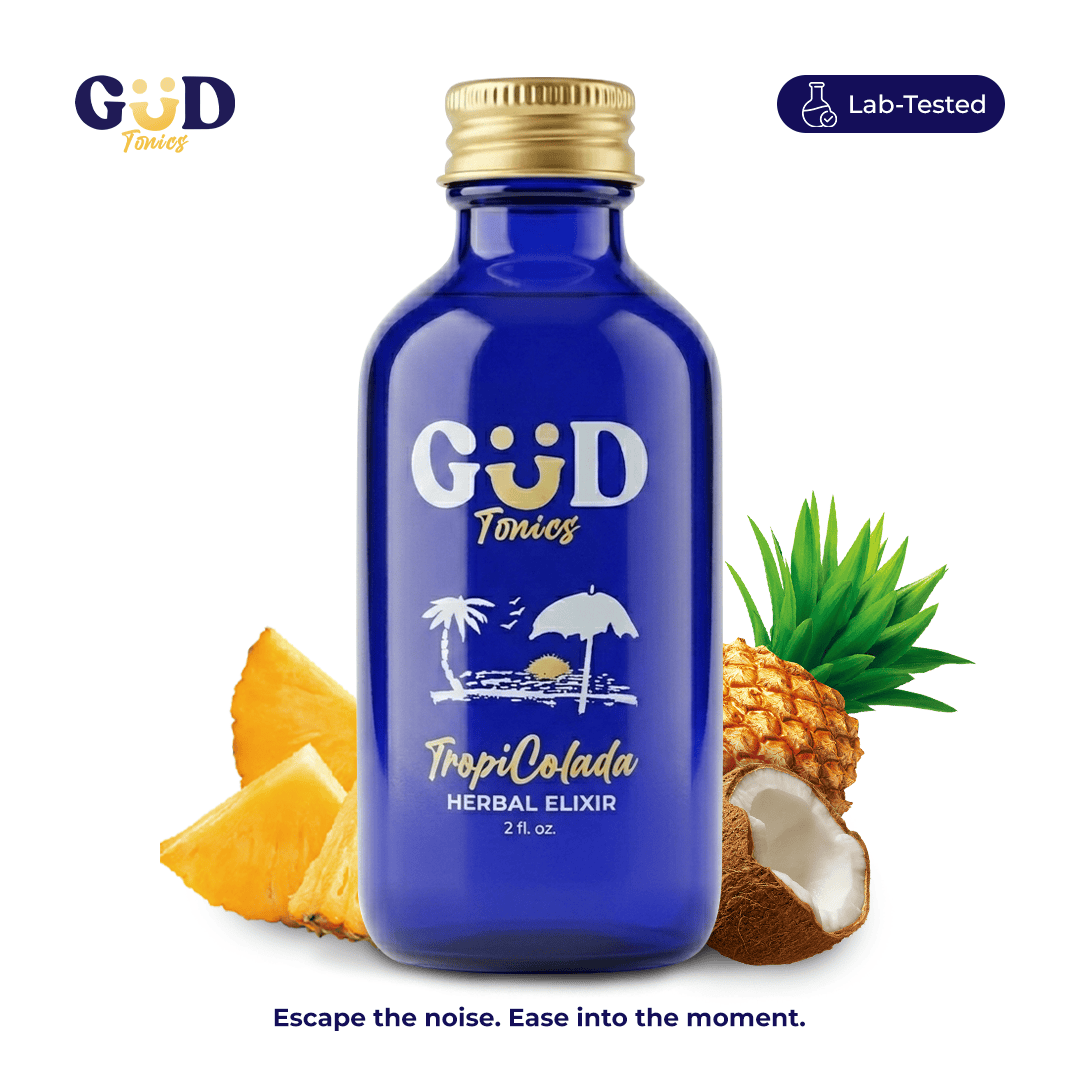
🌊 Discover Baja Bliss: The Ultimate Refreshing Escape from GÜD Tonics 🍍🥥✨
There's a particular kind of relief in a cold, crisp drink at exactly the right moment. The day has been a lot, the afternoon is dragging, and one bright, zesty sip resets the whole mood. That feeling is what Baja Bliss is built to deliver. As a refreshing kava drink from GÜD Tonics, it's less a beverage and more a small reset button, a crisp lime escape you can reach for whenever the day needs a cooler, brighter moment. This guide is about that experience: the feeling Baja Bliss creates, the senses it engages, and how to turn a single bottle into a genuine mini getaway. No clinical breakdown here, no list of tasting notes. Just the escape itself, the way a chilled, citrus-forward pour can carve out a pocket of calm in an ordinary day. Baja Bliss leans bright and lime-led, built on premium kava extract with mitragynine and botanicals, and the whole point is the refreshing, feel-good moment it gives you. Think of this as a guide to making the most of that moment. One honest note before we get into it. Baja Bliss contains kava and mitragynine (MIT, the ingredient drawn from the kratom leaf), so it is for adults 21 and over only. It is not for anyone who is pregnant or breastfeeding, and you should talk with your healthcare provider before adding any new functional drink to your routine, especially if you have a liver condition or take medication. With that covered, here is how a refreshing kava drink becomes the ultimate escape. Table of Contents TL;DR What Makes Baja Bliss a True Escape The Sensory Side of a Refreshing Kava Drink The Crisp Lime at the Heart of the Moment Building Your Own Mini Getaway When the Escape Fits Best Honest Cautions for an Easygoing Sip Make Baja Bliss Your Go-To Escape Final Thoughts Frequently Asked Questions TL;DR Baja Bliss is a refreshing kava drink from GÜD Tonics, designed around a crisp lime escape rather than a heavy or sugary sip. The experience is sensory: a cold, zesty pour that engages taste, temperature, and a moment of calm all at once. It is built on premium kava extract plus mitragynine and botanicals, so it carries a mellow, feel-good character alongside the refreshment. The feel typically begins within about 15 to 30 minutes, and it is at its brightest served well chilled over ice. It is alcohol-free, which makes it a natural fit for a midday reset, an outdoor break, or an easygoing evening pause. Honesty matters with kava. The FDA has issued a consumer advisory linking kava to rare liver effects, kava and MIT are both calming so they do not pair with alcohol or driving, and this is a refreshing moment to enjoy rather than a treatment for anything. If you want a bright, cooling pause you can reach for on a busy day, Baja Bliss turns a few quiet minutes into a small getaway. What Makes Baja Bliss a True Escape An escape doesn't have to be elaborate. The most reliable ones are small and repeatable, the kind you can summon on a regular Tuesday without booking anything or going anywhere. Baja Bliss is built for exactly that. It takes the simple act of pouring a cold drink and turns it into a deliberate pause, a few minutes where the noise of the day quiets down and you get to feel a little brighter. A refreshing kava drink works as an escape partly because of the contrast it creates. When the afternoon feels heavy or the schedule feels packed, a bright, crisp, cold sip is the opposite sensation. That contrast is the reset. It interrupts the autopilot of a busy day and replaces it, even briefly, with something cooling and pleasant. The lime-forward character of Baja Bliss is tuned for that brightness, so the first sip lands as an immediate lift rather than just another drink. Underneath the refreshment sits the blend that gives the moment its feel-good quality. Baja Bliss is built on premium kava extract, drawn from the root of the Piper methysticum plant that's been used across the South Pacific for centuries in social settings. Paired with mitragynine and botanicals, it carries a mellow, settled character that turns a quick sip into something relaxing. For a neutral overview of kava and how it's been used, the National Center for Complementary and Integrative Health is a reliable, non-commercial reference. So the escape is really two things working together: the crisp, cooling refreshment of the lime and the mellow, feel-good character of the kava plus MIT blend. One brightens the moment, the other settles it. Together they make a single bottle feel like a small getaway instead of an ordinary pour. The Sensory Side of a Refreshing Kava Drink An escape is something you feel, and the strongest ones engage more than just taste. Baja Bliss is most rewarding when you slow down enough to notice everything happening in the glass. Here's what a refreshing kava drink puts in front of your senses. The Cold That Resets You Temperature does a surprising amount of the work. A drink served cold delivers an instant cooling sensation, like stepping into shade. With Baja Bliss, that cold is the first part of the escape, the moment the chilled liquid hits and the day shifts down a gear. Serving it over plenty of ice keeps that cooling quality going from the first sip to the last, which is why temperature matters as much as flavor here. The Zest That Wakes You Up Right alongside the cold comes the brightness. The crisp lime gives the drink a lively, zesty character that wakes up your palate and lifts the mood in a single sip. This is the part that makes the refreshment feel active rather than passive. No flat, neutral cooler here. It's a bright, cooling lift that resets your attention, the sensory equivalent of opening a window on a stuffy room. The Settle That Follows Then the feel-good character arrives. As the kava and MIT blend takes effect over about 15 to 30 minutes, the experience moves from a sharp, refreshing jolt to a mellower, more settled state. That gentle settle is what turns a quick sip into a real pause. The escape isn't just the cold and the zest in the first moment. It's the calmer, lighter feeling that lingers after, which is the part many people come back for. The Ritual That Frames It The ritual itself has a sensory dimension too. The sound of ice in a glass, the bright color of a lime wheel on the rim, the cold weight of the bottle from the fridge: all of it tells your brain this is a deliberate moment, not a gulp of something on the way out the door. Treating Baja Bliss as a small ritual rather than a quick drink is what lifts it from refreshment to escape. The Crisp Lime at the Heart of the Moment Every escape needs a center, and for Baja Bliss it's the lime. The citrus is what gives this refreshing kava drink its identity, and knowing why it works helps you get the most out of every pour. Lime is one of the most reliably refreshing flavors there is. It reads as clean, bright, and cooling in a way few other profiles match, and it carries a gentle tartness that keeps a drink lively rather than flat. Baja Bliss leans into that fully, leading with a crisp lime character that feels closer to a freshly squeezed wedge over ice than a candy-sweet citrus soda. That freshness is why the first sip lands as a genuine lift. What keeps the lime from going sharp or thin is the balance underneath it. The kava base adds a mellow, grounding quality that rounds out the citrus, so the drink stays smooth and easy to enjoy rather than puckery. And because Baja Bliss isn't built on heavy sweetness, the refreshment comes from the lime and the cold rather than a wall of sugar. That makes it feel cleaner on the palate, exactly what you want when the whole point is a crisp, cooling reset. The lime does something practical too: it makes the escape easy to repeat. A flavor that's all sweetness can wear you out, but a crisp, citrus-forward profile stays appealing sip after sip and day after day. That repeatability is what lets Baja Bliss become a go-to refreshing escape rather than a one-time novelty. Building Your Own Mini Getaway The beauty of this escape is how little it asks of you. A few simple touches turn a bottle of Baja Bliss into a genuine mini getaway, and none of them are complicated. Get it properly cold. The crisp lime is brightest when the drink is chilled, so keep bottles in the fridge and pour straight from there for the full cooling effect. Pour over plenty of ice. Ice keeps the drink cold and crisp from the first sip to the last and doubles down on the refreshing character of the escape. Dress the glass. A lime wheel, a sprig of mint, or a thin slice of cucumber plays up the citrus and makes the moment feel like a treat rather than a routine. Build a light spritz. A splash of soda water and a little muddled mint turns Baja Bliss into a simple alcohol-free spritz, a slightly more elaborate escape for when you have a few extra minutes. Carve out the moment. Step away from the screen, take it outside or to a comfortable chair, and let the feel build gradually over about 15 to 30 minutes. The escape works best when you give it your attention. Start small. Begin with a smaller serving to learn how it affects you before pouring more. You're after a relaxed pause, not a rush. The ritual is the difference between drinking something and taking a break. Build these small touches into the moment and a refreshing kava drink starts to feel like an actual getaway. When the Escape Fits Best A reset is most valuable when the timing is right. Baja Bliss slots into several moments where a bright, refreshing pause helps, and knowing them makes it easier to reach for at the right time. The Midday Reset The afternoon slump is one of the most reliable times for an escape. When energy dips and focus scatters, a crisp, cold sip offers a brighter alternative to a third coffee. The refreshment wakes up your palate while the mellow blend takes the edge off the busyness, a fitting midday pause that won't wreck your evening the way a late caffeine hit can. The Outdoor Break Baja Bliss is at its best in the warm, bright settings where a cooling drink belongs. Poolside lounging, a backyard hang, a break in the shade after time outdoors: all of it pairs naturally with a chilled lime pour. The cooling character of the drink matches the mood of a sunny afternoon, an easy companion for the outdoorsy moments GÜD's community tends to love. The Evening Wind-Down Not every escape happens in daylight. A chilled Baja Bliss also suits an easygoing evening, when you want something refreshing and feel-good in hand without reaching for alcohol. The mellow character of the blend fits an unhurried night of music or conversation. Just keep the cautions in mind: because kava and MIT are calming, this is a downtime sip, never something to pair with driving. The Sober-Curious Moment For anyone cutting back on alcohol, a satisfying drink to hold and share makes a real difference. Baja Bliss gives you a bright, intentional sip that feels like a treat rather than a compromise, so you stay fully part of a gathering without the alcohol or the next-day fog. Kava has been a communal drink for centuries, which makes sharing a round a natural fit for game nights and get-togethers. Honest Cautions for an Easygoing Sip An escape this easy to love still comes with real responsibilities, and being clear about them is part of enjoying it well. Baja Bliss is a feel-good refreshment, not a risk-free one, and it isn't for everyone. It's for adults 21 and over only, because it contains kava and mitragynine. It is not for anyone who is pregnant or breastfeeding. Kava has been associated with rare liver effects, and the US Food and Drug Administration has issued a consumer advisory about it. If you have a liver condition or take medication, talk with your healthcare provider before trying it. Never mix Baja Bliss with alcohol. Both kava and MIT are calming, so don't enjoy it before driving, operating machinery, or swimming, even during a poolside escape. Start with a smaller serving and use it in moderation. Research on many of these ingredients is still limited, so treat the drink as a refreshing, feel-good pause rather than a remedy for anything. The kava fact sheet from the NIH is a good place to read the safety details before you start. Respecting these is what responsible enjoyment looks like, and it's the only honest way to make a refreshing kava drink a regular part of your downtime. Make Baja Bliss Your Go-To Escape If a crisp, cooling reset sounds like exactly what your busy days have been missing, this is where to start. GÜD Tonics Baja Bliss is the crisp lime tonic at the center of everything above, built on premium kava extract with mitragynine and botanicals and made to be served chilled over ice. Alcohol-free, bright, and easy to fold into a midday pause, an outdoor break, or a relaxed evening. Curious how it stacks up against the rest of the family before you commit? The three-bottle GÜD flavor sampler is a low-commitment way to taste a few profiles. And if you find yourself drawn to something creamier and more tropical, the piña colada character of TropiColada offers a sweeter, fruit-forward take on the same kava plus MIT base. Ready to keep your escape on hand? Explore the full GÜD Tonics range and pick the vibe that fits your day. A final honest reminder, because a refreshing escape is best enjoyed with clear eyes. Baja Bliss is for adults 21 and over, is not intended for anyone pregnant or breastfeeding, and should never be mixed with alcohol or enjoyed before driving. If you have a liver condition or take medication, check with your healthcare provider first. It is a refreshing moment to enjoy, not a medicine or a treatment for any condition. Final Thoughts The best escapes are the ones you can actually reach. Baja Bliss makes a small getaway as simple as opening the fridge, filling a glass with ice, and giving yourself a few quiet minutes to enjoy a bright, crisp, cooling sip. The cold that resets you, the zest that wakes you up, the mellow settle that follows: it all adds up to a refreshing kava drink that does more than quench a thirst. It carves out a pocket of calm in an ordinary day. What makes it work is how repeatable it is. No special occasion or long break required to feel the lift. Keep it cold, serve it with a little care, respect the cautions, and Baja Bliss can become the dependable refreshing escape you turn to whenever the day needs a brighter moment. Pour one, take that first cold sip, and let the busyness fade for a while. Frequently Asked Questions What makes Baja Bliss a refreshing escape rather than just a drink? The escape comes from the combination of a crisp, cooling lime character and the mellow, feel-good blend underneath it. The cold and the zest deliver an immediate reset, while the kava plus MIT settles into a calmer feeling over about 15 to 30 minutes. Treat it as a deliberate pause, served chilled over ice, and a refreshing kava drink becomes a small getaway. How long does the feel from Baja Bliss take to begin? Most people notice the feel within about 15 to 30 minutes, and it's best served well chilled over plenty of ice. Because the onset is gradual, start with a smaller serving and give it time before deciding whether to have more, so you learn how it affects you personally. Is Baja Bliss sweet or more of a crisp, clean refreshment? It leans crisp and clean rather than sweet. The lime does the work, so the drink reads as bright and cooling instead of syrupy, with the kava base adding a smooth, grounding quality. That balance is what makes it easy to enjoy a full bottle as a genuine refreshment rather than a sugary treat. When is the best time to reach for a refreshing kava drink like Baja Bliss? It fits a midday reset when energy dips, an outdoor break on a warm afternoon, an easygoing evening wind-down, or a sober-curious gathering where you want a satisfying sip to hold. Because kava and MIT are calming, keep it to downtime and never enjoy it before driving or any activity that needs you sharp. Is Baja Bliss safe to enjoy? It's for adults 21 and over only and is not for anyone pregnant or breastfeeding. Kava has been linked to rare liver effects in an FDA consumer advisory, so avoid alcohol, be cautious with medications, and talk with your healthcare provider if you have any liver concerns. Start with a smaller serving, and treat it as a refreshing pause rather than a treatment for anything.
Learn more
🌿 The Powerful Duo: Mitragynine & Kava in Harmony 🌊✨
Table of Contents TL;DR: The Quick Version What Mitragynine Is at the Ingredient Level How Mitragynine Behaves at Different Amounts What Kava Contributes to the Blend Why MIT and Kava Complement Each Other What the Harmony Feels Like in a Sip Honest Safety Notes for Mitragynine and Kava How GÜD Tonics Builds This Blend Final Thoughts Frequently Asked Questions Inside every GÜD Tonics elixir sits a deliberate pairing of two natural ingredients, and the one that draws the most curiosity is mitragynine. It's the headline compound from the kratom leaf. When it meets premium kava extract in a carefully measured blend, the result is more balanced than either ingredient delivers alone. This guide takes you to the ingredient level: what mitragynine is, how kava complements it, and why a gentle lift meeting a steady calm makes for such a pleasant, sociable sip. A quick and honest note before the science. These drinks and ingredients are for adults 21 and over only. They are not for anyone who is pregnant or breastfeeding. Talk with your healthcare provider before trying them, especially if you have a liver condition or take medication, and never mix them with alcohol. With that framing set, here is how this ingredient-level harmony actually works. TL;DR: The Quick Version Mitragynine is the primary active compound in the kratom leaf (Mitragyna speciosa), and it is the ingredient GÜD uses, in carefully measured amounts, to add a gentle lift to its blends. Mitragynine behaves differently depending on the amount: smaller amounts tend to feel lighter and more energizing, while larger amounts are associated with heavier, more sedating effects. Kava brings a steady, mellow, sociable calm from its kavalactones, which rounds out the brighter quality of mitragynine. The pairing of MIT and kava is designed for harmony and balance, with the mitragynine portion kept deliberately small. This is ingredient-level science, not a health claim: neither compound is a treatment for any condition, and research, especially on mitragynine, is still limited. Compliance is built in: adults 21 and over only, never with alcohol, not while pregnant or breastfeeding, and the FDA has a consumer advisory about kava and rare liver effects. What Mitragynine Is at the Ingredient Level Mitragynine is the main active compound in the leaves of Mitragyna speciosa, the tree that produces kratom. When people talk about the effects associated with the kratom leaf, mitragynine is the molecule doing most of the work, alongside a related compound called 7-hydroxymitragynine. Looking at the plant through this ingredient lens beats talking about the raw leaf, because a blend can use a measured amount of the compound rather than an open-ended scoop of plant material. Now the part worth getting clear. According to the National Institute on Drug Abuse, mitragynine and 7-hydroxymitragynine interact with receptors in the brain and can produce effects people describe in two directions: stimulant-like in some situations, more opioid-like or sedating in others. That dual character is why the amount matters so much, and it's the single most important fact to carry into any conversation about this ingredient. Be honest about the state of the science, too. Research on mitragynine in people is still early, and it has not been shown to be safe and effective for any medical use. GÜD treats it as one carefully dosed ingredient in a flavorful beverage, not as a remedy. That distinction, a measured ingredient versus a high-dose product, is the foundation everything else here rests on. How Mitragynine Behaves at Different Amounts The defining trait of mitragynine is that it's dose-dependent. The experience shifts with the amount. That sets it apart from how kava behaves, and it's the reason a thoughtful blend treats mitragynine with such restraint. Understanding the curve explains why GÜD keeps the mitragynine portion small and consistent. In smaller, measured amounts, mitragynine tends to read as lighter and gently energizing, the kind of subtle brightness that can lift a relaxed mood without tipping it into drowsiness. As the amount climbs, the character is reported to shift toward the heavier, more sedating end. A well-made social drink stays firmly in that lower, gentle-lift range rather than chasing the stronger, sleepier territory. So measurement and consistency aren't nice-to-haves. They're the whole point. An ingredient that changes character with amount has to be handled with precision, batch after batch, so each serving delivers the same balanced experience. A drink built around a small, reliable amount of mitragynine is a different animal from variable quantities of raw leaf, where the dose and quality can be all over the map. The dose-dependent nature of mitragynine is also why "start low and go slow" is more than a generic disclaimer. With a steady ingredient, a slightly larger serving just means a bit more of the same feeling. With a dose-sensitive one, a larger serving can shift the character itself, pushing it from light and bright toward heavy and sleepy. Treat each serving as its own measured amount, not a stepping stone to a bigger one, and you keep mitragynine in the gentle-lift zone where it complements kava. That mindset matters whether you're sipping a finished blend or just trying to understand why a responsible product keeps this ingredient on a short leash. What Kava Contributes to the Blend If mitragynine supplies the gentle lift, kava supplies the calm foundation under it. Kava is the root of Piper methysticum, a South Pacific plant with a centuries-long tradition of being prepared into a relaxing, sociable beverage. Its active compounds are called kavalactones, and they're responsible for the settled, mellow, clear-headed ease kava is known for. Kava makes such a good partner for mitragynine because of how steady it is. Where mitragynine shifts with amount, kava delivers a more consistent, grounded calm. The National Center for Complementary and Integrative Health offers a useful overview of kava and its traditional uses if you want a neutral reference. That mellow base keeps the gentle lift from feeling jittery or thin, anchoring it in relaxation. As with the compound from the kratom leaf, kava is enjoyed for relaxation and sociability, not as a treatment for anything. Research on kava continues, and the plant carries a well-known FDA consumer advisory about rare liver effects, which the safety section below addresses directly. Kava is the calm half of this pairing, and it earns that role through its steadiness. Why MIT and Kava Complement Each Other MIT and kava work so well together because their characters fill in each other's gaps. Kava alone can lean toward the mellow, even heavy, end of relaxation. A small amount of mitragynine adds a touch of brightness and lift that offsets that heaviness, keeping the experience sociable and present rather than sleepy. In return, kava's steady calm grounds the lighter quality of mitragynine. Each ingredient covers a weakness the other might have alone. This is why the pairing gets described as harmony. It isn't about stacking two strong things for a bigger effect. It's about balance, where a measured amount of one ingredient complements a steady amount of the other to land somewhere neither reaches alone: relaxed but clear, calm but lightly uplifted. That middle ground is the entire design goal, and it's what makes the blend suited to conversation and connection. Timing adds another layer to the partnership. Kava's calm settles in as a smooth, even baseline, while the lift from mitragynine reads as a lighter accent on top rather than a separate, competing sensation. When the proportions are right, you don't feel two distinct ingredients pulling in different directions. You feel one cohesive mood. That coherence is the payoff of treating mitragynine as a small, supporting note rather than the loud lead, and it's why proportion, not potency, is the metric that matters in a blend like this. Restraint is the discipline that makes the harmony possible. Because both ingredients are calming in their own ways, the temptation to just add more of each leads in the wrong direction. The skilled version keeps the mitragynine small and the kava steady, so the two stay in proportion. You can taste that balance in something like the crisp lime Baja Bliss, where the lift and the calm sit together rather than competing. What the Harmony Feels Like in a Sip You probably want to know what to expect, so here's an honest, non-exaggerated description. A blend built around a small amount of mitragynine and a steady base of kava tends to bring on a relaxed, easygoing mood with a clear head and a subtle sense of lift. It suits good conversation, a wind-down evening, or a social setting where alcohol is off the table. Effects generally begin somewhere in the 15-to-30-minute range, and the drink is best enjoyed slowly and chilled over ice. Individual responses vary, and that's worth taking seriously. Body weight, tolerance, what you've eaten, your own sensitivity: all of it shapes how a serving lands. Start with a single serving, give it the full window to take effect before deciding whether you want more, and resist treating one serving as a baseline to exceed. With an ingredient as dose-sensitive as mitragynine, patience improves the experience. Setting and timing shape the experience as much as the blend itself. Because the gentle lift from mitragynine sits on top of kava's relaxed base, the drink feels best when you're already easing out of a busy stretch rather than ramping into one. Many people reach for it in the late afternoon or early evening, when the idea is to soften the edges of the day and settle into something social or quiet. Pair it with food, hydration, and an unhurried pace, and the balance comes through the way it's designed to instead of being rushed past. A word on activities belongs here too. Because both ingredients are calming, a blend like this isn't meant to pair with driving, operating machinery, or swimming. It's a drink for the slowing-down part of your day, the moments built for relaxation and being present, not for tasks that demand sharp coordination or quick reflexes. Honest Safety Notes for Mitragynine and Kava A trustworthy guide doesn't bury the cautions, so here they are plainly. On the mitragynine side, reported side effects of the kratom leaf range from mild ones such as nausea, dizziness, and drowsiness to rarer but more serious effects, and health authorities specifically warn that combining it with other substances raises the risk of harm. Research in people remains limited, which is precisely why GÜD works with small, measured amounts inside a controlled blend rather than encouraging open-ended use. On the kava side, the plant has been associated in rare cases with liver effects, which is why the FDA issued its consumer advisory. The agency maintains consumer information on dietary supplements worth reviewing, and anyone with a liver condition or who takes medication that affects the liver should consult a healthcare provider before trying kava. These aren't footnotes to skip past. They're central to using either ingredient responsibly. Combining either ingredient with alcohol is off the table, and it's worth understanding why. Alcohol is itself a depressant, kava is calming, and the kratom-derived compound can add sedating effects of its own at higher amounts. Layering them is exactly the kind of stacking this whole approach is built to avoid, and it can amplify drowsiness and impair judgment in risky ways. The same logic applies to other sedatives or medications that affect the central nervous system or the liver. When in doubt about whether something you take could interact, the safe default is to ask a healthcare provider before adding a kava and mitragynine drink to the mix, rather than finding out the hard way. The bottom-line rules are short and firm. This is for adults 21 and over. It's not for anyone pregnant or breastfeeding. Never combine it with alcohol, and never use it before driving or anything that requires full alertness. If you take medication or manage any health condition, talk with your healthcare provider first. Neither mitragynine nor kava is a cure, treatment, or medicine, and honest enjoyment means respecting every one of these limits. How GÜD Tonics Builds This Blend At GÜD Tonics, this pairing is the product, designed with care from the ingredient up. We start with premium kava extract for the steady, sociable calm, add a small, carefully measured amount of mitragynine for a gentle lift, then finish with botanicals and real flavor so each bottle tastes like something you actually want to drink. The aim is an alcohol-free social drink that helps you relax and stay present, with effects many people begin to notice in roughly 15 to 30 minutes when served chilled. Consistency and transparency drive every batch. Want to explore the range? The tropical TropiColada elixir leans into a bright, piña-colada profile, while the variety sampler lets you find your favorite without committing to one flavor first. We stay upfront that these drinks are for adults 21 and over, never to be mixed with alcohol, and not for anyone pregnant or breastfeeding. Curious to taste calm and clarity in a single balanced sip? Explore the full GÜD Tonics collection and find the flavor that fits your moment. Final Thoughts At its core, the harmony between mitragynine and kava is a story about balance at the ingredient level. Mitragynine, the headline compound of the kratom leaf, contributes a gentle, dose-sensitive lift. Kava, with its steady kavalactones, contributes a grounded, sociable calm. Held in careful proportion, with the mitragynine kept small and the kava kept steady, the two complement each other to produce a relaxed-but-clear feeling neither reaches alone. That balance only works alongside honesty and restraint. Start with one serving, give it time, keep it to adults 21 and over, never mix with alcohol, avoid it before driving or anything needing full focus, and check with your healthcare provider if you have a liver concern or take medication. Respect the limits, including the FDA advisory on kava and the early state of research on mitragynine, and this thoughtful pairing can have a comfortable place in a mindful, alcohol-free routine. That's the duo GÜD Tonics set out to perfect. Frequently Asked Questions What is mitragynine? Mitragynine is the main active compound in the leaves of Mitragyna speciosa, the tree that produces kratom. It's the molecule responsible for most of the effects associated with the kratom leaf, alongside a related compound called 7-hydroxymitragynine. GÜD Tonics uses a small, carefully measured amount of mitragynine as one ingredient in its blends to provide a gentle lift, rather than relying on raw leaf. How does mitragynine work with kava? The two ingredients complement each other. Kava's kavalactones provide a steady, mellow calm, while a small amount of mitragynine adds a gentle lift and brightness. Kava grounds the lighter quality of mitragynine, and mitragynine offsets the heaviness kava can have on its own. Held in proportion, MIT and kava land on a relaxed-but-clear feeling. This is ingredient-level balance, not a health claim. Is mitragynine safe? Research on mitragynine in people is still limited, and it has not been shown to be safe and effective for any medical use. Reported side effects of the kratom leaf range from mild to rarely serious, and the risk rises when combined with other substances, which is why it should never be mixed with alcohol. It's for adults 21 and over, not for anyone pregnant or breastfeeding, and worth discussing with a healthcare provider first. How much mitragynine is in a GÜD Tonics blend? GÜD keeps the mitragynine portion deliberately small and consistent from batch to batch. Because mitragynine is dose-dependent, with smaller amounts feeling lighter and larger amounts more sedating, the idea is to stay in the gentle-lift range. The focus is balance with kava, not strength, so each serving delivers a steady, relaxed experience rather than a heavy one. Can you feel mitragynine and kava right away? Effects from a kava and mitragynine blend generally begin somewhere in the 15-to-30-minute range, and the drink is best enjoyed slowly and chilled over ice. Responses vary with body weight, tolerance, and what you've eaten, so start with one serving and give it the full window before deciding whether you want more. Both ingredients are calming, so avoid pairing the drink with driving or anything that needs full alertness.
Learn more
🌿 Exploring Kavalactones: The Science Behind Kava’s Relaxing Effects 🧘♂️✨
Table of Contents TL;DR: The Quick Version What Kavalactones Are How Many Kavalactones Are in Kava The Six Main Kavalactones How Kavalactones Are Thought to Create Kava's Calm Chemotypes: Why Kava Can Feel Different What Influences Kavalactone Content Honest Safety Notes on Kava Active Compounds How GÜD Tonics Works With Kava's Chemistry Final Thoughts Frequently Asked Questions When people describe the calm, settled feeling they get from a cup of kava, they're describing chemistry at work. The compounds responsible are called kavalactones. They're the reason the kava root has held a central place in South Pacific life for centuries, and the reason it now turns up in modern functional drinks. Understanding these active compounds is the best way to make sense of what kava is, why one kava can feel so different from another, and how a humble root produces such a distinctive experience. This guide takes a grounded, science-first look at kavalactones, hype left at the door. We'll cover what they are, how many have been identified, which six do most of the work, how they're thought to create kava's relaxing character, and what the term chemotype means for the kava you choose. Before going further, one honest note: the kava and mitragynine drinks discussed here are for adults 21 and over, they are not for anyone who is pregnant or breastfeeding, and you should talk with your healthcare provider first, especially if you have a liver condition or take any medication. TL;DR: The Quick Version Kavalactones are the primary active compounds in kava, the root of the Piper methysticum plant, and they are what give the drink its characteristic calm, relaxed quality. Researchers have identified about 18 different kavalactones in kava, though six of them account for the large majority of the active content. The six main kava active compounds are kavain, dihydrokavain, methysticin, dihydromethysticin, yangonin, and desmethoxyyangonin. These compounds are thought to interact with the brain's calming systems, which may help explain the relaxed feeling many people report, though research is still limited. The unique ratio of kavalactones in a given plant is called its chemotype, and that signature is a big reason different kava can feel different. Honest safety still applies: kava is for adults 21 and over, should never be mixed with alcohol, and the FDA has issued a consumer advisory tied to rare liver effects. What Kavalactones Are Kavalactones are a family of naturally occurring compounds found in the root and rhizome of the kava plant, Piper methysticum. They belong to a chemical class known as lactones, specifically styryl lactones, and they're the substances researchers point to when they try to explain why kava feels the way it does. If kava is famous for its calming character, kavalactones are the engine behind that reputation. They concentrate in the underground parts of the plant, which is why kava is prepared from the root rather than the leaves or stems. Think of kavalactones as the active fraction of the kava root. A prepared kava drink holds water, plant fiber, and a range of other natural substances, but it's the kavalactone content that carries the experience people are after. When you read about a kava product being "full-spectrum" or described by its percentage of active compounds, that language points directly at kavalactones. The National Center for Complementary and Integrative Health offers a clear overview of kava and what the research does and does not show if you want the broader picture alongside the chemistry. Here's what makes kavalactones interesting from a scientific standpoint: they aren't a single substance. They're a group of related molecules, each with a slightly different structure and, importantly, a slightly different behavior. That variety is the key to understanding kava. The way these compounds combine, and the proportions in which they appear, shapes the entire character of a given kava. We'll come back to that when we look at chemotypes later on. How Many Kavalactones Are in Kava One of the most common questions about kava chemistry is simply how many kavalactones there are. The widely cited figure from the research literature: around 18 distinct kavalactones have been identified in the kava plant. That number reflects decades of analytical work isolating and characterizing the individual compounds present in the root. The more practical point is that not all 18 carry equal weight. Studies consistently find that six of these kavalactones make up the large majority of the active content in a typical kava extract, often cited as roughly 95 percent of the organic extract. The remaining dozen or so show up in much smaller amounts. So while it's accurate to say kava contains around 18 kavalactones, the experience and the chemistry are dominated by a much smaller cast of six. That's why most analysis, labeling, and discussion of kava active compounds focuses on those six rather than the full set. Concentrating the effect into a handful of compounds is part of what makes kava measurable and consistent when it's handled carefully. Laboratories can quantify the six major kavalactones to characterize a sample, which is how producers verify what's in a given batch. Peer-reviewed studies on these compounds are searchable through PubMed, the database of biomedical research if you'd rather read the primary literature than secondhand summaries. One caveat worth repeating: human research on kava remains limited compared to many everyday substances, so the chemistry is better understood than the full picture of how it affects people. The Six Main Kavalactones Six compounds do most of the work, so they deserve a closer look. Each is a kavalactone in its own right, and together they form the core of what gives kava its identity. They're commonly listed with a standard numbering used in scientific shorthand. Kavain Kavain is among the most studied of the kava active compounds and gets linked again and again to kava's relaxing, easing character. It tends to show up in meaningful amounts in many noble kava varieties, and it's usually discussed first when people talk about why kava feels calming. Dihydrokavain Dihydrokavain is a close structural relative of kavain. It contributes to the overall profile of a kava and is one of the six analysts measure when characterizing a sample. Like its relatives, it's part of the blend rather than a standalone actor. Methysticin Methysticin lends kava part of its name, since the plant is Piper methysticum. One of the six dominant kavalactones, it adds to the rounded character of the root's chemistry. Dihydromethysticin Dihydromethysticin is the reduced counterpart to methysticin and another of the six major compounds. It's one of the kavalactones that varies noticeably between plants, which feeds into the chemotype differences discussed below. Yangonin Yangonin is a kavalactone with a distinct structure that contributes to the aroma and overall makeup of kava. It's one of the six measured in standard analysis and plays its part in the combined effect. Desmethoxyyangonin Desmethoxyyangonin rounds out the group of six. Its presence and proportion, like the others, help define the particular signature of a given kava. None of these six works in isolation. The experience people describe comes from the combination, which is exactly why the ratio between them matters so much. How Kavalactones Are Thought to Create Kava's Calm This is where honesty matters most, because it's easy to overstate. What we can say: kavalactones are the compounds researchers believe are responsible for the calm, relaxed feeling kava is traditionally associated with. What we can't responsibly say is that kava treats, cures, or manages any medical condition. The science supports a general mechanism in broad strokes, but it remains limited, and that distinction deserves respect. The leading explanation is that kavalactones interact with the brain's own calming systems. Research suggests these compounds may influence GABA activity, the signaling pathway the nervous system uses to quiet itself down, which would fit the settled, unwound feeling people report after drinking kava. Some kavalactones have also been studied for how they affect other receptors and neurotransmitters tied to mood and relaxation. Together, these interactions form the most accepted picture of how the kava active compounds produce their characteristic feel. Notice that "may influence" and "is thought to" are doing real work in those sentences. Much of the mechanistic research comes from laboratory settings rather than large human trials, and individual responses to kava vary. Many people just reach for kava to relax and feel sociable, not to chase a specific clinical outcome, and that framing is the accurate one. The kavalactone effects people enjoy are real to them. The scientific story is still being written, though, and a good guide says so plainly rather than dressing it up. The chemistry also explains a timing element. Kava isn't an instant switch. The kavalactones need time to absorb and take effect, which is why people who enjoy kava beverages often describe the feeling settling in over roughly 15 to 30 minutes. That gradual onset is one of the nicer features of working with these compounds, since it rewards slowing down rather than chasing a quick hit. Chemotypes: Why Kava Can Feel Different Ever heard that two kava can feel quite different from each other? The concept of a chemotype is the explanation. A chemotype is the specific signature created by the proportions of the six main kavalactones in a particular kava plant. Because those six can appear in different ratios, each variety carries its own numerical fingerprint, and that fingerprint shapes its character. The standard system assigns each of the six major kavalactones a number, then lists them in order of their relative concentration in the plant. Written out, the numbering runs: 1 is desmethoxyyangonin, 2 is dihydrokavain, 3 is yangonin, 4 is kavain, 5 is dihydromethysticin, and 6 is methysticin. A chemotype is expressed as a sequence of these numbers, most abundant kavalactone first. So a kava with a chemotype beginning in kavain reads differently on paper, and often feels different in the cup, than one dominated by another compound. This is the language growers and analysts use to describe a kava's makeup precisely. Chemotype also sits at the heart of the distinction between what are often called noble and non-noble kava. Noble varieties tend to carry chemotypes long valued in traditional use, while certain other varieties have profiles that are generally less preferred for everyday drinking. The deeper comparison is a topic of its own, so here's the simpler takeaway: the chemotype tells you about the balance of kavalactones, and that balance is a major reason kava is not a one-size-fits-all experience. When a producer pays attention to chemotype, they're paying attention to consistency and quality. What Influences Kavalactone Content The amount and ratio of kavalactones in a finished kava isn't fixed. Several factors shape it, and understanding them explains why quality varies so much across kava products on the market. The Plant Variety Different kava cultivars are genetically inclined toward different chemotypes, so variety is the starting point. The plant a producer chooses sets the basic kavalactone signature before anything else happens. Which Part of the Plant Is Used Kavalactones concentrate in the root and rhizome, and the underground parts run richer than aerial ones. Quality kava is made from these root portions, which is one reason sourcing matters when you want a faithful kavalactone profile. Growing Conditions and Maturity Soil, climate, and how long a plant is allowed to mature all influence kavalactone content. Older, well-grown plants tend to develop a fuller profile, which is why traditional growers prize patience. Preparation and Extraction How kava is processed has a big effect on the kavalactones that end up in your cup. Kavalactones aren't very water-soluble, so traditional kneading in water and modern extraction methods each pull them out differently. A concentrated extract captures more of the active compounds than a casual steep, which is part of why standardized products aim for consistency. If you want a controlled, full-spectrum starting point, a product like Raw Kava Extract Powder is built around delivering kavalactones reliably rather than leaving the content to chance. Put it all together and you can see why two kava drinks vary so widely. The same word, kava, can describe a weak, poorly prepared cup or a carefully sourced, properly extracted one. The difference is the kavalactones, and that's precisely what careful producers focus on. Honest Safety Notes on Kava Active Compounds A science-minded guide owes you a straight account of safety, because kava is enjoyed by many adults but it isn't for everyone and it isn't risk-free. Understanding the kavalactones is only half the picture. Understanding the cautions is the other half. Kava drinks are for adults 21 and over, and they are not for anyone who is pregnant or breastfeeding. Kava has been associated in rare cases with liver effects, which is why the U.S. Food and Drug Administration issued a consumer advisory. The agency's dietary supplement information gives context on how these products are regulated and why honest sourcing and labeling matter, points that connect directly to kavalactone quality. Anyone with a liver condition should be especially cautious and should speak with a doctor before trying kava, and anyone taking medication should check with a healthcare provider first, since kavalactones and other botanicals can interact with some drugs. Two practical rules apply no matter how much you enjoy the chemistry. First, never combine kava with alcohol. Both place demands on the liver, and mixing them works against your safety. Second, don't pair kava with driving, operating machinery, or swimming, because kavalactones are calming and the mitragynine found in some drinks is calming too, and the combination can leave you sedated. None of this contradicts the appeal of kava. It just frames it responsibly, which is the only honest way to talk about active compounds that affect how you feel. How GÜD Tonics Works With Kava's Chemistry At GÜD Tonics, respect for kava's chemistry is built into how we make our drinks. We start with premium kava extract chosen for a faithful kavalactone profile, then blend it with mitragynine and botanicals to create herbal elixirs made for calm, clarity, and connection, without alcohol and without a crash. Because the kavalactones need a little time to settle in, our tonics are made to be poured over ice and sipped slowly, with effects many people begin to notice in roughly 15 to 30 minutes. The newest flavor, Pink Sunset, brings that chemistry into an easygoing, feel-good sip. A fan favorite like Kava Oasis shows how a well-made kava drink can taste inviting rather than earthy. Talking openly about what's in the bottle is part of doing this right, which is why we're upfront about the kava, the mitragynine, and who these drinks are for. Want to experience well-handled kava chemistry in a flavor made for relaxing? Browse the full GÜD Tonics collection and find the one that fits your moment. Final Thoughts Kavalactones are the quiet science behind a centuries-old tradition. These active compounds, roughly 18 in total with six doing most of the work, are what turn the root of the Piper methysticum plant into the calming drink people gather around. They're thought to interact with the brain's own relaxation systems, their proportions define a kava's chemotype, and their quality depends on everything from the plant variety to the way it's prepared. The throughline is balance. The chemistry is real and worth understanding, but the research is still limited, kava is not a treatment for anything, and it carries real cautions that deserve attention. Knowing what kavalactones are and what they do lets you appreciate kava for what it offers: a relaxed, unhurried feeling enjoyed responsibly by adults who understand both the science and the safety behind their cup. Frequently Asked Questions What are kavalactones? Kavalactones are the primary active compounds in kava, the drink made from the root of the Piper methysticum plant. They belong to a chemical class called styryl lactones and concentrate in the root and rhizome. Kavalactones are what researchers point to when explaining kava's characteristic calm, relaxed quality, and they're the fraction referred to when a kava product is called full-spectrum or measured by its active-compound content. How many kavalactones are in kava? Researchers have identified around 18 distinct kavalactones in the kava plant. Six of them make up the large majority of the active content, often cited as roughly 95 percent of the organic extract. Those six are kavain, dihydrokavain, methysticin, dihydromethysticin, yangonin, and desmethoxyyangonin, which is why most analysis and discussion of kava active compounds focuses on them. How do kavalactones create kava's relaxing feeling? Kavalactones are thought to interact with the brain's calming systems, with research suggesting they may influence GABA activity, the pathway the nervous system uses to quiet itself. That would fit the settled feeling many people report. Be honest, though: this research is still limited, much of it comes from laboratory settings, and kava is not a treatment for any condition. Many people just use it to relax rather than expecting a specific clinical outcome. What is a kava chemotype? A chemotype is the signature created by the proportions of the six main kavalactones in a particular kava plant. Each of the six is assigned a number, and a chemotype is written as a sequence listing them in order of concentration, most abundant first. Because those six compounds appear in different ratios across varieties, the chemotype is a major reason different kava can feel different, and it underpins the distinction between noble and other kava types. Are kavalactones safe? Kava is enjoyed by many adults, but it isn't risk-free. It's for adults 21 and over and not for anyone pregnant or breastfeeding. Kava has been linked in rare cases to liver effects, prompting an FDA consumer advisory, so anyone with a liver condition should talk to a doctor first, as should anyone taking medication. Never combine kava with alcohol, and don't drive or operate machinery afterward, since kavalactones are calming.
Learn more
🌿 Embracing Kava for the Future: How GÜD Tonics is Revolutionizing Relaxation ✨
An ancient root from the South Pacific is having a thoroughly modern moment. For centuries, kava was something you prepared by hand, sipped from a shell, and shared slowly. Now it shows up chilled in a bottle, ready to drink, sitting next to sparkling water and cold brew in the fridge. That shift is the heart of what we mean by the future of kava, and it's moving faster than most people realize. This guide is about that transformation. We'll look at where kava came from, what's driving its leap into the mainstream, and how GÜD Tonics fits into a broader wave of modern kava that's reshaping how people relax. The lens here is forward-looking. Not a history lesson or a deep dive into the chemistry, but the story of where a calming tradition is going and why so many people are reaching for it now. One honest note up front. GÜD Tonics contain kava and mitragynine (MIT, from the kratom leaf), so they are for adults 21 and over only, never for anyone pregnant or breastfeeding, and never to be mixed with alcohol or used before driving. Kava carries an FDA consumer advisory linking it to rare liver effects, which we will address openly. These tonics are a feel-good social drink, not a medicine, and nothing here is a treatment for any condition. With that clear, here is how relaxation is being reinvented. Table of Contents TL;DR From the South Pacific to the Modern Fridge What Is Driving the Future of Kava How GÜD Tonics Is Revolutionizing Relaxation The Bigger Trend: Functional Drinks Going Mainstream Doing Modern Kava Responsibly Where the Future of Kava Goes From Here Embracing the Future With GÜD Tonics Final Thoughts Frequently Asked Questions TL;DR The future of kava is convenient and ready to drink, taking a centuries-old South Pacific tradition and translating it into a chilled, bottled format made for modern life. Several forces are driving the shift: the sober-curious movement, demand for functional drinks, a preference for clean energy without a crash, and a desire for calm in busy days. GÜD Tonics modernizes kava by blending premium kava extract with mitragynine (MIT) and botanicals into a consistent, great-tasting, alcohol-free format. Kava is riding a larger wave of functional beverages moving from niche to mainstream, sitting alongside adaptogen drinks and other wellness-forward options. Responsible enjoyment is part of the future. That means honest labeling, the FDA liver advisory, no alcohol, no driving, and adults 21 and over only. The category is likely to keep growing through better flavors, transparency, and education, with consumer trust at the center. From the South Pacific to the Modern Fridge To understand where kava is going, it helps to know where it's been. Kava comes from the root of the Piper methysticum plant, cultivated across the islands of the South Pacific for hundreds of years. There, it's long been a centerpiece of gatherings, prepared by grinding the root and steeping it in water to make a calming, earthy drink shared among friends, families, and communities marking important occasions. That traditional preparation is meaningful. It's also slow and labor intensive, which kept kava largely tied to its region of origin for generations. As the NIH National Center for Complementary and Integrative Health notes in its overview of kava, the plant has a long record of traditional use, alongside real safety considerations any modern product has to take seriously. The challenge for anyone trying to bring kava to a wider audience was always the same: keep what makes it special while making it practical for everyday life. The modern fridge is where that challenge gets solved. Translating a hand-prepared root into a clean, consistent, ready-to-drink bottle is the breakthrough that defines this era of kava. It keeps the calming character people have valued for centuries and drops the preparation that kept it out of reach. That single move, from shell to bottle, set the stage for the future of kava to arrive. What Is Driving the Future of Kava A tradition doesn't go mainstream without strong cultural currents behind it. Several shifts in how people live and drink are pushing kava forward right now, and they explain why this moment feels different from any before it. The Sober-Curious Movement More people than ever are rethinking their relationship with alcohol. The sober-curious movement isn't about strict abstinence so much as drinking less and seeking out alternatives that still feel social and satisfying. That creates real demand for a drink you can hand someone at a gathering that's enjoyable and entirely alcohol-free. Kava, with its naturally calming and sociable character, fits that need almost perfectly, and a bottled format makes it easy to reach for. A Hunger for Clean Energy Without the Crash The classic options for a lift, sugary energy drinks and endless coffee, come with a familiar cost: jitters, spikes, an inevitable slump. A growing number of people want something steadier. Modern kava drinks, especially those that blend kava with mitragynine and botanicals, aim for a feel-good, balanced experience rather than a hard caffeine punch. That promise of calm energy without a crash speaks directly to anyone tired of the spike-and-fall cycle. The Demand for Calm in Busy Lives Stress is a near-universal feature of modern life, and people are hunting for accessible ways to build moments of calm into their day. A chilled, ready-to-drink tonic offers a simple ritual: pour, sip, take a beat. It's no cure for a hectic schedule, but as an easy, intentional pause it meets a real and widespread desire. That appetite for everyday calm is one of the strongest engines behind kava innovation. Convenience as the Deciding Factor Even the best tradition struggles to spread when it's inconvenient. The single biggest breakthrough for kava has been format. A grab-and-go bottle removes the grinding, steeping, and guesswork that once limited kava to enthusiasts and island gatherings. Convenience turns a niche ritual into something a busy student, a professional, or a weekend hiker can fold into a normal day, and that accessibility is exactly what drives a quiet revolution. How GÜD Tonics Is Revolutionizing Relaxation Plenty of brands talk about modernizing wellness. What sets GÜD apart in this kava revolution is a specific recipe and a specific philosophy, both aimed at making relaxation effortless and enjoyable rather than clinical. It starts with the blend. Each GÜD Tonic pairs premium kava extract with mitragynine (MIT, from the kratom leaf) and a thoughtful selection of botanicals. Kava brings the calm, MIT adds the ingredient many people credit with a gentle, feel-good lift, and the botanicals round out flavor and balance. The result is a tonic designed to feel relaxed and upbeat at once, a more nuanced experience than a plain calming drink or a straight energy shot. Consistency is the second pillar. Traditional kava preparation varies from batch to batch and person to person, which makes the experience hard to predict. A carefully formulated tonic delivers the same quality and character every time, so you know what you're getting. For a tradition stepping into the mainstream, that reliability is essential. Trust is built on knowing your next bottle will be as good as your last. Taste and format complete the picture. Kava's natural earthiness has always been an acquired flavor, and one of the clearest ways GÜD modernizes the experience is by making it delicious. The crisp lime Baja Bliss flavor and the tropical, piña colada style TropiColada tonic turn an old-world root into something you actively look forward to drinking. Served chilled over ice, alcohol-free, and ready in seconds, it's relaxation rebuilt for the way people live now. The Bigger Trend: Functional Drinks Going Mainstream Kava isn't making this leap alone. It's part of a much larger shift in what people expect from a beverage, and that broader trend is a big reason the future of kava looks so promising. Walk down a beverage aisle today and you'll find drinks that promise more than refreshment. Functional beverages, those made with an intended benefit like calm, focus, or energy, have moved from health-food obscurity into everyday shopping carts. Adaptogen sodas, botanical tonics, and wellness-forward drinks now share shelf space with traditional soft drinks, reflecting a consumer base that wants its choices to do something, not just taste good. Kava slots into this category naturally. It's one of the original functional drinks, really, valued for centuries for how it makes people feel. The modern twist is packaging that heritage in a format and flavor profile that matches contemporary expectations. The NIH Office of Dietary Supplements reflects the wider public interest in botanicals and supplements that has grown alongside this trend, a sign that curiosity about plant-based options is mainstream now, not fringe. For kava, all of this means momentum. As more people grow comfortable choosing drinks for how they feel rather than only how they taste, an ancient calming root is perfectly positioned to ride the wave. The category kava sits in is expanding, and that rising tide is lifting modern kava with it, giving this tradition a bigger audience than it has ever had. Doing Modern Kava Responsibly A good future for kava can't be built on hype alone. It has to be built on honesty, because a calming product people trust is one that tells them the full story. Responsible practice isn't a footnote to this revolution. It's part of what makes the revolution worth embracing. Start with the liver conversation. Kava has been associated with rare liver effects, and the US Food and Drug Administration has issued a consumer advisory on the topic. The FDA dietary supplements resource is the place to read that guidance directly. A trustworthy modern kava brand doesn't bury this. It states the facts plainly, advises avoiding alcohol entirely, and encourages anyone with a liver condition or who takes medication to talk with a healthcare provider before sipping. Hiding the risk would betray the very trust the category depends on. Honest framing matters too. Kava and MIT are calming ingredients, not medicines. The responsible way to talk about modern kava is to describe what people experience, a relaxed, feel-good character, without claiming it treats, cures, or prevents anything. No promises about anxiety, sleep, or any condition. And clear limits: adults 21 and over only, never for anyone pregnant or breastfeeding, never combined with alcohol, and never before driving, swimming, or anything that needs full alertness. A future built on that kind of transparency is one consumers can actually rely on. Where the Future of Kava Goes From Here If the current moment is about convenience and great flavor, the next chapter is likely about depth: more refined products, broader acceptance, better-informed drinkers. A few directions look especially probable as kava innovation continues. Expect flavor and format to keep evolving. As more people discover bottled kava, brands will keep expanding their lineups, refining recipes, and experimenting with profiles that suit different moods and moments. The newest GÜD flavor, Pink Sunset, is a small example of that ongoing experimentation. The broader category will keep widening the menu so there's something for nearly every palate and occasion. Transparency and education are the other frontier. As kava reaches a wider audience, demand for clear information about sourcing, ingredients, and safe enjoyment will only grow. The brands that earn lasting trust will be the ones that lead with honest labeling, explain the FDA liver advisory rather than hiding it, and help people understand responsible use. Ongoing peer-reviewed research will keep shaping that conversation as scientists study kava and its compounds more closely. The likeliest future, then, is a category that grows up. Kava moves from curiosity to a familiar, respected option in the functional drink space, supported by better products, clearer information, and a community of drinkers who value both the experience and the honesty behind it. That's a future worth embracing, and it's already taking shape one bottle at a time. Embracing the Future With GÜD Tonics If the future of kava is convenient, delicious, and honest, GÜD Tonics were built to be part of it. Each one blends premium kava extract with mitragynine (MIT) and botanicals to deliver calm, a feel-good lift, and clean energy without a crash, all alcohol-free and ready to enjoy chilled over ice. Effects generally begin within about 15 to 30 minutes, so it slots easily into a social evening, a post-work reset, or a relaxed moment with friends. Choosing where to start is the fun part. Want to sample the range before committing? The GÜD Tonics flavor sampler lets you taste across the lineup and find the profile that fits you best. Curious to see what the future of relaxation looks like? Shop the complete GÜD Tonics range and find the flavors that match your moments. A final honest reminder. GÜD Tonics are for adults 21 and over, are not for anyone pregnant or breastfeeding, and should never be combined with alcohol or enjoyed before driving. Kava carries an FDA consumer advisory linking it to rare liver effects, so check with your healthcare provider first if you have a liver condition or take medication. This is a feel-good social drink to enjoy responsibly, not a medicine or a treatment for anything. Final Thoughts The future of kava isn't a far-off idea. It's already in the fridge, chilled and ready to pour. By taking a centuries-old South Pacific tradition and translating it into a consistent, great-tasting, alcohol-free format, modern kava meets the moment that the sober-curious movement, the appetite for clean energy, and the rise of functional drinks have all created together. GÜD Tonics sit right at the center of that shift, pairing premium kava extract with mitragynine and botanicals to make relaxation effortless, enjoyable, and honest. Best part? This is still early. As flavors broaden, transparency deepens, and more people discover what a well-made tonic can offer, a calming root with deep roots is stepping confidently into its next chapter. Sip it responsibly, stay informed, and enjoy being part of where relaxation is headed. Frequently Asked Questions What does the future of kava actually look like? It looks convenient, flavorful, and transparent. The biggest change is format: a centuries-old hand-prepared root translated into a chilled, ready-to-drink bottle that fits modern life. Expect more refined flavors, clearer labeling, and better consumer education, all anchored by honest information about responsible use and safety. How is modern kava different from traditional kava? Traditional kava is prepared by grinding the root and steeping it, which is slow and varies batch to batch. Modern kava, like GÜD Tonics, delivers a consistent, great-tasting, ready-to-drink experience by blending premium kava extract with botanicals. You keep the calming character and lose the preparation and unpredictability. Why is kava becoming popular now? Several trends line up at once: the sober-curious movement seeking alcohol-free social drinks, demand for clean energy without a crash, a desire for everyday calm, and the broader rise of functional beverages. Convenient bottled formats finally made an ancient tradition practical for busy modern routines. Is modern kava safe to drink? Kava has a long history of traditional use, but it carries real safety considerations, including an FDA consumer advisory linking it to rare liver effects. Drink responsibly, never with alcohol, never before driving, and only as an adult 21 or over. Anyone pregnant, breastfeeding, with a liver condition, or on medication should consult a healthcare provider first. What makes GÜD Tonics part of the kava revolution? GÜD modernizes kava by blending premium kava extract with mitragynine (MIT) and botanicals into a consistent, delicious, alcohol-free tonic that's ready in seconds. It pairs heritage with convenience and honest labeling, exactly the combination driving kava innovation. It's a feel-good social drink, not a medicine.
Learn more
Herbal Focus Enhancer: 9 Essential Ways to Achieve Superior Mental Clarity
Some days your brain just won't cooperate. You sit down to work, open the right tab, and twenty minutes later you're seven tabs deep and can't remember what you came to do. Sound familiar? You're not broken, and you don't need another shot of espresso that leaves you wired and foggy by noon. What you need is a herbal focus enhancer approach that works with your body instead of bullying it, plus a few habits that quietly do most of the heavy lifting. So here are nine ways to sharpen attention and find a calmer, clearer headspace. Some are plants people have leaned on for generations. Others are unglamorous lifestyle basics that researchers keep confirming matter more than any supplement. We treat them all as tools, because the win is stacking a few that fit your life rather than chasing one magic ingredient. One note before we start. Nothing here treats, cures, or prevents any medical condition, and we won't pretend otherwise. Herbs and habits can support how you feel and function, but if you're dealing with persistent attention struggles, that's a conversation for your healthcare provider. Expectations set, here are nine ways to think more clearly. Table of Contents TL;DR How We Grouped These Nine Ways Calming Herbs for Steady Attention Energizing Botanicals for a Clean Lift Daily Habits That Sharpen the Mind A Calm-Focus Drink Ritual With GÜD Tonics Final Thoughts Frequently Asked Questions TL;DR A good herbal focus enhancer strategy blends a few supportive plants with the unglamorous habits that move the needle. We sorted nine ways into three lanes: calming herbs, energizing botanicals, and daily habits, plus a closing calm-focus drink ritual. Calming options include L-theanine from green tea and lemon balm. Energizing picks include ginseng, rosemary aroma, and peppermint. The habit lane covers hydration, sleep, movement, and single-tasking, which often matter more than any supplement. Safety notes: none of these treat any condition, kava carries an FDA liver advisory and should never be mixed with alcohol, anything with mitragynine is strictly 21+, and you should consult your healthcare provider before adding new botanicals. How We Grouped These Nine Ways Focus isn't one thing. Sometimes you can't concentrate because your mind is racing and you need to settle. Other times you're flat and foggy and need a gentle lift. And often the culprit is something boring, like dehydration or a bad night's sleep. So we sorted these nine ways into three lanes that map to those situations: calming herbs for a busy mind, energizing botanicals for a clean lift, and daily habits that build the foundation everything else sits on. You don't need all nine at once. Pick one from each lane, try it for a week, and notice what changes. Mental clarity tends to come from a handful of small, consistent choices rather than one dramatic fix. Now to the full set. Calming Herbs for Steady Attention When your thoughts won't stop bouncing, the answer usually isn't more stimulation. It's a touch of calm that lets your attention settle on one thing. These first few lean on botanicals traditionally used to relax without knocking you out. 1. L-Theanine From Green Tea If you only try one thing from this list, make it this. L-theanine is an amino acid found naturally in green tea leaves, and it's closely associated with a calm, focused kind of alertness. Paired with the modest caffeine in tea, it tends to produce the smooth, steady attention that coffee drinkers wish they had, minus the jitters and the crash. A cup of green tea, or matcha if you want something richer, hits a sweet spot for desk work and reading. The combination is one of the most popular natural nootropics because it's gentle and easy to build into a morning. Caffeine-sensitive? Lean toward green tea over matcha and keep an eye on how late in the day you sip. 2. Lemon Balm Lemon balm is a citrusy member of the mint family with centuries of use in European herbal traditions, often to encourage a calm and settled state of mind. People reach for it as a tea or tincture when a racing head is the thing standing between them and concentration. Because it leans relaxing rather than sedating, it works as a daytime option when stress is fraying your attention. Try it in the late afternoon, the stretch where many of us get scattered and reach for a sugary pick-me-up. A warm cup can take the static down a notch so you can refocus on what's in front of you. 3. Kava for Calm Focus Kava deserves a careful spot here. It's the root of Piper methysticum, cultivated across the South Pacific for centuries and central to social and ceremonial life there. Its active compounds, kavalactones, are known for producing a relaxed, sociable kind of calm. That last part matters. Many people describe kava as relaxing without fogging the mind, which is why it earns a place in a focus conversation as a way to dial down anxiety-driven distraction. The compliance notes are real and non-negotiable. The FDA issued a consumer advisory in 2002 linking kava to rare liver concerns, so you should never combine kava with alcohol, you should be cautious if you take medication, and you should avoid it if you have a liver condition. The U.S. National Center for Complementary and Integrative Health offers a balanced overview of kava's uses and safety worth reading before you try it. Used responsibly by healthy adults, kava is a distinctive calm-focus tool rather than a stimulant. Energizing Botanicals for a Clean Lift The flip side of focus is energy. When you're foggy and flat, you need a lift that doesn't turn into restlessness. These botanicals are traditionally used for a steadier kind of vitality. 4. Ginseng Ginseng is one of the most recognized energizing herbs on the planet, with deep roots in East Asian wellness traditions. People have long used it for a feeling of stamina and vitality during demanding days. That's the kind of slow-burn energy that supports sustained attention better than a sugar rush. You'll find it as a tea, a tincture, capsules, or part of a blended drink. One thing to keep in mind: "ginseng" covers several different plants, and the research on its broader effects is still limited. Treat it as a traditional energizing herb you're experimenting with, not a guaranteed result, and choose products that tell you which species they use. 5. Rosemary Aroma This one surprises people. Rosemary is best known as a kitchen herb, but its bright, piney aroma has a long folk association with alertness and remembering. You don't even have to drink it. Keep a sprig nearby, run a rosemary essential oil in a diffuser, or brew it as a light tea while you work. Aroma is an easy, low-stakes lever to pull. If a scented candle or a few crushed rosemary leaves on your desk nudges you toward feeling switched on, that's a cheap and pleasant win for natural focus. No downside to trying it. 6. Peppermint Peppermint is the cool, crisp wake-up call of the herb world. The aroma alone feels invigorating, and the flavor is refreshing enough to snap you out of an afternoon slump. It's been used traditionally to refresh the senses, which is why a cup of peppermint tea or even a whiff of peppermint oil is a common desk-side trick. Because it's caffeine-free, peppermint is a great option when you want a sensory lift later in the day without risking your sleep. Served cold over ice, it doubles as a refreshing pick-me-up. And like rosemary, real peppermint beats artificial flavoring by a wide margin. Daily Habits That Sharpen the Mind Now the part nobody wants to hear and everybody needs to. No herb on earth outperforms the basics. These three habits are the foundation, and on most days they're the difference between a clear head and a foggy one. 7. Hydration Your brain is mostly water, and even mild dehydration is one of the most common and most overlooked causes of afternoon fog and flagging concentration. Before you blame your willpower or reach for another stimulant, drink a glass of water. It sounds too basic to count, and that's why people skip it. Keep water within arm's reach while you work and sip steadily rather than chugging once you're already parched. If plain water bores you, infuse it with citrus, cucumber, or mint. Getting hydration right is the easiest upgrade to mental clarity on this entire list. 8. Sleep Nothing sabotages focus like poor sleep, and nothing restores it like good sleep. While you rest, your brain consolidates memory and clears out the metabolic clutter of the day. Skimp on it and no herb or habit can fully compensate. Protecting your sleep is the highest-leverage thing you can do for your attention, full stop. The practical moves are well established: keep a consistent schedule, dim the lights and screens in the last hour before bed, keep the room cool and dark, and build a calming wind-down ritual. Want to dig into how habits and supplements interact with sleep? The NIH Office of Dietary Supplements is a trustworthy, non-commercial resource on supplements and health. Treat sleep as the foundation, not the thing you cut when you're busy. 9. Single-Tasking and Movement These two pair naturally, so we're counting them as one focused habit. Multitasking feels productive but mostly trains your brain to switch constantly, which fractures attention. Single-tasking is the antidote: pick one thing, close the other tabs, set a timer, and work in a focused block before you take a real break. Your concentration improves with practice. Movement is the partner habit. A short walk, a few minutes of stretching, or any light activity between focus blocks gets blood flowing and resets a tired mind. You don't need a workout. Just get up, move, and come back. Stacking single-tasking with brief movement breaks is one of the most reliable, equipment-free ways to think clearly all day. A Calm-Focus Drink Ritual With GÜD Tonics A surprising amount of focus is about ritual. Pouring a deliberate, non-alcoholic drink before a work block tells your brain it's time to settle in. That's where a calm-focus beverage fits, and it's the niche we built GÜD Tonics for. Our social tonics blend premium kava extract with a measured amount of mitragynine and supporting botanicals. Think calm and clarity in one sip. Kava brings the relaxed, clear-headed calm that quiets distraction, while a gentle, measured lift from mitragynine helps you feel switched on rather than sedated. Effects tend to arrive within roughly fifteen to thirty minutes, and the drinks are best enjoyed chilled over ice, which makes them a natural anchor for a focus ritual. Want a bright, uplifting flavor to start a work session? The TropiColada tonic is a tropical favorite, while the crisp Baja Bliss lime option keeps things light and refreshing. Not sure which suits your routine? The flavor sampler trio lets you test the range. Now the part that matters most. GÜD products contain mitragynine and are strictly for adults 21 and over, never for anyone pregnant or breastfeeding. Both kava and mitragynine are calming, so don't pair them with alcohol, driving, operating machinery, or swimming. Kava's FDA liver advisory means anyone with a liver condition or taking medication should talk with their healthcare provider first. For the deeper science behind mitragynine, the National Institute on Drug Abuse keeps a factual page on kratom and mitragynine. Once those boxes are checked, you can browse the full GÜD collection and make a calm-focus sip part of your day. Final Thoughts There's no single switch that turns on a clear mind, and anyone selling you one is overpromising. What works is stacking a few of these nine ways until you find your combination. Maybe it's green tea in the morning, a walk and a glass of water in the afternoon, and a protected eight hours at night. Maybe it's a calm-focus drink ritual before deep work plus a serious commitment to single-tasking. Focus follows care. Hydrate, sleep, move, and stop trying to do five things at once, and you've built the foundation. Add calming or energizing botanicals on top, matched to whether your problem is a racing mind or a flat one, and you've got a flexible toolkit. Keep the safety notes front of mind: these support how you feel and function, none of them are cures, and the kava and mitragynine warnings are there for good reason. Build the habit stack that fits your life, and superior mental clarity stops feeling like luck. Frequently Asked Questions What is the best herbal focus enhancer for beginners? For most people starting out, L-theanine from green tea is the gentlest entry point. It pairs calm with alertness and slots into a morning without much effort. From there, layer in the boring-but-powerful habits, especially hydration and sleep. Remember that none of these are medical treatments, and consult your healthcare provider before adding new botanicals if you take medication. Do herbs actually improve focus, or is it placebo? A bit of both, probably. Many of these plants have long traditional histories and plenty of people notice a difference, but the research on most of them is still limited. It's fair to say botanicals can support how you feel and function, and ritual and expectation play a role too. What isn't fair is claiming any herb treats or cures an attention disorder, because none of them do. Can kava help with concentration? Kava is often described as relaxing without fogging the mind, so some people use it to dial down anxiety-driven distraction and find a calmer focus. It's not a stimulant. Take the safety notes seriously: kava carries an FDA liver advisory, should never be combined with alcohol, and is not recommended for anyone with a liver condition or on medication without a doctor's input. Are natural nootropics safe to use every day? Gentle options like green tea or peppermint are part of many people's daily routines, but it depends on the botanical and the person. Kava deserves extra caution because of its liver advisory, and anything containing mitragynine is strictly for adults 21 and over and not for daily use without care. Talk with your healthcare provider before making any botanical a daily habit, especially if you're pregnant, breastfeeding, or on medication. What matters more for mental clarity, supplements or habits? Habits, by a wide margin. Sleep, hydration, movement, and single-tasking do more for focus than any supplement, and they cost nothing. Think of herbs and drinks as helpful additions on top of a solid foundation, not replacements for it. Fix the basics first. Then experiment with botanicals to see what gives you an extra edge.
Learn more
10 Essential Reasons Herbal Energy Drinks Are the Best Choice
Ever felt great for an hour after a conventional energy drink, then crashed hard into the afternoon? Then you already know the core problem with the old formula. Sky-high caffeine and a wall of sugar buy you a short window, then collect interest. Natural energy drinks take a different route. Rather than overloading your system, they lean on botanicals, lighter sources of lift, and cleaner ingredient lists, so you can stay productive without the jittery spike or the slump that follows. This category has grown up fast. As people get more thoughtful about what they put in their bodies, demand for natural energy drinks has climbed alongside the broader functional-beverage and sober-curious movements. Below are ten concrete reasons these herbal options deserve a permanent spot in your fridge, sorted into four themes: what they leave out, how they make you feel, what they put in, and how they fit a modern lifestyle. Kava-based drinks such as GÜD Tonics show up as one example along the way, but this is a case for the whole category. Table of Contents What Counts as a Natural Energy Drink Theme 1: What They Leave Out Theme 2: How They Make You Feel Theme 3: What They Put In Theme 4: How They Fit Your Life How to Choose a Good Natural Energy Drink Safety First Why GÜD Tonics Fits the Bill Frequently Asked Questions Final Thoughts TL;DR Natural energy drinks swap heavy sugar and caffeine for botanicals, smarter lift sources, and cleaner labels. The biggest win is energy without the crash, which means steadier focus and no afternoon slump. Herbal energy drinks tend to be lower in artificial additives and easier on your system than conventional cans. Many double as alcohol-free social drinks, which fits the sober-curious shift perfectly. Read labels carefully, mind the caffeine, and if a drink contains kava or mitragynine (MIT), it is for adults 21 and older, not for those pregnant or breastfeeding, and worth a chat with your healthcare provider. What Counts as a Natural Energy Drink A quick definition keeps everyone on the same page before we get to the reasons. The term covers a wide range, but natural energy drinks generally rely on plant-derived ingredients and lighter, cleaner sources of lift rather than the megadose of synthetic caffeine and sugar that defines the conventional category. Some use modest amounts of green tea, yerba mate, or guarana. Others build around adaptogenic and functional botanicals such as kava, ginseng, or maca, sometimes paired with B vitamins, electrolytes, or a small mitragynine (MIT) component for a clear-headed feel. None of this means "natural" automatically means weak, or that every herbal drink is identical. What matters is the design philosophy. These drinks aim for a smoother, more sustainable experience instead of a violent peak followed by a valley. The natural and organic slice of the energy-drink market has been one of its faster-growing segments precisely because so many people want exactly that. So why does the category earn the hype? Read on. Theme 1: What They Leave Out 1. No Sugar Crash The single most common complaint about conventional energy drinks is the sugar crash. It's also the easiest problem to solve. A can loaded with sugar sends your blood sugar climbing fast, your body overcorrects, and within a couple of hours you feel worse than before you cracked it open. Most herbal energy drinks are built to skip that cycle entirely, using little to no added sugar and pulling flavor from real ingredients rather than a syrup bomb. The payoff is an experience that stays level instead of peaking and collapsing. You get the lift you wanted without paying for it later. Big difference. 2. Fewer Artificial Additives Flip over a typical conventional energy drink and you'll often find a long list of synthetic dyes, artificial sweeteners, and preservatives you can't pronounce. Healthy energy drinks tend to go the other way, favoring recognizable, plant-derived ingredients and shorter labels. That doesn't make them magic. It does mean fewer of the artificial extras that many people would rather skip. If you're trying to clean up your daily habits without giving up a midday pick-me-up, cutting the clutter is an easy upgrade. 3. A Gentler Caffeine Load Conventional energy drinks can deliver a serious caffeine hit, with some servings landing well above what many people want in one sitting. Great for a jolt. Rough on anyone sensitive to caffeine, prone to jitters, or hoping to sleep that night. Natural options frequently use a lighter touch, drawing modest caffeine from sources such as green tea, or skipping a big caffeine dose altogether in favor of other botanicals. A gentler load means fewer jitters, less of a racing heart, and more control over how wired you feel. You can still get going without feeling wired to the wall. Theme 2: How They Make You Feel 4. Energy Without the Crash This is the headline benefit, the phrase the whole category is built around. Energy without the crash means a smoother curve: a noticeable lift that eases up gently instead of dropping out from under you. Because herbal drinks skip the extreme sugar-and-caffeine spike, your body doesn't have to slam on the brakes afterward. Kava-based drinks show how this works in practice. Kava itself is calming rather than stimulating, so in a tropical sipper such as the TropiColada kava tonic the sense of clean energy comes from a small MIT component paired with the fact that there's no sugar collapse to recover from. You feel steady, present, and off the wired-then-tired rollercoaster. 5. Calmer, Steadier Focus Feeling wired and feeling focused aren't the same thing, and conventional energy drinks often deliver the former when you wanted the latter. Many herbal options aim for calm alertness instead, a state where you're clear-headed and engaged without your leg bouncing under the desk. Ingredients matter here. Green tea contains L-theanine, an amino acid associated with relaxed concentration, and calming botanicals such as kava are traditionally used to take the edge off stress. What people describe is the ability to settle into a task and stay with it. A bright daytime option such as the Pink Sunset tonic leans into that calm-alertness idea. For studying, deep work, or a long creative session, steady focus beats a frantic buzz every time. 6. A Better Mood, Not Just a Buzz A good energy drink should make the next few hours feel better, not just faster. This is where the botanical approach tends to shine. Rather than a one-note caffeine spike, many natural blends aim for a more rounded, pleasant lift that supports a good mood alongside alertness. Plenty of people reach for these drinks because they want to feel upbeat and social, not just awake. To be clear, this is about everyday feel-good vibes, not treating any condition, and research on many individual botanicals is still limited. As a daily ritual, though, a drink that leaves you in a brighter headspace is more enjoyable than one that just revs your engine. Theme 3: What They Put In 7. Botanicals and Adaptogens With a Long History One quiet advantage of natural energy drinks is heritage. Many of the plants in these formulas have been used for generations. Kava is the root of the Piper methysticum plant, prepared across the South Pacific for centuries as a calming, social drink, with active compounds called kavalactones (more than 18 of them, about 6 doing most of the work). Yerba mate, ginseng, and green tea carry similarly long traditions. History doesn't replace modern evidence, and you can browse the peer-reviewed research collected on PubMed to see where the science currently sits. Still, there's something reassuring about ingredients people have leaned on for a very long time rather than a lab-made stimulant cocktail. 8. Cleaner, More Transparent Labels Trust comes from being able to see what you're drinking, and clean energy drinks tend to compete on transparency. Better brands tell you what's inside, where it comes from, and how much of it you're getting, instead of hiding behind a vague "energy blend." That clarity lets you make an informed choice, watch your caffeine intake, and steer clear of ingredients you'd rather skip. For reliable background on individual botanicals and how they're studied, the NIH Office of Dietary Supplements is a solid, neutral starting point. A label you can read isn't a small thing. It's the foundation of drinking something with confidence. Theme 4: How They Fit Your Life 9. An Alcohol-Free Social Option Social energy used to come in a glass with alcohol in it, and a growing number of people are looking for something better. Natural energy drinks, especially the more sophisticated functional ones, slot neatly into the sober-curious lifestyle. You get something interesting and adult to sip at a gathering, a feel-good lift without the hangover, and a way to stay social without the alcohol. That's a big part of why the broader functional-beverage and non-alcoholic category has grown so quickly. A drink that helps you show up relaxed and present, then wake up clear, is an appealing trade for the old routine. 10. A Smarter Long-Term Habit Our last reason zooms out. Any drink you reach for regularly is a habit, and habits compound. Trading a daily sugar-and-caffeine megadose for a cleaner, gentler natural option is the kind of small swap that adds up over months and years. You sidestep the constant spike-and-crash cycle, you take in fewer artificial extras, and you build your routine around ingredients you can feel good about. None of this is a health cure, and it does not replace sleep, water, and decent food. As a default choice repeated day after day, though, a natural energy drink is a smarter foundation than a sugary can. How to Choose a Good Natural Energy Drink Not every product that calls itself natural lives up to the label, so shop with a little skepticism. Check the sugar content first, since a "natural" drink loaded with cane sugar still comes with a crash. Read the caffeine number and match it to your own tolerance and the time of day. Look for transparent labeling that names actual ingredients and amounts rather than a mysterious proprietary blend. Favor recognizable botanicals over a wall of synthetic additives. And think about the moment: a light green tea blend suits a gentle morning, while a more functional botanical drink might fit a focused afternoon or an alcohol-free evening out. If a drink contains potent botanicals such as kava or a mitragynine (MIT) component, read the safety section below before making it a regular. Safety First Natural does not automatically mean risk-free, so here are a few notes worth your attention. Caffeine, even from plants, still affects sleep and can cause jitters in sensitive people, so mind your total daily intake. If a drink includes kava, keep in mind that while the National Center for Complementary and Integrative Health summarizes its long traditional use, kava has been associated with rare liver effects and the FDA has issued a consumer advisory. Drinks that contain mitragynine (MIT) are for adults 21 and older only and are not for anyone pregnant or breastfeeding. Across the board, never mix these drinks with alcohol, and because calming botanicals such as kava can have a relaxing effect, do not pair them with driving, operating machinery, or swimming. If you take medication, have a liver condition, or have any health concern, talk with your healthcare provider before adding a new functional drink to your routine. Enjoy the upgrade responsibly, and do not assume that "herbal" means "anything goes." Why GÜD Tonics Fits the Bill Want a real example of these ten reasons in one bottle? GÜD Tonics is built for it. GÜD makes alcohol-free social tonics that blend premium kava extract with a measured MIT component and botanicals, designed for calm, clarity, and a clean lift with no sugar crash to recover from. The flavors make it easy to look forward to: the tropical pull of TropiColada, the bright vibe of Pink Sunset, and the crisp lime of Baja Bliss. They fit a focused workday, a low-key hang, or a night when you want to stay social and wake up clear. If the case for natural energy drinks resonates, explore the GÜD Tonics collection and pour your first one over ice. Frequently Asked Questions Are natural energy drinks actually better than regular ones? For most people who dislike the spike-and-crash cycle, yes. Natural energy drinks generally use less sugar, a gentler caffeine load, and cleaner ingredients, which tends to produce steadier energy without the crash. They aren't a health product, but as a daily swap they're usually the smarter choice. Do herbal energy drinks have caffeine? Some do, some don't. Many draw modest caffeine from green tea, yerba mate, or guarana, while others lean on non-caffeine botanicals for their effect. Always check the label so you can match the caffeine level to your tolerance and the time of day. What does "energy without the crash" really mean? It describes a smoother experience: a noticeable lift that tapers gently instead of dropping you into an afternoon slump. By skipping the extreme sugar-and-caffeine peak of conventional cans, herbal drinks let your body stay level rather than overcorrecting. Are healthy energy drinks safe to have every day? Many people enjoy them daily, but moderation and label-reading still matter. Watch your total caffeine, and if a drink contains kava or MIT, keep in mind the 21-plus rule, the kava liver advisory, and the advice to consult your healthcare provider, especially if you take medication. Can natural energy drinks replace alcohol at social events? They make a great alcohol-free option for the sober-curious, offering something flavorful and uplifting to sip without the hangover. Just never combine them with alcohol, and save calming botanical drinks for moments when you can relax rather than drive. Final Thoughts It comes down to one idea: you can feel energized without paying for it later. Skip the sugar crash, ease off the heavy caffeine, lose the artificial extras, and you're left with cleaner, steadier energy, calmer focus, and a drink that fits a modern, alcohol-aware lifestyle. Botanical and kava-based options such as GÜD Tonics show how good that can feel in practice. Choose transparent labels, mind the caffeine, respect the safety notes around kava and MIT, and you have a daily ritual worth keeping. Your afternoon self will thank you.
Learn more