
Table of Contents
- TL;DR: The Quick Version
- Where Kava Comes From: The Plant and Its Pacific Cradle
- The Earliest Chapters of Kava History
- Kava Origins Across the Island Nations
- How the Root Was Prepared Through the Ages
- Traditional Kava Rituals and Their Meaning
- When the World Met Kava: Explorers and Early Records
- What the Long Kava History Timeline Teaches Us
- A Modern Echo of an Ancient Pour
- Final Thoughts
- Frequently Asked Questions
Long before kava reached refrigerator shelves in chilled, ready-to-pour bottles, it was a root pounded by hand, mixed in a carved wooden bowl, and passed cup by cup beneath the open sky. Kava history stretches back thousands of years across the islands of the South Pacific, where it grew into far more than a drink. It anchored ceremony, diplomacy, hospitality, and daily rest. Why does kava still carry such a sense of calm and meaning today? Following the long timeline of where it came from, and how generations prepared and shared it, gets you most of the way to an answer.
Consider this a walk through that timeline. We'll cover the plant's botanical origins, the early island societies that first cultivated it, the ceremonial customs that grew up around the bowl, and the way the root traveled and changed as outsiders encountered it. One note before we go further: the kava drinks referenced here are made for adults 21 and over, they are not for anyone who is pregnant or breastfeeding, and you should talk with your healthcare provider first, especially if you have a liver condition or take medication.
TL;DR: The Quick Version
- Kava history begins on the islands of the South Pacific, where the root of the Piper methysticum plant has been cultivated and consumed for an estimated three thousand years or more.
- The history of kava is tied to the great Pacific voyaging cultures, who carried the plant between islands as they settled the region.
- Kava origins differ slightly across Fiji, Vanuatu, Tonga, Samoa, and beyond, but each island built the root into ceremony, hospitality, and rest.
- Traditional kava rituals centered on a communal bowl, careful preparation, and gestures of respect such as clapping and offering the first cup to a guest or chief.
- The earliest preparation method was labor-intensive: roots were cleaned, pounded or chewed, steeped in water, and strained before the drink was served.
- Safety still applies today: kava is for adults 21 and over, should never be mixed with alcohol, and the FDA has issued a consumer advisory tied to rare liver effects.
- GÜD Tonics carries the spirit of that long tradition into a modern, alcohol-free pour, while keeping the heritage of the bowl front and center.
Where Kava Comes From: The Plant and Its Pacific Cradle
Start with the plant itself. Kava comes from the root of Piper methysticum, a slow-growing shrub in the pepper family that thrives in the warm, humid climate of the South Pacific. The roots are the prized part. Once they mature, growers harvest, clean, and process them into the drink that has anchored island life for millennia. If you want the botanical grounding before the cultural story, the National Center for Complementary and Integrative Health keeps a clear overview of the kava plant and its traditional uses.
Kava's geographic cradle is the cluster of island groups scattered across the western and central Pacific. That includes Melanesia, where Vanuatu and Fiji sit, and Polynesia, home to Tonga, Samoa, and others. These warm, volcanic islands gave the plant the conditions it needed, and the people who lived there gave it purpose. Over centuries, kava wove itself into the agricultural calendar, the social order, and the spiritual life of these communities.
Here's a detail that changes how you read the rest: Piper methysticum doesn't reproduce reliably from seed. For most of its history it spread by cuttings, passed from grower to grower and island to island by human hands. That one botanical fact tells you something about kava origins. The plant didn't spread on its own. People carried it, deliberately, because it mattered to them. So the history of kava is inseparable from the history of the people who tended it.
The Earliest Chapters of Kava History
Nobody can pin an exact date on the first cup of kava. The practice predates written records in the region by a wide margin. What researchers and oral traditions do agree on is that kava consumption is ancient, with many estimates placing its cultivation at roughly three thousand years old, and some suggesting it may be older still. Deep roots, by any measure.
Kava's story ties closely to the seafaring cultures of the Pacific. The ancestors of today's island nations were among the most accomplished navigators the world has known, settling islands separated by vast stretches of open ocean. As they voyaged and built new communities, they brought essential plants with them, and kava rode along in their canoes as cargo of both culture and sustenance. That's a big part of why the plant shows up across such a wide span of the Pacific despite the distances involved.
Because so much of early kava history passed down orally, many islands keep their own legends about how the plant came to their people. These origin stories vary widely, yet they share a common thread: kava is treated as a gift of real significance, something tied to ancestors, the land, and the bonds between people. Whether the tale frames it as a plant that sprang from the earth in a moment of grief or one delivered by ancestral figures, you can hear how seriously island cultures regarded the root. It was never an ordinary crop. In the words of the people who lived it, the history of kava is a history of something sacred.
Kava Origins Across the Island Nations
The broad outlines of kava history are shared across the South Pacific, but the specifics shift from one island group to the next. A look at a few of the most prominent kava cultures shows how the same root grew different customs depending on where it took hold.
Fiji
In Fiji, kava goes by yaqona (often pronounced "yangona"), and it sits near the center of social and ceremonial life. The Fijian kava ceremony, with its prepared bowl and structured serving, became one of the most recognized expressions of the tradition. Kava in Fiji has long marked welcomes, gatherings, and important community occasions, and it remains a central thread of cultural identity.
Vanuatu
People often call Vanuatu a heartland of kava, home to a wide diversity of varieties and deeply rooted local customs around the root. In many parts of the country, the evening kava session was, and remains, a fixed rhythm of daily life. That rich variety of cultivars reflects how central the plant has been to the people who grew it.
Tonga and Samoa
In Tonga and Samoa, kava (called kava or 'ava depending on the language) carried strong ceremonial weight, especially in formal gatherings and events tied to chiefs and titles. Preparation and serving followed careful protocols, and the order in which people received their cup reflected social standing and respect. These customs show how the drink worked as a kind of social architecture, organizing relationships and honoring hierarchy.
Across all of these places, kava's underlying role stayed consistent even as the details varied. It brought people together, marked moments of importance, and offered a calm, sociable way to share time. That consistency is one of the most striking things about kava origins. One plant, many islands, one durable shared purpose.
How the Root Was Prepared Through the Ages
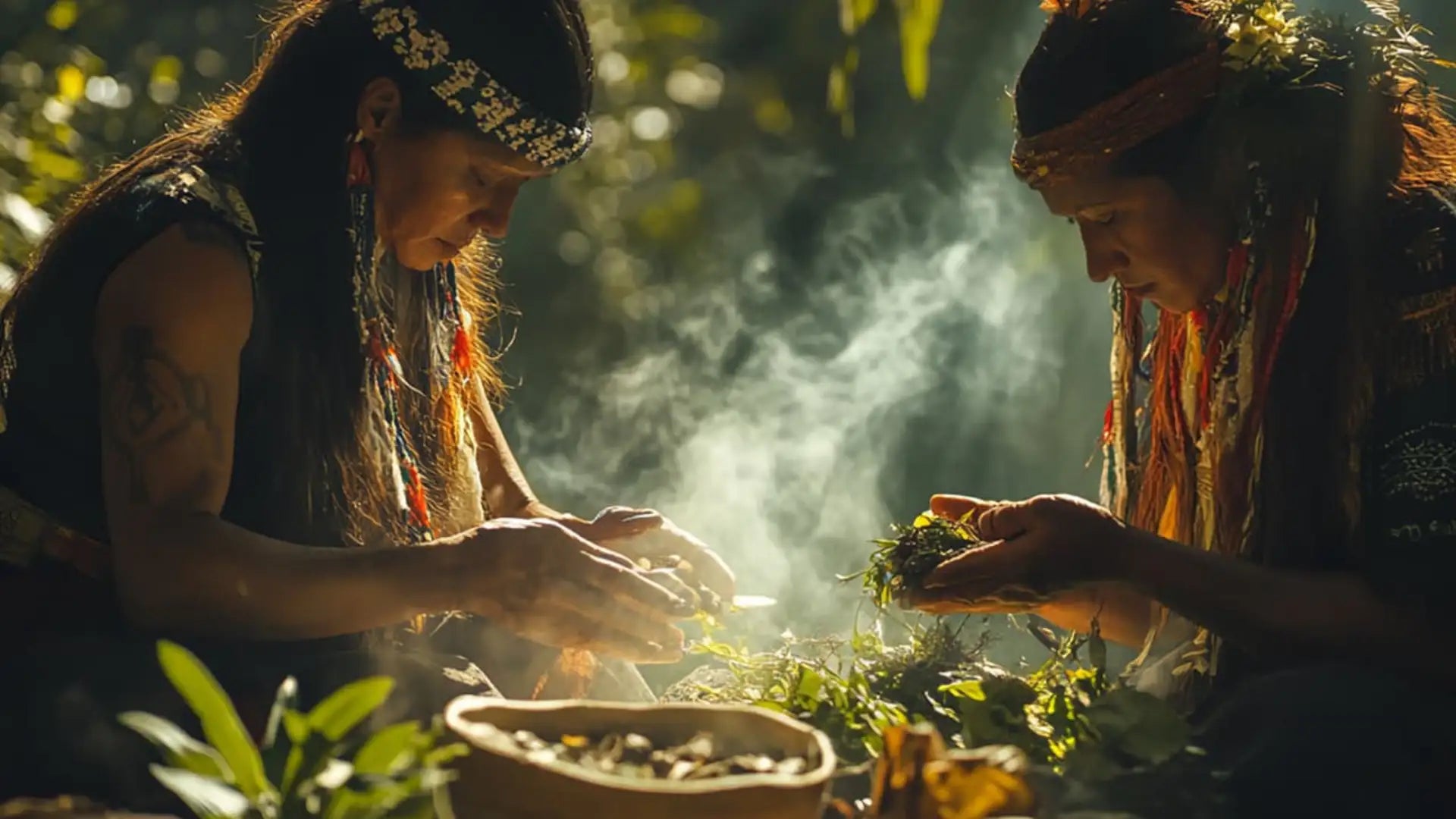
Preparation is a big chunk of kava history, because the method shaped the entire experience. Traditional kava wasn't poured from a bottle. People made it by hand, through a process that demanded time and care, and that labor was part of what gave the ritual its weight.
It all starts with the root and lower stump of the plant. Traditionally, these were harvested, washed, and cleaned. Next, the root had to be broken down so its compounds could release into water. Across the islands, a few methods developed over time:
- Pounding. In many places, the cleaned roots were pounded with a heavy implement against a stone or in a wooden mortar, breaking the fibrous material into a pulp that could be steeped.
- Grinding and grating. Some communities grated or ground the root into a finer material to prepare it for mixing.
- Chewing. In certain older traditions, particularly recorded in parts of the Pacific, the root was chewed and then expelled to break it down before steeping. This labor-intensive method was a recognized part of the historical record, though it gave way to pounding and grinding in many areas over time.
Once the root was broken down, it went into a large communal bowl with water, often the carved wooden tanoa or a similar vessel. People kneaded and worked the mixture by hand, then strained it through fibrous material to remove the solids. What remained was the cloudy, earthy beverage that island communities drank. It has a famously distinctive taste, earthy and a little bitter, which comes with the territory of traditional kava.
Every step here reinforced that kava was something prepared with intention. The time it took, the shared bowl at the center, the communal effort, all of it set the stage for the ritual that followed. Preparation and ceremony weren't separate. They were two halves of the same experience, and together they make up one of the most enduring chapters of the history of kava.
Traditional Kava Rituals and Their Meaning
If preparation set the stage, the ritual was the performance. Traditional kava rituals turned the act of drinking into a structured, meaningful occasion, and these customs are among the most fascinating parts of kava history. Specifics varied by island, but several elements showed up again and again.
The Communal Bowl at the Center
The single shared bowl was the literal and symbolic heart of the ceremony. Instead of pouring individual servings from separate containers, the community prepared kava in one vessel and served everyone from it. That reinforced unity and shared participation. To drink from the same bowl was to take part in something together.
Gestures of Respect
Many traditional kava rituals included specific gestures that signaled respect and intention. In several cultures, a clap of cupped hands before or after receiving the cup was customary. Words of thanks, a measured pace, an orderly approach to serving, all of it was part of the etiquette. None of it was empty formality. Each gesture communicated humility, gratitude, and a nod to the occasion's importance.
Order and Social Recognition
Serving order often carried meaning. In formal ceremonies, honored guests, chiefs, or elders might receive their cup first, reflecting their standing within the community. That made the ritual a quiet expression of social structure, a way of recognizing relationships and roles without anyone needing to say a word.
Ceremony for the Significant Moments
Kava ceremonies marked the milestones of island life. They welcomed visitors and dignitaries, sealed agreements between groups, accompanied weddings and funerals, and opened gatherings of consequence. Kava on the table signaled that a moment mattered. For everyday rest, the customs ran lighter, though the same spirit of slowing down and sharing stayed put. Want to see how botanicals like kava have been studied and documented? The NCCIH kava fact sheet offers a reference-grade summary maintained by the National Institutes of Health.
Put these rituals together and you see that kava was never about the effects of the drink alone. It was about how people came together, honored one another, and marked the rhythm of their shared lives. The ceremony gave the root its deeper meaning, and that meaning is a big part of why kava history feels so rich.
When the World Met Kava: Explorers and Early Records
For most of its history, kava stayed within the South Pacific. That changed as European explorers reached the islands. Some of the most famous early encounters came during the voyages of Captain James Cook in the late eighteenth century, when members of his expeditions observed and documented kava preparation and ceremony. Their written accounts introduced the practice to a wider world and added a documented layer to a tradition that had, until then, lived mostly in oral memory and daily practice.
Outsiders changed the story of kava in complicated ways. On one hand, written records and botanical descriptions helped the plant become known beyond the Pacific, eventually drawing scientific interest in its properties. On the other, the colonial era disrupted many island customs, and at various points outside authorities and missionaries discouraged or restricted traditional practices, kava use among them, in parts of the region. The tradition proved resilient. Its path through this period was anything but smooth.
Over the following centuries, kava traveled further. Botanists studied the plant, and curiosity about its calming reputation spread. The same plant that Pacific voyagers had carried island to island eventually found its way into gardens, laboratories, and markets far from home. Through all of that movement, though, the cultural center of gravity stayed where it began. The islands of the South Pacific are still the heart of kava origins, and the traditions born there continue to define what the drink means. How that heritage evolved into the global, modern kava scene is a chapter all its own, separate from the deep timeline we're tracing here.
What the Long Kava History Timeline Teaches Us
Step back from the details and the sweep of kava history offers a few lessons that still land. First, patience. Everything about traditional kava, from the slow-growing plant to the labor of preparation to the unhurried pace of the ceremony, ran against the rush of modern life. The root rewarded time and care, and the people who used it built that patience into the culture around it.
Second, connection. From its earliest chapters, kava was a communal drink. People prepared it in a shared bowl, served it with gestures of respect, and used it to bring folks together at the moments that mattered. In many ways, the history of kava is a history of gathering. That thread holds remarkably steady across thousands of years and dozens of island cultures.
Third, humility about the plant itself. Island traditions treated kava with seriousness and respect, approaching it thoughtfully rather than carelessly. That spirit carries over well today. Many adults enjoy kava for relaxation, but it is not risk-free, and honoring it means being straight about safety. Kava is for adults 21 and over and not for anyone pregnant or breastfeeding. It has been associated in rare cases with liver effects, which is why the U.S. Food and Drug Administration issued a consumer advisory; you can review the agency's dietary supplement information for context. It should never be combined with alcohol, and because both kava and mitragynine are calming, it should not be paired with driving, operating machinery, or swimming. Anyone with a liver condition or taking medication should speak with a healthcare provider first. Treating the root with that kind of care carries forward an attitude island cultures held for centuries.
A Modern Echo of an Ancient Pour
At GÜD Tonics, we think a lot about the long lineage behind every bottle we make. Our herbal elixirs blend premium kava extract with mitragynine (MIT) from the kratom leaf and botanicals, crafted for calm and clarity without alcohol and without a crash. The format is modern, poured over ice and ready in seconds rather than pounded by hand. But the intention behind it reaches back to the bowl and the gathering. We think of our drinks as a contemporary echo of a very old practice, made for adults 21 and over who want to slow down and feel present.
We also believe the best way to honor a heritage this deep is to be straight about what we make and who it's for. That means clear ingredients, plain safety guidance, and respect for the tradition that gave kava its meaning in the first place. If the long story of the root has you curious to taste a modern take, you can explore the full GÜD Tonics collection and find a flavor that fits your moment, whether that's the tropical TropiColada or the newest pour, Pink Sunset. Want a closer feel for traditional, unflavored kava? Our Raw Kava Extract Powder brings you nearer to the root's heritage form.
Final Thoughts
Kava's history is one of the longer and richer stories you'll find behind any drink. From its botanical cradle in the volcanic islands of the South Pacific to its journey across the ocean in voyaging canoes, from the labor of pounding the root to the careful gestures of the ceremonial bowl, kava has carried meaning for thousands of years. It was a drink of welcome, of agreement, of rest, of community, and the traditions built around it reflect cultures that valued patience, respect, and connection.
Knowing kava origins and the rituals that shaped the tradition does more than satisfy curiosity. It deepens the experience of the drink itself. When you know the root in your glass descends from a practice this old and this thoughtful, a quiet pour becomes a small link in a very long chain. Approach it with the same care the islands always have, enjoy it responsibly, and you join something that has been bringing people serenity for millennia.
Frequently Asked Questions
How old is kava and where does its history begin?
Kava history begins in the islands of the South Pacific, where the root of the Piper methysticum plant has been cultivated and consumed for an estimated three thousand years or more, with some traditions putting it older still. The practice ties closely to the great Pacific voyaging cultures, who carried the plant between islands as they settled the region. Since the tradition predates written records there, much of its earliest history survives through oral tradition and cultural practice.
What were the kava origins across different islands?
Kava origins are shared across the South Pacific but took on local character in each island group. In Fiji it goes by yaqona and holds a central ceremonial role; Vanuatu counts as a heartland of kava with many varieties; and in Tonga and Samoa kava carried strong ceremonial weight tied to chiefs and formal gatherings. Despite these differences, the root served a remarkably consistent purpose everywhere: bringing people together and marking important occasions.
How was kava traditionally prepared?
Traditionally, kava was made by harvesting and cleaning the root, then breaking it down by pounding, grinding, or in some older customs chewing it. The prepared root went into a large communal bowl with water, got kneaded by hand, and was strained through fibrous material to remove the solids. What came out was a cloudy, earthy drink served from the shared bowl. The whole process took time and care, which was part of what gave the ritual its meaning.
What did traditional kava rituals involve?
Traditional kava rituals centered on a single communal bowl, gestures of respect like clapping cupped hands or offering thanks, and a serving order that often recognized chiefs, elders, or honored guests first. Ceremonies marked welcomes, agreements, weddings, funerals, and significant gatherings. These customs turned drinking kava into a structured, meaningful occasion rather than a casual act, which is why they remain such a notable part of the tradition.
Is kava safe to drink today?
Many adults enjoy kava for relaxation, but it is not risk-free. It is for adults 21 and over and not for anyone pregnant or breastfeeding. Kava has been associated in rare cases with liver effects, which prompted an FDA consumer advisory, so anyone with a liver condition should talk to a doctor first. It should never be mixed with alcohol, and because it is calming, you should not drive or operate machinery after drinking it. Check with your healthcare provider if you take any medication.