The drink in your hand at a party says a lot about you. For generations, that drink was almost always alcoholic, and the question "what are you having?" had a narrow set of answers. That's changing fast. Social beverages, the things we pour, clink, and sip together when we gather, are going through one of the biggest shifts in living memory. The options on the table now look nothing like they did even a decade ago.
This guide traces that change. We'll look at how the drinks we share have evolved, why so many people are reaching for something other than wine or beer at gatherings, and how a chilled bottle of kava fits into the new picture. We're mapping a cultural moment here, not handing you a history of cocktails or a chemistry lesson. By the end you'll have a clear sense of where social drinking is headed and why the choices feel so different now.
One note before we go further. GÜD Tonics contain kava and mitragynine (MIT, from the kratom leaf), so they are for adults 21 and over only, never for anyone who is pregnant or breastfeeding, and never to be mixed with alcohol or enjoyed before driving. Kava carries an FDA consumer advisory linking it to rare liver effects, which we will address openly. These tonics are a feel-good drink to share, not a medicine, and nothing here is a treatment for any condition. With that clear, here is how the drink experience is being redefined.
Table of Contents
- TL;DR
- What We Mean by Social Beverages
- A Short Story of How Social Drinks Evolved
- Why the Shift Toward Alcohol-Free Social Drinks Is Accelerating
- What People Actually Want From Social Beverages Now
- How GÜD Tonics Redefines the Drink Experience
- Hosting With the New Generation of Social Drinks
- Enjoying Social Beverages Responsibly
- Sharing the Moment With GÜD Tonics
- Final Thoughts
- Frequently Asked Questions
TL;DR
- Social beverages are the drinks we share when we gather, and the category is moving away from alcohol being the automatic default.
- The drinks people raise together have evolved through several eras, from spirits and beer to soda and seltzer, and now toward feel-good, alcohol-free options.
- The sober-curious movement, a focus on wellness, and a desire to feel present are pushing the rise of alcohol-free social drinks.
- People want a drink that tastes great, looks the part in a glass, and offers a genuine experience rather than just sweetness or bubbles.
- GÜD Tonics blend premium kava extract with mitragynine (MIT) and botanicals to deliver calm, a feel-good lift, and clean energy without a crash, all alcohol-free.
- Responsible enjoyment is part of this new culture: honest labeling, the FDA liver advisory, no alcohol pairing, and adults 21 and over only.
What We Mean by Social Beverages
Before tracing the evolution, let's pin down the term. Social beverages are the drinks we reach for in the company of others: the bottle passed around a backyard gathering, the glass raised in a toast, the can cracked open at a tailgate, the round ordered when friends sit down together. What makes a drink social is not its ingredients but its role. It's the thing that gives our hands something to hold and our gatherings a shared ritual.
That definition matters. It explains why this category is so culturally loaded. A social drink is rarely about thirst. It's about belonging, celebration, winding down after a long week, and marking an occasion as different from an ordinary day. For a long time, alcohol owned that role by default, which is why questioning it can feel surprisingly significant. Change what fills the glass and you change the texture of the moment itself.
Here's the interesting part. The role has stayed constant while the contents keep changing. Humans have always wanted something to share when they come together. What that something is has shifted across centuries, and it's shifting again right now. Once you understand social beverages as a role rather than a single product, it's easy to see why a bottled kava tonic can step into a space once dominated entirely by wine and beer.
A Short Story of How Social Drinks Evolved
The drinks we gather around have never stood still. Trace how social drinks evolved over time and the current moment feels less like a sudden break and more like the next logical step in a long, ongoing change.
The Long Reign of Fermented Drinks
For most of recorded history, the default social drink was something fermented. Beer, wine, and later distilled spirits were woven into harvest festivals, religious rites, weddings, and everyday meals across countless cultures. These drinks were social technology as much as refreshment, lowering inhibitions and easing conversation in settings where people needed to connect. That deep history is why alcohol still feels like the assumed answer at so many gatherings, even as the assumption loosens.
The Soft Drink and Soda Fountain Era
Then came carbonated soft drinks, and the social table had a new option. Soda fountains became gathering spots in their own right, and bottled sodas gave people, including those who didn't drink alcohol, something festive to hold. For the first time, a sweet, fizzy, non-alcoholic drink could feel celebratory rather than like a consolation prize. The trade-off was sugar. Over time that became its own concern, which set the stage for the next wave.
The Seltzer and Sparkling Water Wave
More recently, sparkling water and flavored seltzers surged as people looked to cut sugar without giving up bubbles and flavor. This wave proved something important. A drink could be clean, light, and still feel social. Seltzer at a party stopped being unusual and started being normal. That cultural shift quietly prepared the ground for a bigger idea: an alcohol-free choice could be the choice, not the fallback. That's exactly the door the newest social beverages walked through.
The Functional and Feel-Good Turn
The current chapter goes a step further than swapping out alcohol or sugar. The newest social drinks aim to offer an experience of their own, a sense of calm, a gentle lift, or a feel-good mood, without relying on alcohol to deliver it. Kava tonics, adaptogen sodas, botanical drinks. They all live in this space. This is the turn that makes the present moment feel new. People aren't only removing something from the glass, they're looking for a positive experience to put in its place.
Why the Shift Toward Alcohol-Free Social Drinks Is Accelerating
Trends don't gather speed without strong reasons behind them. Several cultural currents are converging right now to make alcohol-free social drinks more appealing than ever, and together they explain why the change feels so quick.
The Sober-Curious Movement
A growing number of people are rethinking how much, and whether, they drink. The sober-curious movement is less about strict abstinence and more about choosing intentionally: drinking less, taking breaks, or skipping alcohol entirely while still showing up to be social. That mindset creates real demand for a drink you can hold at a gathering that's enjoyable and entirely alcohol-free. No more awkwardness of being the only person without something interesting in hand.
A Wellness-First Mindset
Wellness has moved from a niche interest to a mainstream value, and that shows up in the glass. Many people now factor in how a drink will make them feel the next morning, and the day after, when they decide what to pour tonight. Avoiding a hangover, sleeping better, waking up clear: all of it pushes people toward options that leave them feeling good rather than depleted. As resources like the NIH overview of kava make clear, plant-based drinks come with their own real considerations. Still, the broader appetite for choices that align with wellbeing is unmistakable.
The Desire to Stay Present
There's also a quieter, more emotional driver. Plenty of people just want to remember their gatherings, follow the conversation, and stay fully themselves while they socialize. A drink that offers a relaxed, sociable feeling without dulling the evening fits that desire well. Staying present has become its own kind of luxury, and social beverages built around clarity rather than intoxication speak directly to it.
Inclusivity at the Table
Hosts are thinking more about everyone at the gathering. Designated drivers, people taking medication, those in recovery, expectant parents, anyone simply not drinking that night. They all deserve more than water or a sugary soda. Offering a good alcohol-free option is increasingly seen as basic hospitality. That inclusive instinct is broadening the market and normalizing the idea that the best drink in the room doesn't have to contain alcohol.
What People Actually Want From Social Beverages Now
Knowing the trend is one thing. Understanding what a modern drinker wants is what reveals why some of these new options succeed while others fade. A few expectations come up again and again.
The first is flavor. A social drink has to taste good enough that you'd choose it on merit, not because it lacks alcohol. The era of bland non-alcoholic options as an afterthought is over. People expect complexity, balance, and a profile worth savoring, the kind of taste that makes you want a second one for the right reasons.
The second is presence in the glass. Part of the social ritual is visual and tactile: a chilled bottle, ice in a nice glass, a color that looks like it belongs at the celebration. A drink that looks the part helps the person holding it feel included rather than singled out. Sharing a drink is partly about the object itself, and the newest social beverages take that seriously.
The third is a real experience. This is the defining expectation of the current era. People want their drink to do something, to offer a feeling of calm, a subtle lift, or a feel-good mood that makes the gathering better. The broad public interest in botanicals reflected by the NIH Office of Dietary Supplements shows how mainstream this curiosity has become. That hunger for an experience, not just a beverage, is precisely the gap functional social beverages aim to fill, and it's where a thoughtfully made kava tonic finds its place.
How GÜD Tonics Redefines the Drink Experience
Plenty of brands talk about reinventing the drink in your hand. What sets GÜD apart is a specific recipe and a clear philosophy, both built around making a shared moment feel good without alcohol.
Start with the blend. Each GÜD Tonic pairs premium kava extract with mitragynine (MIT, from the kratom leaf) and a thoughtful selection of botanicals. Kava brings the calm. MIT adds the ingredient many people credit with a gentle, feel-good lift. The botanicals round out flavor and balance. The result is designed to feel relaxed yet upbeat, a more layered experience than a plain sweet soda or a fizzy water. It's built for the role social drinks have always played: helping people unwind and connect.
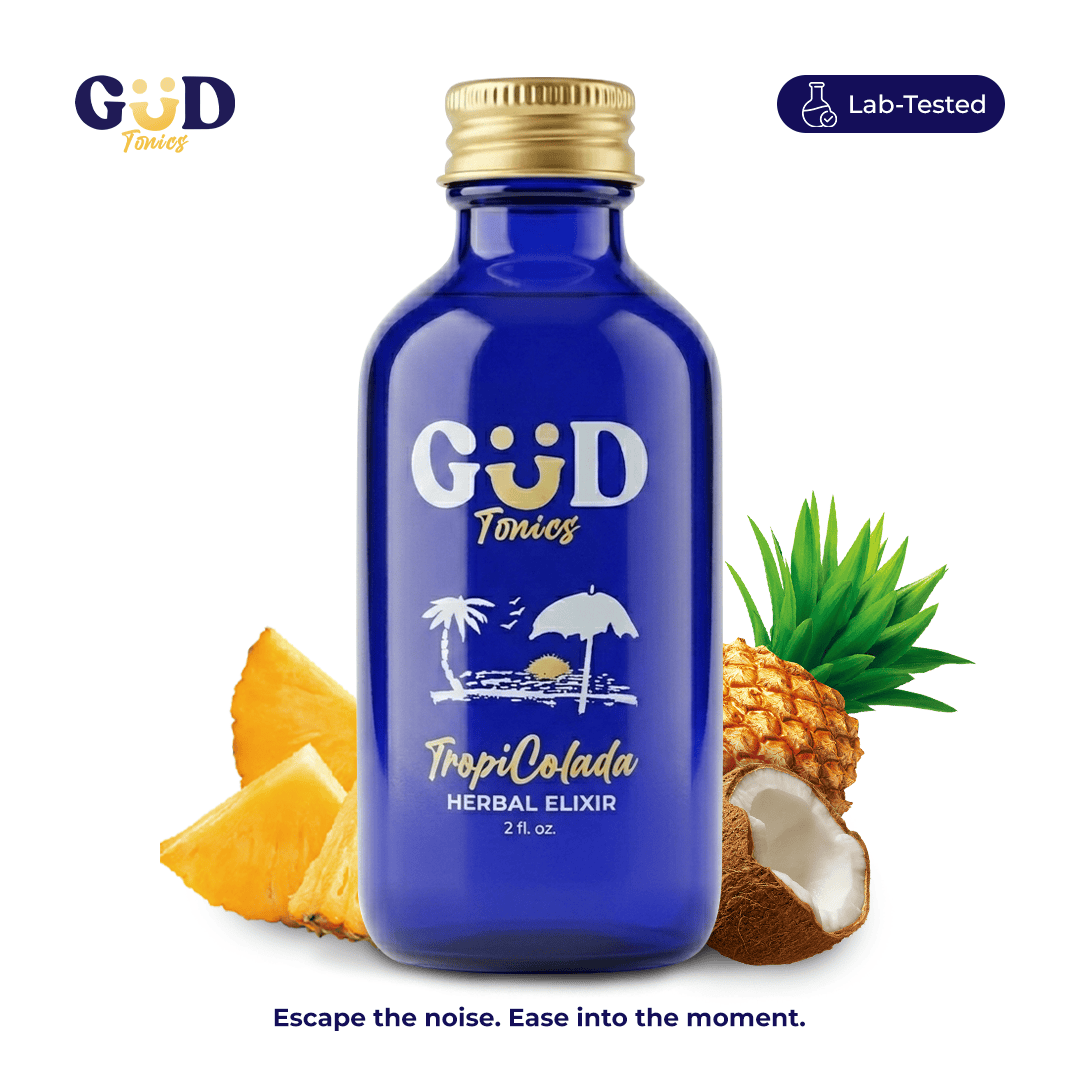
Flavor is the second pillar, because a social drink lives or dies on taste. GÜD leans into bright, crowd-pleasing profiles rather than the earthiness people once associated with kava. The crisp lime Baja Bliss tonic and the tropical, piña colada style TropiColada blend are made to be poured over ice and actually looked forward to. Served chilled in a real glass, they hold their own next to any cocktail on the table. That's exactly what a modern drinker expects.
Consistency and convenience complete the picture. Traditional kava varies batch to batch, but a carefully formulated tonic delivers the same character every time, so you know what you're handing a friend. Effects generally begin within about 15 to 30 minutes, and there's no preparation beyond chilling and pouring. That reliability and ease are what let a centuries-old root step confidently into the modern role of a shared, alcohol-free social drink.
Hosting With the New Generation of Social Drinks
The shift in social beverages isn't only changing what individuals choose. It's changing how thoughtful hosts plan a gathering. Building a drink menu that welcomes everyone has become part of good hospitality, and the new options make it easier than ever.
Treat alcohol-free choices as headline offerings rather than backups. Instead of one lonely bottle of water for the non-drinkers, set out a chilled selection of feel-good tonics with proper glasses, ice, and a garnish or two. When the alcohol-free option looks and feels as considered as anything else on the table, no one feels left out, and conversation flows just as freely.
Variety helps too. People arrive at a gathering in different moods and with different plans for the night, so offering a small range lets each guest match the drink to their moment. Something crisp, something tropical, something a little more mellow. A GÜD Tonics flavor sampler makes that easy for a host, giving you a few distinct profiles to put out so guests can pick what suits them. Pour them over ice, keep them cold, let people choose. That sense of choice is a big part of what makes the new social drinks feel generous rather than restrictive.
Enjoying Social Beverages Responsibly
A good future for social drinking has to be built on honesty, because a drink people trust is one that tells them the whole story. Responsibility is not a buzzkill here. It is part of what makes this new culture worth embracing.
It starts with the liver conversation. Kava has been associated with rare liver effects, and the US Food and Drug Administration has issued a consumer advisory on the subject. The FDA dietary supplements resource is the place to read that guidance directly. A trustworthy product states this plainly, advises avoiding alcohol entirely, and encourages anyone with a liver condition or who takes medication to talk with a healthcare provider before sipping. Hiding the risk would undermine the very trust this category depends on.
How you talk about the experience matters just as much. Kava and MIT are calming ingredients, not medicines, so the right way to describe a feel-good tonic is to describe the experience people enjoy without claiming it treats, cures, or prevents anything. That means clear limits, too: adults 21 and over only, never for anyone pregnant or breastfeeding, never combined with alcohol, and never before driving, swimming, or anything that needs full alertness. Because both kava and MIT are calming, it is wise to know how a tonic affects you before you have plans that require sharp focus. Enjoyed with those guardrails in mind, the new generation of social beverages can be both fun and responsible.
Sharing the Moment With GÜD Tonics
If the evolution of social beverages is about feeling good, staying present, and including everyone, GÜD Tonics were made for that exact moment. Each one blends premium kava extract with mitragynine (MIT) and botanicals to deliver calm, a gentle lift, and clean energy without a crash, all alcohol-free and ready to enjoy chilled over ice. They're built to be the drink you actually want to raise with friends, not the compromise you settle for.
Finding your match is the fun part. Whether you gravitate toward crisp citrus, tropical sweetness, or the newest Pink Sunset flavor, there's a profile for the way you like to gather. Ready to bring the new generation of social drinks to your next get-together? Browse the full GÜD Tonics lineup and stock the fridge with something worth sharing.
A final honest reminder. GÜD Tonics are for adults 21 and over, are not for anyone pregnant or breastfeeding, and should never be combined with alcohol or enjoyed before driving. Kava carries an FDA consumer advisory linking it to rare liver effects, so check with your healthcare provider first if you have a liver condition or take medication. This is a feel-good drink to share responsibly, not a medicine or a treatment for anything.
Final Thoughts
The drink we share when we come together has never been static, and right now it's changing in one of the most meaningful ways yet. Social beverages are moving past the old assumption that the glass has to hold alcohol. In its place, a richer set of choices is emerging, drinks built around flavor, presence, and a genuine feel-good experience.
GÜD Tonics sit comfortably in that shift, pairing premium kava extract with mitragynine and botanicals to make a shared moment relaxed, upbeat, and entirely alcohol-free. The most encouraging part? How natural the change feels. People still want something good to hold when they gather, and now that something can leave them clear-headed, included, and feeling great the next morning. Pour it over ice, share it with the right people, and enjoy being part of where social drinking is going.
Frequently Asked Questions
What counts as a social beverage?
A social beverage is any drink we reach for in the company of others, from a toast at a celebration to a round shared at a backyard gathering. What makes it social is its role in connecting people, not its ingredients. That role has historically been filled by alcohol, but a growing range of alcohol-free options now fills it just as well.
Are alcohol-free social drinks actually enjoyable?
They can be excellent. The newest social drinks are designed to taste great, look the part in a glass, and offer a real feel-good experience rather than acting as a bland substitute. A well-made kava tonic served chilled over ice holds its own at any gathering. That's a big reason the category is growing so quickly.
How are GÜD Tonics different from soda or seltzer?
Soda and seltzer mainly offer sweetness or bubbles. GÜD Tonics blend premium kava extract with mitragynine (MIT) and botanicals to offer a calming, feel-good experience alongside flavor. They're meant to play the role a social drink plays, helping you relax and connect, without alcohol. A feel-good drink, not a medicine.
Can I serve GÜD Tonics at a party with people who drink alcohol?
Yes, they make a great alcohol-free option to offer alongside other drinks so everyone has something good to hold. Just never mix a tonic with alcohol in the same glass or the same night, and remember they are for adults 21 and over only, not for anyone pregnant or breastfeeding.
Is it safe to drink kava-based social beverages?
Kava has a long history of traditional use but carries real safety considerations, including an FDA consumer advisory linking it to rare liver effects. Enjoy responsibly, never with alcohol, never before driving, and only as an adult 21 or over. Anyone pregnant, breastfeeding, with a liver condition, or taking medication should consult a healthcare provider first.