Listen to this page
Read by an AI voice. The full article is read aloud, top to bottom, including the help lines. The two tables and the two images are on the page.
Help first.
If someone is difficult to wake, is not breathing normally, is having a seizure, or is unresponsive, call 911.
1-800-222-1222. Poison Control, around the clock, for a reaction that worries you after any kratom or kava product, ours included.
988. The crisis lifeline, anywhere in the United States, by call or text.
Treatment. The federal treatment locator, findtreatment.gov.
Kratom is not a treatment for opioid use disorder, or for opioid or kratom withdrawal, and neither is any kava drink, ours included. Buprenorphine, methadone and naltrexone are the medicines with the evidence base for opioid use disorder, prescribed by a clinician. Clinical questions belong with a clinician who can see you. Not with us.
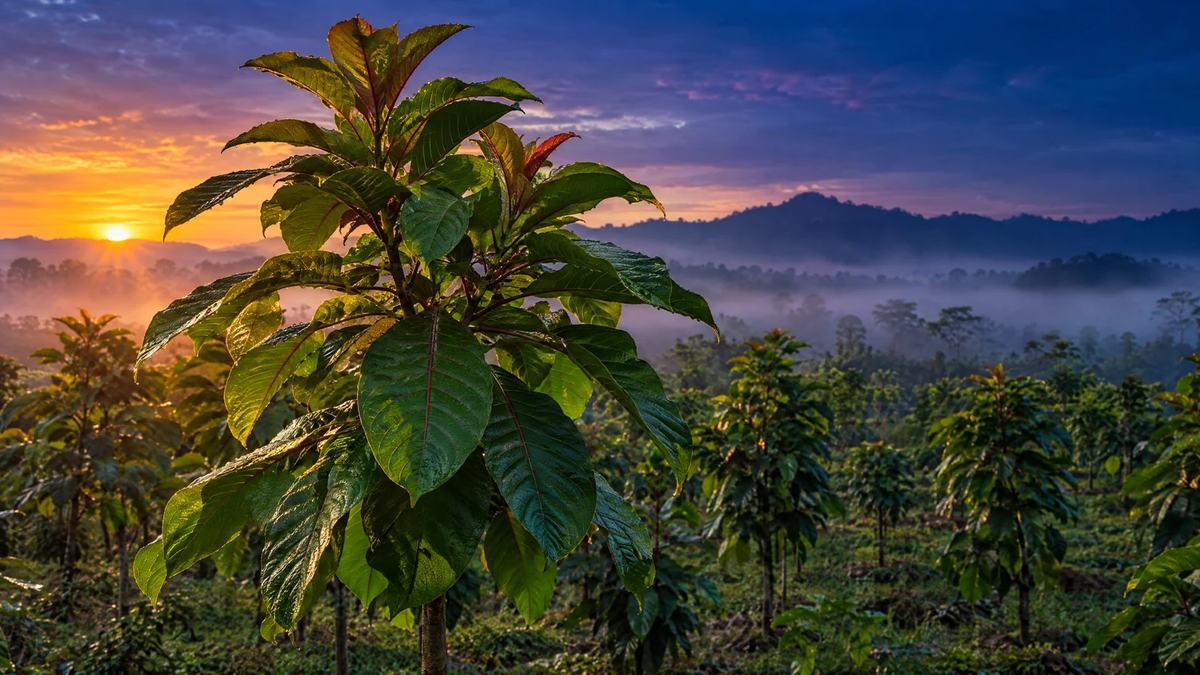
Is kratom synthetic? The plant is not. Kratom is a tree, and its main alkaloid, mitragynine, is found in the leaf. A bottle is a different question. What is inside any kratom product depends on how it was made, and only a test can show it. Since 26 August 2026, three compounds that the DEA describes as made from kratom alkaloids by chemistry have been temporarily in federal Schedule I.
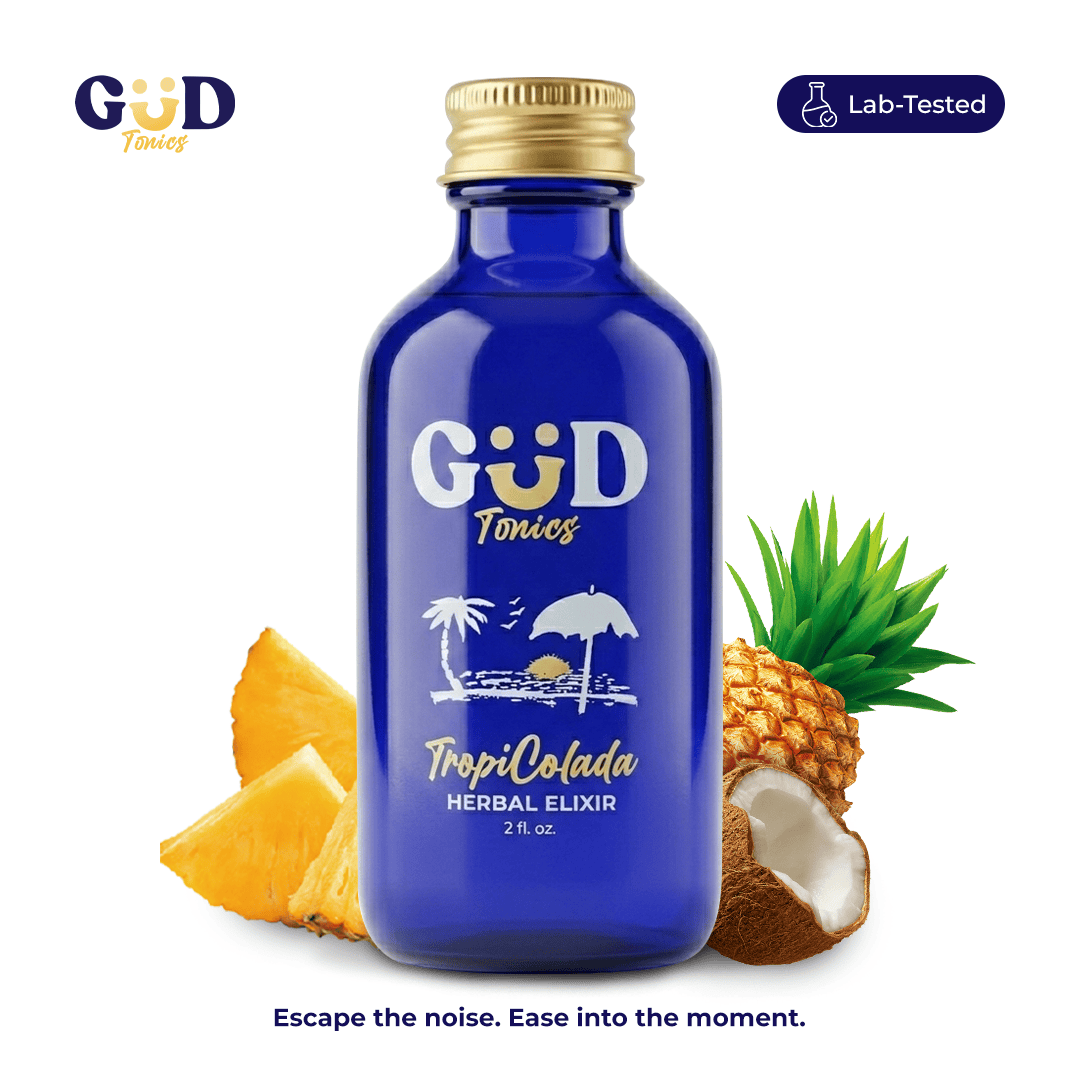
This guide explains four label words, natural, extract, semi-synthetic and synthetic, as agencies and state laws use them. We make kava and kratom drinks, so it also covers drinks, shots and our own certificates.
Checked 7 October 2026. This page covers what is natural in kratom, what the label words mean in law, what is scheduled or only proposed, and what labels and certificates can tell you.
Who wrote it. GUD Tonics. We make the kava and kratom drinks in our shop, so we have an interest here.
What our own documents show. Our three drink certificates cover one lot, 082026, reported on 6 August 2026. They test kratom alkaloids, kavalactones and density only, with no panel for the derivative compounds described below and no heavy metals or microbial results. The minor kratom alkaloid the DEA proposes to schedule above a threshold reads "<LOQ" at a limit of 1.28 mg per bottle (1.29 mg on one certificate). That is above the proposed federal line of 1.00 mg "in the article", which we read as per bottle, so our certificates cannot show which side of that line our bottles are on. Our product pages say "No synthetics, ever." and "third-party lab-tested every batch", and our posted certificates do not cover either claim.
Next review 7 January 2027, or the day any source above changes.
Is kratom synthetic? The short answer
No, not the plant. FDA calls kratom "a tropical tree (Mitragyna speciosa) that is native to Southeast Asia". The DEA's fact sheet agrees: "Kratom is a tropical tree native to Southeast Asia". NIDA says the word refers to both "Mitragyna speciosa, a tree native to Southeast Asia, and to products derived from its leaves that are marketed as herbal supplements".
That second half is the catch. On a shelf, "kratom" can mean dried leaf, a leaf extract, or a product built around one alkaloid concentrated far past what the leaf holds. FDA's update of 13 July 2026, about the July notices, gives their stated aim: "The agencies stated that these actions are intended to target concentrated and synthetic 7-OH products and are not intended to apply to natural kratom leaf containing only naturally occurring trace levels of 7-OH".
Natural is not the same as harmless, though. FDA "has warned consumers not to use kratom because of the risk of serious adverse events, including liver toxicity, seizures, and substance use disorder (SUD)".
So the honest answer has two parts. The leaf is natural. What is in a bottle depends on how it was made, only testing can show it, and a word on a label, ours included, is not a test.
What is natural in the kratom leaf
Mitragynine is the main alkaloid. FDA says kratom contains "over 50 alkaloids". The DEA's notice of 6 July 2026 names "mitragynine (major) and 7-hydroxymitragynine (minor)". FDA's scientific assessment, released in July 2025, says mitragynine "accounts for about 66% of the total alkaloid content of kratom and less than 2% of dried leaf content by weight".
The minor alkaloid is natural too, in small amounts. We call it the minor alkaloid on this page and use its name only inside quotes from agencies and laws. FDA's kratom page calls it "a naturally occurring alkaloid in the kratom plant, but only a minor constituent that comprises less than 2% of the total alkaloid content in natural kratom leaves". FDA's assessment says that, typically, it "occurs in botanical kratom in amounts no more than ~.01-.04 percent by dry weight". That is one to four hundredths of one percent of the dried leaf.
It also forms in the body. NIDA: "Mitragynine is found in kratom leaves and breaks down into 7-OH in the body when digested".
A 2019 study in the journal ACS Central Science looked at that conversion. It was not done in people. In lab tests on mouse and human liver preparations, its authors found that mitragynine was converted into the minor alkaloid by enzymes called CYP3A, and they showed the same conversion in living mice. They wrote that species differences complicate "the translation of the present results to humans". Two disclosures belong beside it. The American Kratom Association helped fund the work, alongside the National Institute on Drug Abuse and the Hope for Depression Research Foundation. And five of the authors are "named as inventors on patent applications related to mitragynine analogs".
One molecule, two ways to get it
Here natural and synthetic stop being opposites. The same DEA notice says "7-hydroxymitragynine can be synthesized from mitragynine through a one-step chemical reaction". And then: "Despite the different origins of 7-hydroxymitragynine, the chemical structures of synthetic and naturally occurring 7-hydroxymitragynine are identical".
So the molecule cannot tell you where it came from. The amount is the clue. FDA's assessment says the high levels in some products are "likely synthetically derived through oxidate chemical conversion of mitragynine isolates or kratom extracts", because pulling that much straight from the plant "would simply be unfeasible economically".
Agencies do not share one word for these products. The DEA's press release of 1 July 2026 says "semi-synthetic 7-OH" in one line and "synthetic 7-OH products" in another. CDC writes "semisynthetic formulations". FDA called the compound "a concentrated byproduct of the kratom plant".

Extract, semi-synthetic, synthetic: what the words mean in law
Colorado wrote the clearest definitions we found. Senate Bill 25-072, signed on 29 May 2025, added a kratom section, 6-1-740, to the state's statutes. The bill prints new law in capitals; we quote it as printed.
| Term | Colorado's definition, as printed |
|---|---|
| Kratom leaf extract. | "THE MATERIAL EXTRACTED FROM A KRATOM LEAF THROUGH THE APPLICATION OF A SOLVENT CONSISTING OF WATER, ETHANOL, FOOD-GRADE CARBON DIOXIDE, OR ANOTHER SOLVENT ALLOWED BY FEDERAL OR STATE LAW TO BE USED IN THE MANUFACTURING OF A FOOD INGREDIENT". |
| Semi-synthesized alkaloid. | "AN ALKALOID OR ALKALOID DERIVATIVE CONTAINED IN A KRATOM LEAF EXTRACT THAT HAS BEEN EXPOSED TO CHEMICALS OR PROCESSES THAT WOULD CONFER A STRUCTURAL CHANGE IN THE ALKALOIDS, SUCH AS OXIDATION, REDUCTION, AND RING OPENING AND CLOSING, RESULTING IN MATERIAL THAT HAS BEEN CHEMICALLY ALTERED". |
| Synthesized alkaloid. | "AN ALKALOID OR ALKALOID DERIVATIVE OF THE KRATOM LEAF THAT HAS BEEN CREATED BY CHEMICAL SYNTHESIS OR BIOSYNTHETIC MEANS, INCLUDING FERMENTATION, RECOMBINANT TECHNIQUES, YEAST- DERIVED TECHNIQUES, AND ENZYMATIC TECHNIQUES, RATHER THAN BY TRADITIONAL FOOD PREPARATION TECHNIQUES SUCH AS HEATING OR EXTRACTING". |
Put plainly: an extract draws out what the leaf holds, with a food-allowed solvent. Semi-synthetic means those alkaloids were then chemically changed, oxidation being the statute's first example. Synthesized means built by chemistry or biosynthesis instead. Colorado's definition of a "KRATOM PRODUCT" ends with "DOES NOT INCLUDE ANY SYNTHESIZED ALKALOIDS OR SEMI-SYNTHESIZED ALKALOIDS".
Whether an extract stays plain depends on the process. Our product pages say our drinks are "Made from real kratom leaves using a natural extraction process that preserves the full-spectrum alkaloids". They do not name the solvent, so you cannot check that sentence against Colorado's definition from our pages.
Three compounds the DEA calls synthetic are now temporarily in Schedule I
On 26 August 2026, a DEA temporary order placed mitragynine pseudoindoxyl, MGM-15 and MGM-16 in Schedule I. Its dates line: "This temporary order is effective August 26, 2026, until August 26, 2028".
The order is direct about origin: "Unlike the indole alkaloids mitragynine and 7-hydroxymitragynine, which are naturally occurring in the plant, mitragynine pseudoindoxyl, MGM-15, and MGM-16 are produced through synthetic modifications of purified mitragynine isolates or 7-hydroxymitragynine". It calls all three "synthetic derivatives" in one passage, and pseudoindoxyl and MGM-15 "semisynthetic opioids" in another. Such products, it says, "are commonly sold in different forms such as powders, tablets, and liquid shots".
Pseudoindoxyl comes with an asterisk. The Justice Department's announcement of 25 August 2026, which calls it MGPI, says "The published scientific literature has not established MGPI as a naturally occurring kratom alkaloid", while "scientific and analytical questions remain" about incidental trace levels in some botanical products. It said it will use enforcement discretion when only incidental traces are confirmed in a product otherwise consistent with botanical kratom, then added: "This policy does not create a legal exemption and does not change MGPI's status as a schedule I controlled substance". Fair summary: pseudoindoxyl is not a leaf ingredient, but not unrelated to the plant either.
The minor alkaloid itself is not federally scheduled. The DEA's notice of 6 July 2026 proposes a threshold. For leaf it is "more than 0.050 percentage of 7-hydroxymitragynine on a dry weight basis". For synthetic products, and for leaf processed into forms "such as extracts, concentrates, processed edibles, or pressed pills", it is more than 0.050 percent by weight or volume "or greater than 1.00 milligram of 7-hydroxymitragynine in the article". That is a proposal. Our Federal Register search on 7 October 2026 found no order, so it is not in force.
| Substance | In the kratom leaf? | What federal documents call it | Federal status, 7 October 2026 |
|---|---|---|---|
| Mitragynine | Yes, the main alkaloid | "major" (DEA notice) | Not controlled. |
| The minor alkaloid | Yes, in small amounts; also formed in the body and made in labs | "minor constituent" (FDA); "semi-synthetic" when concentrated (DEA press release) | Not controlled; threshold proposed 6 July 2026, no order. |
| Mitragynine pseudoindoxyl | Not established as a leaf alkaloid (DOJ); trace questions open | "synthetic derivatives", "semisynthetic opioids" (DEA order) | Schedule I, temporary, 26 Aug 2026 to 26 Aug 2028. |
| MGM-15 | No | "synthetic compounds" (DOJ) | Schedule I, temporary, same dates. |
| MGM-16 | No | "synthetically manufactured for research purposes" (DEA order) | Schedule I, temporary, same dates. |
Drinks and shots are on the agencies' lists
If you came here holding a bottle, this part is about you. The DEA's July notice lists "liquid oral beverages (shots)" among the forms that products built on the minor alkaloid take. FDA's press release of 29 July 2025 said: "In June, the FDA issued warning letters to seven companies for illegally distributing products containing 7-OH, including tablets, gummies, drink mixes and shots". CDC's report of 26 March 2026 describes "a rapidly expanding commercial market of powders, tablets, gummies, and concentrated energy shots".
The DEA and FDA lines concern concentrated or chemically altered products; CDC's describes a market moving away from leaf. None finds that every kratom drink contains those compounds. None is a clean bill of health for drinks, either.
CDC's report of 2 April 2026 comes closer to home. It says "kava and kava-kratom combination products sold in the United States are unregulated and advertised to contain >250 mg kavalactones per serving (30 ml), often with multiple servings per container". Every drink we sell is a kava-kratom combination product. The report found that poison center reports involving both plants reached "30% (61) of all kava reports in 2025". Those are reports, not proof of cause, and CDC notes that "NPDS generic codes do not permit distinction among product types", so the data cannot show whether any involved a bottle like ours.
What the law says about kratom in a drink
FDA. FDA's kratom page, current as of 2 December 2025, says "kratom is not lawfully marketed as a dietary supplement and cannot be lawfully added to conventional foods". The page does not mention beverages by name. Our reading, not FDA's wording, is that a ready-to-drink bottle is a conventional food, so we do not read that sentence as leaving drinks out.
Rhode Island. Rhode Island's kratom statute, in effect since 1 April 2026, bars anyone from preparing, distributing, selling, possessing or advertising "A kratom product that is a conventional food or beverage or labeled as a conventional food or beverage product", or one "containing any synthetic alkaloids". Of the statutes we read for this guide, it is the only one that bans the drink format itself.
California. In a press release of 1 May 2026, the California Department of Public Health said "Kratom and kratom derivatives, including the highly potent compound 7-hydroxymitragynine (7-OH), are illegal to manufacture or sell for consumption in California". It added that these products "are typically sold as beverages, powders, capsules, gummies, or 'energy shots'". That is the department's statement; we did not read the statute behind it.
Our product pages list only two places in California, San Diego and Oceanside, as not available for shipment.
None of these documents treats a drink as a gentler or more lawful way to sell kratom.
What a kratom label has to say, in some states
Several states require alkaloid amounts on the label. Arizona's kratom statute says a processor or retailer may not prepare, distribute, sell or expose for sale "Any kratom-containing product that does not include on its package or label the amount of mitragynine and 7-hydroxymitragynine contained in the product". Colorado requires each retail package to set out "QUANTITATIVE DECLARATIONS OF THE AMOUNT OF MITRAGYNINE AND THE AMOUNT OF 7-HYDROXYMITRAGYNINE PER SERVING OF THE KRATOM PRODUCT". Rhode Island's label rule asks for "The total amount of mitragynine and 7-hydroxymitragynine contained in the kratom product", though Rhode Island bans kratom beverages outright.
Numbers are the point. Adjectives are the risk. The DEA's July notice says products built on the minor alkaloid are "frequently being labeled as 'natural M. speciosa extracts'". The DEA's August order, on semisynthetic compounds marketed as "botanical extracts", warns that the branding "creates a false sense of safety for unknowing consumers who may equate the term 'botanical' with lower risk".
That applies to us too. Our product pages carry the badge "No synthetics, ever". It is a sourcing statement, and the kind of claim this guide tells you not to rely on. They state no milligrams of mitragynine; our certificates do. Our advice: read a kratom label for numbers, not adjectives, ours included.
What to ask for, and what our own certificates show
Colorado's Attorney General issued a public advisory on 13 August 2025 with a checklist for kratom buyers. Two of its lines fit a drink label: "Read the label and know the serving size and servings per container of any kratom product" and "Ask for the COA of the product to confirm the ingredients".
A COA, or certificate of analysis, covers only what the lab looked for. The DEA's order shows why that matters: pseudoindoxyl and the minor alkaloid it forms from are "closely related compounds" that "require specific method and instrumentation for accurate identification". No agency we found tells consumers to ask for a "derivative panel". That is our phrase for a section naming the scheduled compounds, with a result for each.
Here is what ours show. All three drink certificates on our lab results page come from Cora Science, LLC, for lot 082026, reported on 6 August 2026, one sample per drink. The fourth certificate there, for our kava powder, is its manufacturer's. The methods are kratom alkaloids and kavalactones, both by UHPLC-DAD, plus a unit weight test for density. That is all. No derivative panel. No heavy metals, microbial or residual solvent results. Every specification reads "Report Results", so nothing passes or fails, and the lab notes "the results relate only to the specific sample of material or product analyzed".
Mitragynine reads 87.4 to 88.5 mg per bottle. The minor alkaloid reads "<LOQ", below the limit of quantitation, and that limit is 1.28 mg per bottle on two certificates and 1.29 mg on the third. It is not zero. The DEA's proposal also draws a line at 1.00 mg "in the article", which we read as per bottle. A bottle under 1.00 mg and a bottle between 1.00 and 1.28 mg would both print "<LOQ", so our certificates cannot show which side of the proposed line ours are on. That comparison is our arithmetic, not the lab's.

Now set those certificates beside our product pages, which say "No synthetics, ever" and "third-party lab-tested every batch, with results linked right on the page". The certificates did not test for the three scheduled derivatives, so they cannot back the first claim. They cover one lot per drink, so they cannot back the second.
Our New Jersey customer notice already put the honest version in writing: for our bottles, the truthful statement is "pseudoindoxyl not looked for, and not added". It also says the lab that tests our drinks now runs a panel naming all three scheduled compounds, and that our drink certificates of 6 August 2026 predate it. Nothing on this page says our bottles, or any product from the companies behind us, are free of those compounds.
One more document belongs here. Our drink certificates name Empowered Creations, LLC as the client. The same lab's certificate for the same client, dated 20 August 2026, covers King K Platinum, lot 12242, sold under another brand in our group. It carried a derivative panel and reported mitragynine pseudoindoxyl at 2.59 ug/g, with MGM-15 and MGM-16 not detected. It is not one of our drinks and says nothing about ours. It is one reason this page does not call our bottles free of the scheduled compounds.
Our advice, for any kratom product, ours included. Match the lot; if you hold one of our bottles, ask us whether there is a certificate for its lot number. Read the method list before the results: if mitragynine pseudoindoxyl, MGM-15 and MGM-16, or their chemical names, are not listed, that certificate did not look for them. Read "<LOQ" next to its limit, never as zero. And report adverse reactions to FDA's MedWatch program or Safety Reporting Portal, as FDA encourages.
Questions people ask about whether kratom is synthetic
Is kratom synthetic or natural?
The plant is natural. FDA, the DEA and NIDA all describe kratom as a tree native to Southeast Asia, and its main alkaloid, mitragynine, is found in the leaf. Some products sold as kratom hold alkaloids concentrated or chemically changed in a lab, so natural on a label is a claim, not a test.
Is the minor kratom alkaloid natural or synthetic?
It can be either. FDA says it makes up less than 2% of the leaf's total alkaloid content. The DEA says it can be made from mitragynine in a one-step chemical reaction, and that the natural and synthetic molecules are identical. What differs is origin and amount.
Which kratom-related compounds are federally scheduled?
Three: mitragynine pseudoindoxyl, MGM-15 and MGM-16, temporarily in Schedule I from 26 August 2026 to 26 August 2028. A threshold for the minor alkaloid was proposed on 6 July 2026, and no order had followed as of 7 October 2026. Kratom leaf is not a federally controlled substance.
Are kratom drinks and shots regulated?
CDC calls kava and kava-kratom combination products sold in the United States unregulated; our drinks are in that category. FDA says kratom cannot be lawfully added to conventional foods. Rhode Island bans kratom products that are a conventional food or beverage, and California's health department says kratom products are illegal to sell for consumption there.
What should I look for on a kratom certificate of analysis?
Check the lot, which compounds were tested, and how results are reported. A result below the limit of quantitation is not zero. If the scheduled compounds, or their chemical names, are not listed, the certificate did not look for them. Our own drink certificates do not name them.
Disclaimer: this article summarizes publicly available material as of 7 October 2026, with links to primary sources. It is general information, not legal or medical advice. A proposed rule is not law, and state rules change. Our laboratory figures come from one sample of one lot per drink, and comparisons with any proposed limit are our own arithmetic. Statements about botanical products have not been evaluated by the Food and Drug Administration, and no product is intended to diagnose, treat, cure or prevent any disease.