Help first.
If someone is difficult to wake, is not breathing normally, is having a seizure, or is unresponsive, call 911.
On the road. Our advice: do not drive after a kava drink. If you feel affected, do not drive.
1-800-222-1222. Poison Control, around the clock, for a reaction that worries you after any kava or kratom product, ours included.
988. The crisis lifeline, anywhere in the United States, by call or text.
Treatment. The federal treatment locator, findtreatment.gov.
Kratom is not a treatment for opioid use disorder, or for opioid or kratom withdrawal, and neither is any kava drink, ours included. Buprenorphine, methadone and naltrexone are the medicines with the evidence base for opioid use disorder, prescribed by a clinician. Clinical questions belong with a clinician who can see you. Not with us.
Can you drive after drinking kava? The clearest government guidance we found advises against it, and it comes from Australia. NSW Health, the health department of the Australian state of New South Wales, says "Consumption of kava before driving a motor vehicle or operating machinery is not recommended." It adds: "If feeling affected by kava avoid driving and using machinery."
US agencies say almost nothing specific about kava and driving, but some US impaired-driving laws reach "any drug" without listing kava. California makes it unlawful for a person "under the influence of any drug to drive a vehicle", and Washington's statute covers a driver "under the influence of or affected by intoxicating liquor, cannabis, or any drug".
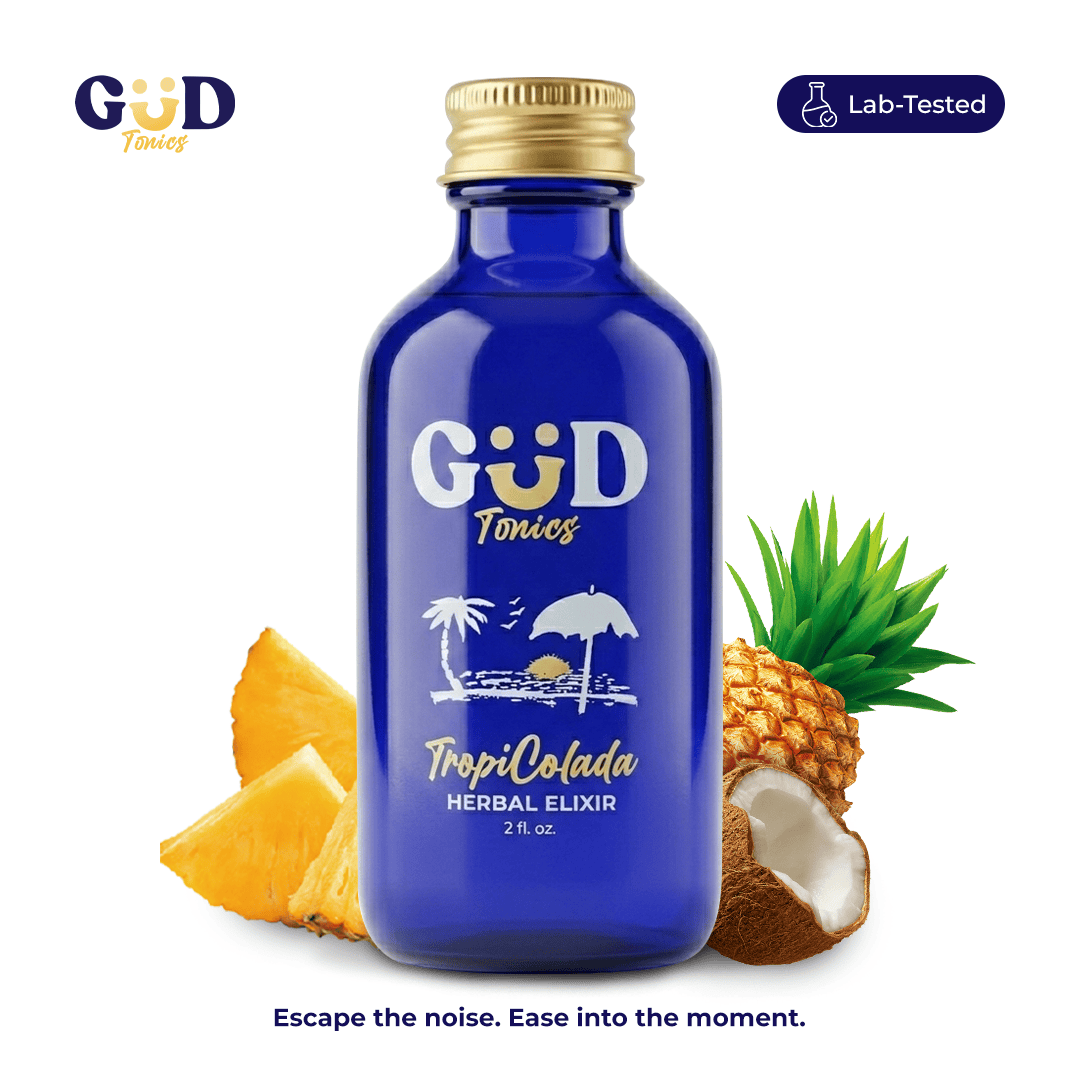
And if the bottle in your hand is one of ours, it is not just kava. Every ready-to-drink GUD Tonic contains kratom as well as kava, and we found no study that has tested a kava-plus-kratom drink and driving.
Our advice: do not drive after a kava drink, and especially not after one of ours, which has kratom in it. If you feel affected, do not drive. This page gives no amount and no waiting time that makes driving safe, because none of the research below establishes one.
Checked October 19, 2026. This page covers agency guidance, two US impaired-driving statutes, the kava and kratom driving research and its limits, kava with alcohol, and US kava DUI news.
Who wrote it. GUD Tonics. We sell kava and kratom drinks, so we have an interest here. All three of our ready-to-drink flavors, and the bundle of all three, list Mitragyna speciosa (kratom) next to noble kava root extract, and our FAQ says mitragynine is "in every ready-to-drink GUD Tonic". We sell to adults 21 and over. Our kava extract powder doesn't list kratom, but its page carries a Kava + Kratom block, so we don't call it kratom-free.
Next review January 19, 2027, or the day any source above changes.
What health and police agencies say about kava and driving
The most direct guidance we found is Australian, so read it as foreign guidance, not US law. NSW Health's kava clinical factsheet, last updated on December 5, 2022, says kava use "may affect perceptions, alertness, and responsiveness and therefore a person's ability to drive safely", depending on the amount consumed, and that crash data "from some countries" suggest "kava has the potential to impair driving ability". Your Room, a joint site of NSW Health and St Vincent's Alcohol and Drug Information Service, adds that in New South Wales, "for the purposes of traffic legislation kava will be defined as a drug".
The NSW Police Force's kava guidance for officers, version 3.0, July 2024, is blunter: "Kava has psychoactive depressant properties that can impair skills required for safe driving". It tells officers that the state's offense of driving under the influence of a drug, section 112 of the Road Transport Act 2013, "is applicable to drivers where there is evidence of impairment due to any substance including kava". That is New South Wales law, not US law.
In the United States, we found no federal guidance page that names kava in a driving context. NHTSA's page on drug-impaired driving mentions neither kava nor kratom; its own summary is that driving impaired by "any substance" is "against the law in all 50 states and the District of Columbia". The one US federal document we found that discusses kava and driving is an FDA scientific memorandum of August 11, 2020, which reviewed kava for use in conventional foods: "If higher doses of kava are used when driving and operating heavy machinery, caution is advised, as visual attention may be possibly impaired under cognitive demand." That is a caution, not a rule.
What US law says: impairment by "any drug"
We found no US driving statute or regulation that names kava. That absence does not settle the question, because the two statutes below are written around impairment, not around a list of plants.
California. Vehicle Code section 23152 says: "(f) It is unlawful for a person who is under the influence of any drug to drive a vehicle." Section 312 of the Vehicle Code defines a drug as "any substance or combination of substances, other than alcohol, which could so affect the nervous system, brain, or muscles of a person as to impair, to an appreciable degree, his ability to drive a vehicle", measured against how a prudent, careful driver would drive.
Washington. RCW 46.61.502 covers a person who drives while "under the influence of or affected by intoxicating liquor, cannabis, or any drug", and adds: "The fact that a person charged with a violation of this section is or has been entitled to use a drug under the laws of this state shall not constitute a defense against a charge of violating this section." We did not read how Washington defines "drug" there.
Statutes differ from state to state; Florida's, for one, names alcohol, listed chemicals and controlled substances, and we have not checked its rules or case law. Nothing here predicts how a charge would go where you live, and it is not legal advice.
What the kava driving studies found
The studies are few, and they did not test the same thing. Each exposure below stays in the study's own words. None of them is a drink like ours.
Sarris and colleagues, 2013, Australia. A randomized, placebo-controlled, double-blind crossover trial in which 22 adults aged 18 to 65 used a driving simulator after being given, a week apart, "an acute medicinal dose of kava (180 mg of kavalactones)", the sedative oxazepam (30 mg), or placebo. "No impairing effects on driving outcomes were found after kava administration compared to placebo". Oxazepam slowed braking. The limits: one dose, a simulator, 22 people. The authors asked for "larger recreational doses" to be studied next.
Wainiqolo and colleagues, 2016, Fiji. A population-based case-control study on Viti Levu from July 2005 to December 2006. It compared 140 drivers of vehicles in crashes where someone died or was hospitalized for 12 hours or more with 752 control drivers interviewed in road surveys; over 90% in both groups were male. Kava was self-reported for the 12 hours before the crash or survey, and "this study did not undertake an objective measurement of kava". Some 23% of crash drivers and 4% of controls reported it.
After adjustment, driving after kava was associated with "a four-fold increase in the odds of crash involvement" (odds ratio 4.70; 95% confidence interval 1.90 to 11.63). That is an association, not proof that kava caused crashes, and not a claim that kava drinkers crash four times as often. The authors flag recall bias and write that "residual confounding cannot be excluded", yet conclude: "The precautionary principle would suggest road safety strategies should explicitly recommend avoiding driving following kava use, particularly in communities where recreational use is common". The 12 hours was their question window. It is not a safe interval.
Aporosa, Atkins and Brunton, 2020, New Zealand. A controlled clinical trial from the University of Waikato, in a "naturalised" setting: 20 kava drinkers and 20 controls, tested for reaction and divided attention during and after a 6-hour session of "high traditionally consumed kava volumes (greater than 2,000 mg of kavalactones)". The tests found "no statistical significant difference between control and active participants at any measurement point", while the drinkers' movements and speech "were observed to slow". The authors saw in that gap "an urgent need for more research in this field". No significant difference is not the same as safe to drive.
Aporosa and colleagues, 2022, New Zealand. A controlled comparison, again from Waikato: 20 kava users against 19 controls on the Brain Gauge, which measures six cognitive faculties, during and after a traditionally influenced session. The users showed "a significant level of regression" in temporal order judgment at the final test, and no significant impairment on the other five. The authors link that faculty to "decision making, behavioral control and information processing, all crucial aspects of driver safety". The abstract gives neither the kava's strength nor how much each person drank.
The Iowa crime laboratory cases, 2019, United States. The only US peer-reviewed driving item on kava we found. A paper from Iowa's state crime laboratory described four drivers who said they had drunk kava, each evaluated by a Drug Recognition Expert. Urine screened negative for common drugs by immunoassay; in two cases, mass spectrometry found kavalactones. "Subjects exhibited poor driving behavior and signs of intoxication." Four case reports are not a rate, and the abstract names no products or amounts.

A GUD drink is not just kava
Every study above tested kava. None tested kava with kratom, and all three of our ready-to-drink flavors list kratom in their ingredients. The certificates on our lab results page report kratom alkaloids alongside kavalactones in all three drinks.
NIDA, the National Institute on Drug Abuse, says: "Safety effects of intoxication are not well understood. The impact of kratom intoxication (taking enough to be impaired) on driving, operating heavy machinery, or performing other tasks that could be dangerous if impaired has not been extensively studied."
The only kratom driving-simulator study we found is small. In a 2024 pilot by Zamarripa and colleagues, run within NIDA's intramural research program in Baltimore, "10 adults consumed their typical kratom products" and drove a simulator before and after, with no significant change. The authors set the limits themselves: everyone used raw powder, so "we cannot make inferences about other products"; there was no placebo; and "any kratom dose among a kratom naive individual could produce an impairing effect not observed here". They list kava among the combinations that still need study.
Forensic data are thin. Kedzierski and Mata, at the Orange County Crime Laboratory in California, found mitragynine above 10 ng/mL in 60 of 25,398 DUID (driving under the influence of drugs) cases from 2017 to 2019, or 0.24%, and reported that no case contained mitragynine alone. Detection is not impairment, and one county lab is not a national rate.
On the combination, we found no driving study at all. Our article on interactions, published on October 6, 2026, said the same of the two plants in general: "We found no pharmacokinetic or pharmacodynamic study of the two plants taken together".
Our advice: treat one of our drinks as kava plus kratom, never as "just kava", and do not drive after one. We set out what is actually in our bottles in a separate article.
The research and guidance side by side
Every row keeps its own units. Read the last column first.
| Study or source | Country | What was measured | What it found | What it cannot tell you |
|---|---|---|---|---|
| NSW Health kava factsheet, 2022. | Australia (New South Wales). | Guidance, not a study. | Kava before driving "is not recommended"; avoid driving if affected. | What US law requires, or any safe amount or time. |
| Sarris et al., 2013. | Australia. | One "acute medicinal dose of kava (180 mg of kavalactones)" against oxazepam and placebo, on a simulator, in 22 adults. | No impairment compared with placebo. | Larger recreational amounts, real roads, or any drink. |
| Wainiqolo et al., 2016. | Fiji. | Self-reported kava in the 12 hours before a crash or road survey; 140 crash drivers, 752 controls. | Odds ratio 4.70 for serious-injury crash involvement. | Cause, how much kava, or a safe interval. |
| Aporosa, Atkins and Brunton, 2020. | New Zealand. | Reaction and divided attention over a 6-hour session; "greater than 2,000 mg of kavalactones"; 20 drinkers, 20 controls. | No significant difference, while observers saw movement and speech slow. | That driving was safe. |
| Aporosa et al., 2022. | New Zealand. | Six cognitive measures with a traditionally influenced session; 20 users, 19 controls. | Significant decline in temporal order judgment only. | Kava strength or amount drunk, which the abstract omits. |
| Iowa crime laboratory cases, 2019. | United States (Iowa). | Four drivers with self-reported kava and expert evaluations. | Poor driving and signs of intoxication; kavalactones in two urine samples. | A rate, or which products and amounts. |
| NIDA kratom page. | United States. | Agency summary. | Kratom's impact on driving "has not been extensively studied". | Anything about kava drinks. |
| Zamarripa et al., 2024. | United States. | A simulator pilot with 10 regular users of raw powder, no placebo, plus a survey. | No significant simulator change in the pilot. | Other products, new users, or kava with kratom. |
| Kedzierski and Mata, 2023. | United States (Orange County, California). | 25,398 DUID cases sent to a crime lab, 2017 to 2019. | Mitragynine in 60 cases (0.24%), never alone. | Impairment, cause, or a national rate. |
| Kava plus kratom. | Anywhere. | No study found. | Nothing yet. | Everything about a drink like ours. |
Kava with alcohol: the studies disagree, the agencies do not
The experimental record is mixed. Foo and Lemon, in Australia in 1997, found kava alone had little effect but "appears to potentiate both perceived and measured impairment when combined with alcohol". Herberg, in a 1993 German paper, tested a branded extract, WS 1490, over 8 days with alcohol at 0.05% blood alcohol concentration and reported "no negative multiplicative effects". The Fiji authors found no significant interaction with alcohol, but say their statistical power was limited.
The agencies do not wait for agreement. NSW Health, in Australia, says kava "may potentiate the effects of other central nervous system depressants such as benzodiazepines, barbiturates, or alcohol". In the United States, NCCIH says "Kava should not be used together with other substances that have sedative effects, such as benzodiazepines or alcohol". And NHTSA, on drugs generally: "Using two or more drugs at the same time, including alcohol, can amplify the impairing effects of each drug a person has consumed."
California even makes "the combined influence of any alcoholic beverage and drug" its own offense. Our product pages say "never mix with alcohol", and we cover alcohol and sedatives in our article on kava and kratom interactions. Our advice: no alcohol with a kava drink, ours included, and no driving after either.
Kava DUI cases in US news
US cases are few and old. We cite them as news and name no one.
Utah, 1996. The Deseret News reported on August 5, 1996, that a state trooper stopped a 44-year-old motorist for swerving, that "his alcohol level registered zero" on a breath test, and that laboratory tests "confirmed the kava had impaired the man's ability to operate a vehicle". It reported a conviction, which the trooper called the first of its kind in the country.
California. A wire story in The Record-Courier, dated December 20, 2001, in its web address, described a San Mateo County case as "what is believed to be the state's first DUI prosecution for driving under the influence of kava"; the defendant's lawyer said a urine test "detected no drugs, alcohol or kava". The San Mateo Daily Journal, in undated pages, reported that the case "was dropped after a hung jury rendered a 10-2 verdict in favor of acquitting", and that a judge threw out a second case, citing "a lack of evidence" that kava caused the erratic driving. Governing, in a piece dated August 25, 2010, reported a misdemeanor conviction in San Mateo and another driver who "pled out rather than contest similar charges".
FDA's 2020 memo tells it differently. It says that in California "there were two cases of drivers arrested for 'driving under the influence' after ingesting kava tea. Neither of them was prosecuted." The accounts conflict, and we have not resolved them. We also found no US news report from 2025 or 2026 of a DUI case involving kava or a kava-kratom drink. What the news does show is enough: US drivers have been stopped, charged and, in at least one reported case, convicted after drinking kava.

Can you drive after drinking kava if you feel fine?
Feeling fine is not the same as being fit to drive. It is a weak test.
NSW Health's last driving sentence does not cancel the one before it: kava before driving "is not recommended", and feeling affected is one more reason to stay off the road, not the only one.
NHTSA puts the general point plainly: "Impaired drivers can't accurately assess their own impairment". Its campaign line is shorter: "If you feel different, you drive different."
Belief is not a test either. A 2022 Food Standards Australia New Zealand summary found many people believe kava impairs driving less than other drugs. That's a survey of beliefs, not a safety finding. If formal tests and observers could disagree in the 2020 New Zealand study, a quick check of how you feel in the parking lot will not settle it.
Our advice, for any kava drink and especially ours:
- Do not drive after a kava drink. Ours have kratom in them too.
- If you feel affected, do not drive. If you feel fine, the first rule still stands.
- Sort out the ride home before the first drink, not after the last one.
- Do not add alcohol or sedatives, and ask a clinician or pharmacist about any medicine you take.
- Do not plan to wait it out. No study gives a safe interval, and we will not invent one.
If kava has become a daily habit, our guide to whether kava is addictive looks at the evidence, and our guide to what a kava bar is covers what one serves and the rules behind it.
Questions people ask about kava and driving
Can you drink kava and drive?
The clearest government guidance we found advises against it. NSW Health, in Australia, says kava before driving is not recommended. US agencies say almost nothing specific, but California's and Washington's laws reach impairment by any drug. Our advice: do not drive after a kava drink.
How long after drinking kava can you drive?
No study we found establishes a safe waiting time, and we will not give one. Our advice: do not drive after a kava drink, or if you feel affected. Plan another way home before you drink.
Is it illegal to drive after drinking kava?
We found no US driving statute that names kava. California's law reaches any drug, defined as any substance that could impair driving, and Washington's covers any drug, with lawful use no defense. This is not legal advice.
Can police test for kava?
The sources differ. NSW Health's Your Room site, in Australia, says kava is detectable in blood and urine. In a 2001 US news report, a defense lawyer said a urine test detected no kava. In four Iowa cases, standard screens were negative, but a crime laboratory found kavalactones in two urine samples by mass spectrometry.
Is a kava drink with kratom in it different from plain kava?
Yes. Every ready-to-drink GUD Tonic contains kratom as well as kava. NIDA says the impact of kratom on driving has not been extensively studied, and we found no study of a kava-plus-kratom drink and driving. Our advice: do not drive after one.
Disclaimer: this article summarizes publicly available material as of October 19, 2026, with links to primary sources. It is general information, not legal or medical advice. State laws differ and change, and no figure on this page is a safe amount or a safe waiting time. Statements about botanical products have not been evaluated by the Food and Drug Administration, and no product is intended to diagnose, treat, cure or prevent any disease.