Help first.
If someone is difficult to wake, is not breathing normally, is having a seizure, or is unresponsive, call 911.
1-800-222-1222. Poison Control, around the clock, for a reaction that worries you after any kava or kratom product, ours included.
988. The crisis lifeline, anywhere in the United States, by call or text.
Treatment. The federal treatment locator, findtreatment.gov.
Kratom is not a treatment for opioid use disorder, or for opioid or kratom withdrawal, and neither is any kava drink, ours included. Buprenorphine, methadone and naltrexone are the medicines with the evidence base for opioid use disorder, prescribed by a clinician. Clinical questions belong with a clinician who can see you. Not with us.
What is a kava bar? It is a venue that serves kava drinks, and three US agencies mention kava bars in close to those words. The NIH's National Center for Complementary and Integrative Health (NCCIH) says "Kava drinks are now sold at kava bars at many locations in the United States." The DEA's kava fact sheet says "Several kava bars and lounges in the United States sell kava drinks." And a report in CDC's weekly MMWR of April 2, 2026 describes "dedicated kava bars, which are often promoted as alcohol-free social venues".
Often, not always. Kava is made from the root of a South Pacific plant, and CDC calls it "a central nervous system depressant". Some kava bars also pour drinks made with kratom, a different plant with different laws.
Checked October 19, 2026. Rewritten October 21, 2026 (first published June 17, 2026). This page covers what a kava bar is and serves, how kava is regulated, the age question, and kratom on kava-bar menus.
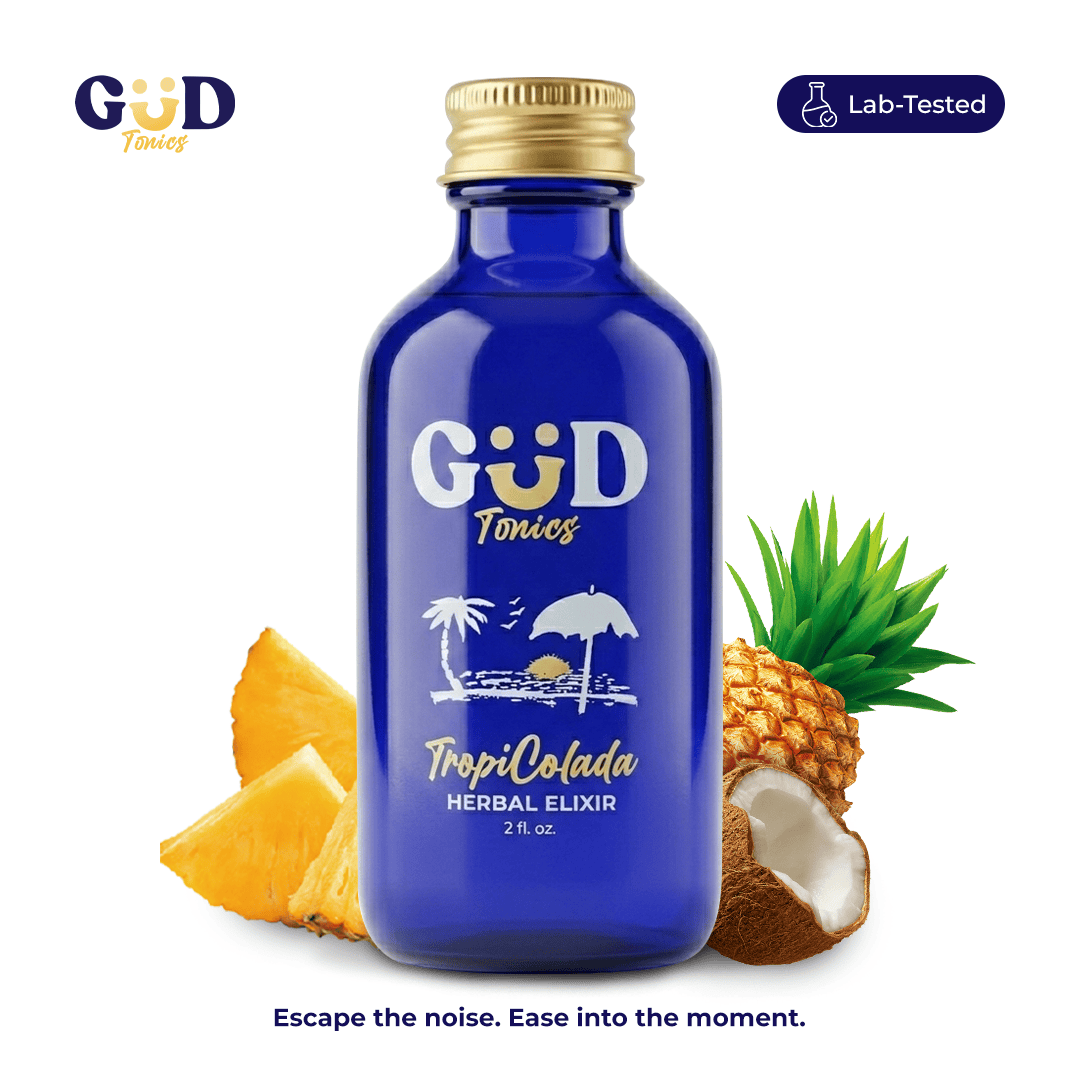
Who wrote it. GUD Tonics. We sell bottled kava and kratom drinks and a kava extract powder in our shop, so we have an interest here. Four of our five products contain kratom: all three of our drinks, and the bundle of them. Our kava extract powder doesn't list kratom, but its page carries a Kava + Kratom block, so we don't call it kratom-free. We sell to adults 21 and over.
What changed. Our June 2026 version of this page said a kava bar offered a night out without intoxication, and it told readers how to pace their drinks. The DEA lists "feeling intoxicated" among kava's effects, and pacing advice is not ours to give, so both are gone.
Next review January 19, 2027, or the day any source above changes.
What is a kava bar? The short answer
Whether you typed "what is a kava bar", "what is kava bar", "whats a kava bar" or "kava bar what is it", the answer comes in four parts.
It is built around kava. HerbalGram, from the American Botanical Council and not a government source, wrote in 2012 that "Kava bars usually only serve kava drinks." And: "The primary purpose of kava bars has always been to provide social gathering places."
It is usually alcohol-free. CDC's word is "often", HerbalGram's is "usually". Neither says always, so read the menu.
Kava is not a soft drink. The DEA's sheet, dated April 2026, calls kava a "non-fermented, psychoactive beverage prepared from the rootstock", and lists "feeling intoxicated" and "drowsiness" among its effects.
Some kava bars sell kratom too. On September 30, 2026, the news site Bisnow wrote that "the term 'kava bar' is somewhat of a misnomer", under the headline "Kava Bars Are Booming. Kratom Is A Big Reason Why".
What kava is, and how a kava bar serves it
Kava is a plant before it is a drink. NCCIH: "Kava is native to the South Pacific and is a member of the pepper family." Its Latin name is Piper methysticum, which the DEA's sheet glosses as "intoxicating pepper". In Hawaii it is 'awa.
The drink comes from the root. The DEA: "Traditionally, kava beverages are prepared by chewing or pounding the rootstock to produce a cloudy, milky pulp that is then soaked in water before the liquid is filtered to drink." Hawaii's Department of Health says that "for at least the past one hundred years", grinding or pounding the noble root before mixing it with water has been more common than chewing. Noble is a variety, not a compliment. Hawaii counts, globally, "more than two hundred varieties of 'awa".
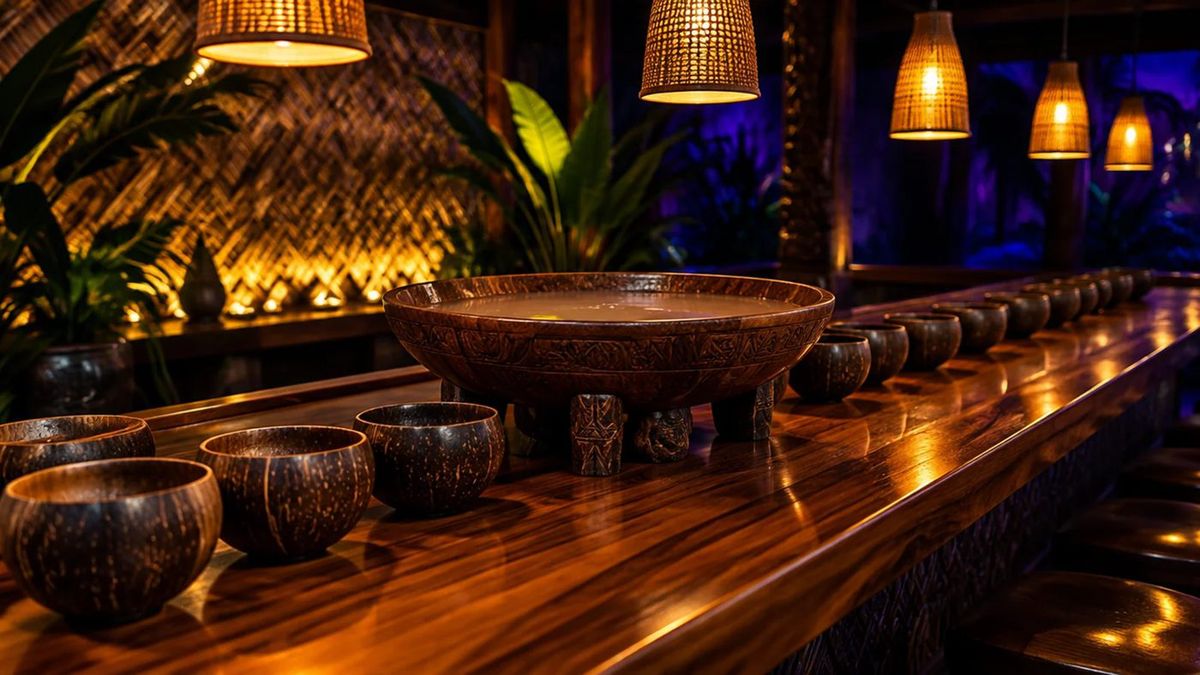
The nakamal. HerbalGram: "Kava bars are thought to have originated in Vanuatu", and "The kava bar was originally referred to as a nakamal." One difference from a US kava bar: "In a traditional nakamal, no money is exchanged for kava." In the United States, HerbalGram says, "Hawaii was the first state where kava bars could be found", but "Florida has surpassed them in number with the first one opening in 2002 in Boca Raton, Florida." That is the council's account, not a government record. Our guest post on the kava scene in Delray Beach and Pompano Beach covers two South Florida towns.
How many are there? We found no government count. Bisnow, citing HappyKava, "a mobile app that tracks kava bars", reported growth "from 303 in 2023 to roughly 700" by its story of September 30, 2026, with Florida at 446. One app's counts, reported by one outlet.
The shell. HerbalGram describes village kava bars that sell kava "by the coconut shell". Bisnow describes patrons cheering "bula," which it calls "a Fijian toast for wishes of good health and life".
What is in the cup depends on the bar. CDC lists US kava products as "concentrated extracts, capsules, and recreational beverages sold through retail outlets and dedicated kava bars". The DEA says the root "contains pharmacologically active kavalactones", and Hawaii's health department says that "organic extraction (i.e., using acetone, ethanol, or similar solvents for extraction) results in two to ten times the total amount of kavalactones than is extracted via aqueous extraction (i.e., using water)." Water or solvent: several of the rules below draw their line right there.

How a kava bar is different from a bar
The obvious difference is alcohol: most kava bars are promoted as having none. The less obvious one is that kava is not a neutral drink.
Alcohol. NCCIH: "Kava should not be used together with other substances that have sedative effects, such as benzodiazepines or alcohol." The DEA: "using kava with other drugs or alcohol may increase the risk for harmful effects." And FDA's 2020 memorandum on kava in foods: "Kava is often consumed with alcohol, which may potentiate the hepatic injury." Hepatic means liver.
The liver. NCCIH: "Various kava products have been linked to rare cases of liver injury, some of which have been serious or even fatal. The first reported cases involved medicinal or dietary supplement products that had been extracted with alcohol or acetone, but other cases have involved kava beverages prepared with water." Read that last clause twice.
Pregnancy and medicines. NCCIH says kava "may have special risks if taken during pregnancy or while breastfeeding", and adds: "If you take any type of medicine, talk with your health care provider before using kava or other herbal products".
There is more on alcohol, sedatives and medicines in our page on kava and kratom interactions. The short version: a kava bar is not a place to keep drinking alcohol, and not a place where the drink has no effect.
How kava is regulated: supplement, food, or neither
The same root is treated differently depending on its form and who is selling it.
Federal. The DEA's sheet says "Kava is not controlled under the Controlled Substances Act." NCCIH says "Kava products are sold in the United States as dietary supplements and in some other countries as drugs or herbal medicines."
Food is a different matter. In a scientific memorandum dated August 11, 2020, a toxicologist in FDA's Division of Food Ingredients concluded "that indiscriminate use of kava either as a 'recreational' or 'relaxation' beverage is not safe for human consumption". Its conclusion: "DFI/OFAS/FDA considers kava an unapproved food additive when used as an ingredient in conventional foods." It is a memo, not a regulation, and it notes that "kava is still available for sale in the U.S. as dietary supplements".
States and cities. Two states accept noble root in water as a kava drink. Hawaii's Department of Health, in a determination dated January 23, 2024, accepted "the noble variety of 'awa root, mixed with water or coconut water to make a beverage through aqueous extraction" as GRAS, generally recognized as safe, "under those specific set of circumstances". Michigan's agriculture department, in a memo of January 11, 2023, "considers the use of the noble variety of kava root mixed with water to make a tea to be a low risk to public health and Generally Recognized as Safe (GRAS)". Both say supplement kava may not go into "teas, smoothies, or other beverages".
Arizona, Los Angeles County, Denver and New York City restrict kava as an ingredient in food or drinks at food businesses; the table sets out each rule. New York City's reached a federal appeals court. In a summary order of December 19, 2024 (No. 24-15), the Second Circuit wrote that "Kavasutra sold kava drinks until the City ordered their cafes to be closed on the ground that kava is a 'food additive' presumed unsafe for public consumption under the City's code which, in turn, relies on federal law," and affirmed the denial of a preliminary injunction. That is not a ruling that kava is unsafe. The order itself says "RULINGS BY SUMMARY ORDER DO NOT HAVE PRECEDENTIAL EFFECT." We have not read later rulings in the case.
| Jurisdiction | Rule | What it covers | Source |
|---|---|---|---|
| United States (DEA) | "Kava is not controlled under the Controlled Substances Act." | Kava in any form. | DEA fact sheet, April 2026. |
| United States (FDA) | Kava is "an unapproved food additive when used as an ingredient in conventional foods". | Kava as a food ingredient. Supplements are still sold. | FDA scientific memorandum, August 11, 2020. |
| Hawaii | Noble 'awa root in water or coconut water is GRAS. Any other preparation or variety is treated as adulterated or an unapproved additive, unless 21 CFR 170.30 is satisfied. | Food and drinks. | Department of Health GRAS determination, January 23, 2024. |
| Michigan | Noble kava root mixed with water is GRAS. Other kava sold as a conventional food "can be cited under the Michigan Food Law as an unapproved additive or adulterated food." | Retail food establishments. | MDARD memo, January 11, 2023. |
| Arizona | "Kava, CBD, non-GRAS ingredients, and unapproved additives shall not be added into food or beverages." | Licensed or permitted retail food establishments. | ADHS letter to county health departments, February 17, 2026. |
| Los Angeles County | Red-tag or impound food or drink with kava as a food additive, except "kava steeped in only water". | Retail businesses. What cannot be sold includes "A prepackaged food or drink product (other than a brewed tea with only water) that has kava added as an ingredient." | Public Health notice, revised February 17, 2026. |
| Denver | "Kava shall only be sold as a supplement." | Retail businesses. A 2019 memo; we did not confirm current enforcement. | Department of Public Health and Environment memo, August 2019. |
| New York City | The City ordered Kavasutra's kava cafes closed on the ground that kava is a "food additive". The appeals court affirmed the denial of a preliminary injunction. | Food service. The City's guide lists dietary supplements, including herbs "such as Kava Kava", among adulterants. | Second Circuit summary order, December 19, 2024; City Health Department guide. |
Put plainly: whether a kava drink is allowed depends on where you are, what is in it and who is selling it. Noble root in water is the form Hawaii and Michigan accept; Los Angeles County exempts kava steeped in only water. Flavored kava, extracts, non-noble kava, supplement kava stirred into a drink, and kava-kratom drinks all sit outside the Hawaii and Michigan findings. So calling kava "legal in all fifty states" is too simple, and at least one older post on our own blog uses those words.
How old do you have to be to drink kava? Do you have to be 21?
We found no federal or state law that sets a minimum age for kava, as of October 19, 2026. Our searches of state legislatures and health-department guidance turned up kratom age laws and no kava age law, and we found no local age ordinance for kava bars. A search can miss things, so read this as what we found, not a guarantee.
What does exist is advice, and its number is 18. Hawaii's Department of Health "recommends posting or providing the following consumer advisory statement", which begins: "Please be advised that 'awa/kava should not be used by persons under 18 years of age, or by pregnant or breastfeeding women. 'Awa/kava should not be used with alcoholic beverages."
Michigan's recommended advisory reads, in full: "Please be advised kava is not for use by persons under 18 years of age, or by pregnant or breastfeeding women. Not for use with alcoholic beverages. Excessive use, or use with products that cause drowsiness, may impair your ability to operate a vehicle or heavy equipment. A potential risk of rare, but severe, liver injury may be associated with kava-containing dietary supplements."
Denver's 2019 memo on kava supplement sales required wording that consuming kava products "is not recommended for use by persons under 18 years of age". Arizona's 2026 letter suggests telling customers that "children, pregnant, and breastfeeding individuals are not advised to consume kava".
These are warnings in health and agriculture department documents. None is an age law. They point the same way, though: every one we read that mentions age draws the line at 18, or at children.
So where does 21 come from? Kratom law, and our own rule. Florida's section 500.92 says "It is unlawful to sell, deliver, barter, furnish, or give, directly or indirectly, any kratom product to a person who is under 21 years of age", a misdemeanor of the second degree, and its definition of a kratom product includes a "beverage". Rhode Island: "No person or entity shall distribute, sell, transfer, or advertise a kratom product to a person under twenty-one (21) years." North Dakota's governor announced on September 4, 2026, that the kratom bill he signed "prohibits the sale of natural kratom to individuals under age 21", and that "The sale of all kratom and kratom products remains prohibited in North Dakota until administrative rules are implemented in accordance with HB 1628." We found no report of those rules being adopted as of October 19, 2026.
21 is also our rule. We sell to adults 21 and over, and our product pages open with an age gate: "Content on this page is only for people over 21 years old." That is our policy, not a kava law, and the June version of this page was wrong to say "Kava drinks are for adults 21 and over" as if it were one.
So, do you have to be 21 to drink kava? Not under any kava law we found. Depending on the state, a kratom drink may carry an age limit of 21 or may not be lawful to sell at all, and a kava-bar menu can include kratom drinks without saying so loudly.
Kratom on the menu at some kava bars
Kratom is a different plant, and it increasingly shows up in the same products. CDC's April 2026 report says "kava products are increasingly being combined with kratom", and that "Since 2017, reports involving combined use of kava and kratom have increased, reaching 30% (61) of all kava reports in 2025." Those are poison center reports, not a rate of harm, and CDC notes that "NPDS generic codes do not permit distinction among product types".
The law on kratom in a drink is blunt. FDA's kratom page, current as of December 2, 2025, says "kratom is not lawfully marketed as a dietary supplement and cannot be lawfully added to conventional foods." Rhode Island's kratom law, in effect since April 1, 2026, bars anyone from preparing, selling or possessing "A kratom product that is a conventional food or beverage or labeled as a conventional food or beverage product", and such products "shall be deemed contraband". Louisiana's alcohol regulator says "the possession and distribution of Kratom are now illegal", with fines for sellers from August 1, 2025, and that "establishments licensed by the Louisiana Office of Alcohol and Tobacco Control (ATC) are prohibited from selling or storing Kratom products on its premises."
A menu may not spell it out. Bisnow reported that many kava bars it visited "rarely market products as 'kratom,' and if they do, it's fairly limited." Our advice: before you order, ask whether a drink contains kratom, which an ingredient list may call Mitragyna speciosa or mitragynine. That goes for bottles too. Every drink we sell contains kratom as well as kava, and the certificates for our three drinks, on our lab results page, report kratom alkaloids alongside kavalactones.
This page is written for people going to a kava bar, not for anyone running one.

Before you go: what to ask, and what to skip
Our advice, for any kava bar and for our own drinks.
Ask what is in the cup. Kava root made with water, an extract, a blend? Any kratom? A vague answer is an answer.
Skip the alcohol, before, during and after. NCCIH and the Hawaii and Michigan advisories say not to combine the two, and the DEA says the mix "may increase the risk for harmful effects".
If you are pregnant or breastfeeding, the Hawaii and Michigan advisories say kava is not for you. If you take medicine, talk with your health care provider first, as NCCIH advises.
Our advice: do not drive after a kava drink. If something feels wrong, call Poison Control on 1-800-222-1222.
Notice what is missing: how many shells, how fast, what it will feel like. That is not ours to tell you.
Questions people ask about kava bars
What is a kava bar?
A venue that serves kava drinks, made from the root of a South Pacific plant in the pepper family. NCCIH, the DEA and CDC each mention kava bars selling kava drinks, and CDC says they are often promoted as alcohol-free social venues. Some also sell kratom drinks.
Do kava bars serve alcohol?
Usually not. CDC says kava bars are often promoted as alcohol-free, and HerbalGram, from the American Botanical Council, wrote in 2012 that they usually serve only kava drinks. Usually is not always, so read the menu. NCCIH and the DEA both warn about combining kava with alcohol.
How old do you have to be to drink kava?
We found no federal or state law that sets a minimum age for kava, as of October 19, 2026. Hawaii's and Michigan's recommended health advisories say kava is not for persons under 18, and a 2019 Denver memo required similar wording. Those are advisories, not age laws.
Do you have to be 21 to drink kava?
Not under any kava law we found. 21 is a kratom age: Florida and Rhode Island set it by law, and so does North Dakota, where all kratom sales stay prohibited until its rules are implemented. It is also our own sales policy at GUD Tonics. Neither is a kava law.
Do kava bars serve kratom?
Some do. CDC reports that kava products are increasingly combined with kratom, and that reports involving both made up 30% of kava reports to poison centers in 2025. FDA says kratom cannot be lawfully added to conventional foods. Ask before you order.
Disclaimer: this article summarizes publicly available material as of October 19, 2026. It is general information, not legal or medical advice. Advisories are not statutes, and state and local rules change. Statements about botanical products have not been evaluated by the Food and Drug Administration, and no product is intended to diagnose, treat, cure or prevent any disease.