Somewhere between a cup of tea and a glass of wine sits a quieter category of drink that humans have been making for thousands of years. An herbal elixir is a concentrated, plant-based preparation meant to be sipped slowly and chosen with intention, and it has quietly become one of the most interesting corners of the modern wellness world. Ever wondered what these botanical drinks really are, where they came from, and how to tell a thoughtful one from a marketing gimmick? This is the place to find out.
Think of this as an educational walk-through, not a shopping list. We're after understanding: what an elixir is, the history behind the word, the main families you'll encounter, how they're made, and the practical wisdom for choosing and enjoying one responsibly. Before going further, one note that will repeat where it matters. The botanical drinks discussed here are not medicine. None of them treat, cure, or prevent any condition, and anyone who promises otherwise is overselling. Some, including kava-based options, carry real safety considerations that deserve a clear place in any honest herbal elixir guide.
Table of Contents
- TL;DR: The Quick Version
- What Is an Herbal Elixir, Really?
- A Brief History of Botanical Drinks
- The Main Families of Botanical Drinks
- How Elixirs Are Made: From Root to Bottle
- How to Choose a Quality Botanical Preparation
- How to Enjoy One Without Overdoing It
- Honest Safety and Compliance Notes
- The GÜD Tonics Take on the Modern Sip
- Final Thoughts
- Frequently Asked Questions
TL;DR: The Quick Version
- An herbal elixir is a concentrated, drinkable botanical preparation, flavored or sweetened, that people sip with intention rather than gulp, whether for relaxation, a clean lift, or everyday wellness.
- The idea is ancient. Healers and herbalists across many cultures made concentrated plant drinks long before the modern wellness shelf existed, and the word itself traces back to early alchemy.
- The main families you will meet are calming, energizing, adaptogenic, and kitchen-spice botanical drinks, plus modern social tonics that blend several ideas at once.
- Most elixirs are made by extracting plant compounds into water, alcohol, glycerin, or oil, then concentrating and flavoring the result into a sippable form.
- Choosing well comes down to label transparency, honest non-disease language, sourcing details, and age-gating on anything containing mitragynine.
- Honest safety matters: kava carries an FDA liver advisory, products with mitragynine are strictly 21 and over, and you should talk with your healthcare provider before adding any botanical, especially if pregnant, breastfeeding, on medication, or managing a liver condition.
What Is an Herbal Elixir, Really?
The word elixir gets used loosely, so let's pin it down. At its simplest, an herbal elixir is a concentrated, drinkable preparation built around one or more botanicals, usually flavored or sweetened, and designed to be sipped rather than chugged. That definition covers a lot of ground on purpose, because the category is broad. A small bottled tonic, a spoonful of syrupy concentrate stirred into water, a glycerin-based blend dropped under the tongue, a ready-to-drink can on a refrigerator shelf. All of them can reasonably be called elixirs.
What separates an elixir from an ordinary beverage is concentration and intention. A regular herbal tea is brewed light and casual, while an elixir tends to be stronger, more deliberate, and built around a specific botanical character. You drink it for a reason, even if that reason is just to slow down at the end of a long day. People reach for one of these botanical drinks the way they might reach for a ritual rather than a refreshment.
It also helps to know what an elixir is not. Not a medicine, not a prescription, not a guaranteed outcome in a bottle. Throughout this guide, the framing stays the same: botanicals have long traditions and many people enjoy how they feel, but the research on most of them is still limited and ongoing. Understanding what an herbal elixir is means understanding both its appeal and its limits.
A quick word on close cousins, since the terms overlap. A tonic usually implies a drink taken regularly for general wellbeing. A tincture is a concentrated liquid extract, often alcohol-based, taken in small drops. A botanical elixir tends to be the most palatable of the bunch, blended and flavored to taste good. The lines blur and brands use the words interchangeably, but knowing the rough distinctions helps you read a label with a clearer eye.
A Brief History of Botanical Drinks
People have been concentrating plants into drinkable form for as long as recorded history, and probably far longer. Long before anyone wrote the word on a bottle, healers and community elders across the world steeped roots, barks, flowers, and leaves into potent preparations. The impulse is universal. Wherever plants grew that made people feel calmer, brighter, or steadier, someone figured out how to capture that quality in a cup.
The word elixir itself has a colorful lineage. It comes by way of medieval Latin and Arabic alchemy, where alchemists searched for an idealized preparation, sometimes imagined as a path to longevity. That mystical reputation faded, but the practice of distilling and concentrating botanicals into a refined liquid carried forward into apothecaries and herbal traditions.
Different cultures developed their own deep traditions. Traditional Chinese and Ayurvedic systems built elaborate frameworks around plant tonics and adaptogens taken to support balance. Across the South Pacific, communities prepared kava root into a communal drink central to social and ceremonial life. European herbalism leaned on cordials and syrups made from local flowers and fruits. Each thread is its own rich story, and what carries forward is how consistent the human instinct has been: take the plant, concentrate it, make it pleasant, share the result.
What's changed in the last decade is access and packaging. A botanical drink is no longer something you have to brew yourself or hunt down in a specialty shop. The modern wellness movement, the sober-curious shift away from alcohol, and a wider interest in feeling good without a crash have pushed these preparations into the mainstream. Today the ancient idea arrives in a bottle you can open in seconds, a real evolution of a very old practice rather than an invention of a new one.
The Main Families of Botanical Drinks
Once you start looking, the sheer variety can feel overwhelming. It helps to sort these preparations into a few broad families based on the feeling people reach for. These groupings aren't rigid scientific categories. They're a practical map for understanding what you're looking at on a shelf or a website.
Calming and Relaxation Blends
This is the most popular family by a wide margin, since most people exploring botanical drinks want to take the edge off a busy day. Kava sits near the center of this group. Made from the root of the Piper methysticum plant, it has been used across the South Pacific for centuries as a social, alcohol-free way to unwind, and its active compounds are called kavalactones. The U.S. National Center for Complementary and Integrative Health keeps a clear overview of kava and what the research does and does not show if you want the grounded version.
Beyond kava, this family includes chamomile, valerian, lemon balm, and passionflower, all with long traditions tied to relaxation. A calming botanical elixir aims for a mellow, settled, sippable character, and kava specifically carries safety considerations covered later in this guide.
Energizing and Uplifting Blends
Not every elixir is about slowing down. This family is built for a clean, smoother lift than coffee delivers. Green tea with its naturally occurring L-theanine, ginseng with its long history in East Asian traditions, peppermint with its invigorating aroma, yerba mate. They all show up here. People reach for these when they want alertness without the jittery spike-and-crash pattern of stronger stimulants.
The signature of a good energizing botanical drink is steadiness. It should lift you without leaving you wired. Caffeine content varies wildly between products, so the label matters more here than almost anywhere else.
Adaptogenic and Balancing Blends
Adaptogens are botanicals traditionally used to help the body cope with everyday stress and stay balanced. Ashwagandha, rooted in Ayurvedic tradition, is the headline name, alongside functional mushrooms like reishi and lion's mane and herbs such as rhodiola. The research on adaptogens is still preliminary, so think of this family as wellness-supportive rather than problem-solving.
A newer, distinctive entry in this family is the modern social tonic, which pairs premium kava extract with mitragynine (MIT) from the kratom leaf to aim for calm and clarity in the same sip. This is the most compliance-sensitive option you'll encounter, since anything containing mitragynine is strictly for adults 21 and over. It's also the lane GÜD Tonics calls home, and it returns later.
Kitchen-Spice Blends
The last family leans on the most kitchen-familiar botanicals around. Ginger and turmeric, often sold as concentrated shots, anchor this group with a warm, spicy bite. These are usually the most potent-tasting preparations, which is why they come in small servings. The same note applies: enjoy them as flavorful traditions rather than remedies, because the broader research remains limited.
How Elixirs Are Made: From Root to Bottle
Understanding how these drinks are produced takes the mystery out of the category and makes you a sharper reader of labels. Every botanical preparation, no matter how fancy the branding, comes down to the same challenge: getting the desirable compounds out of a tough plant and into a pleasant, drinkable form.
First comes extraction. Plant compounds don't all dissolve in the same thing, so makers choose a solvent suited to the botanical. Water extraction is the oldest method and the traditional approach for kava, where the ground root is kneaded and strained in water to release the kavalactones. Alcohol is a powerful solvent used for many tinctures, glycerin offers an alcohol-free alternative with a naturally sweet taste, and some producers use food-grade oils to capture compounds that water alone can't.
Next comes concentration. A light brew is not an elixir. To earn the name, the extract is reduced or standardized so the finished drink carries a meaningful amount of the active botanical. This is where quality producers separate themselves, because consistency from batch to batch requires care, testing, and good sourcing. A vague product that won't tell you how concentrated it is, or what part of the plant it used, is worth questioning.
Then there's formulation. A raw concentrated extract is often bitter, earthy, or just intense, so makers blend it with flavors, natural sweeteners, supporting botanicals, and sometimes carbonation to turn it into something you look forward to drinking. That's the difference between a medicinal-tasting tincture and an approachable botanical elixir. For ready-to-drink products, the blend is then bottled and tested for safety and consistency before it reaches a shelf.
You can also make a simple version at home. A raw kava extract powder, for instance, lets you control the serving and flavor by mixing it into water or a chilled beverage. That do-it-yourself path appeals to people who want full control over strength, while ready-to-drink bottles win on convenience. Neither is better by default. It comes down to whether you value control or speed.
How to Choose a Quality Botanical Preparation
The category is loosely regulated and the marketing can get breathless, so knowing how to evaluate a product is the most practical skill this herbal elixir guide can give you. A few principles steer you toward thoughtful makers and away from hype.
Start with the label. A trustworthy product tells you what's in it, in what amount, and in what form. For kava, that means disclosing the kava type, since noble varieties are generally preferred for regular-style products. Vague phrases like proprietary blend with no further detail are a yellow flag.
Next, read the language carefully. Honest brands describe their products in terms of tradition and feeling, using phrases like traditionally used to relax or many people reach for it to unwind. Brands that promise to cure, treat, or fix a specific condition are crossing a line responsible makers won't. The FDA explains how dietary supplements are regulated and exactly what these labels can and cannot claim.
Then consider sourcing and testing. Quality botanicals come from quality plants, so transparency about where ingredients are grown and whether the finished product is tested for purity signals a maker that takes the craft seriously. For anything containing mitragynine, age-gating to 21 and over is not optional.
Finally, factor in your own situation. The best botanical preparation for you depends on what feeling you're after, how sensitive you are to caffeine or calming compounds, and any medications or conditions you live with. Not sure where to start with the flavor side of a modern social tonic? Sampling a few profiles before committing to one is a smart, low-risk move. A variety like the three-bottle flavor sampler lets you try before you settle on a favorite.
How to Enjoy One Without Overdoing It
Knowing what an herbal elixir is matters, but knowing how to enjoy one is where the experience pays off. These drinks reward a slower, more intentional approach, and a few simple habits make a real difference.
Start low and go slow. Elixirs are concentrated, so more is not better. Begin with a modest serving, especially with anything new to you, and give it time. Many botanical drinks, kava-based ones included, take roughly 15 to 30 minutes to settle in, so patience beats stacking servings.
Mind the temperature and the moment. Most botanical elixirs, particularly calming ones, shine when served chilled over ice, and the experience tends to be better when you treat it as a deliberate pause rather than something you down between tasks. Pour it into a real glass, sit down, let it be a small ritual. That intention is half the point of the category.
Pay attention to pairings and timing. A calming preparation suits an evening wind-down or a relaxed social gathering, while an energizing one fits a slow morning or an afternoon slump. The one pairing to avoid entirely is alcohol, especially with kava or any drink containing mitragynine, since both are calming and combining them works against your safety. By the same logic, you should not pair these drinks with driving, operating machinery, or swimming. Kava in particular has a social warmth to it, which is a big part of why alcohol-free social drinks have caught on.
Honest Safety and Compliance Notes
A complete guide has to be straight about safety, because natural does not mean risk-free. Most botanicals are gentle for healthy adults, but a few deserve prominent attention rather than fine print.
Kava requires the most honesty. It has been associated in rare cases with liver effects, which is why the U.S. Food and Drug Administration issued a consumer advisory back in 2002. That does not make kava off-limits for most healthy adults, but it does mean you should never combine it with alcohol, you should be cautious if you take other medications, and you should avoid it entirely if you have a liver condition.
Mitragynine adds another layer of care. Modern social tonics that blend kava with mitragynine from the kratom leaf are strictly for adults 21 and over and not for anyone pregnant or breastfeeding. Both kava and mitragynine are calming, so you should not pair them with alcohol, driving, operating machinery, or swimming. The National Institute on Drug Abuse maintains a factual overview of kratom and mitragynine for anyone who wants the research-minded background.
Two broad rules apply across the category. First, talk with your healthcare provider before adding any new botanical to your routine, especially if you are pregnant, breastfeeding, taking medication, or managing any health condition. Second, keep your expectations honest. None of these drinks treat or cure anything, and the research on most of them is still limited. Approached with that clarity, botanical elixirs can be an enjoyable, alcohol-free part of an adult routine.
The GÜD Tonics Take on the Modern Sip
Everything in this guide leads naturally to what we do at GÜD Tonics, because we live in that adaptogenic-style social tonic lane described earlier. We exist to make a botanical elixir that delivers calm and clarity in the same sip, an alcohol-free social drink you can look forward to.
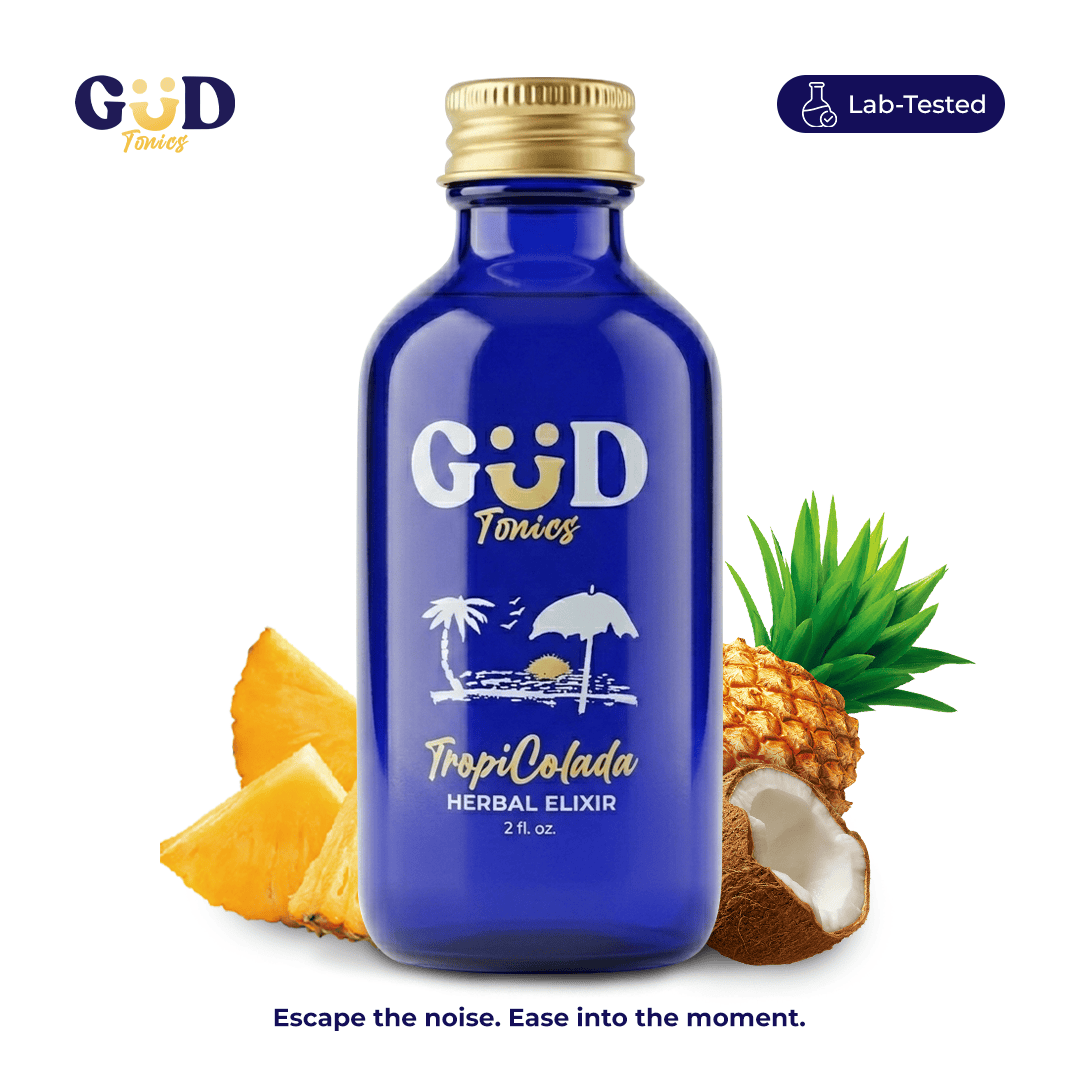
Our bottles blend premium kava extract with a measured amount of mitragynine and supporting botanicals, tuned for a relaxed, clear-headed feeling that many people begin to notice in roughly 15 to 30 minutes and that is best enjoyed chilled over ice. Flavor matters as much as feel, which is why the lineup spans tropical guava, creamy piña colada, and a sunset-bright newest addition. After a tropical evening? The TropiColada blend is a fan favorite, while the newest Pink Sunset flavor was made for exactly the unhurried, sippable moment this category is built around.
We treat the compliance reminders as part of the product, not the fine print. GÜD drinks are for adults 21 and over, not for anyone pregnant or breastfeeding, and never to be mixed with alcohol or paired with driving or swimming. If you take medication or have any liver concern, talk with your healthcare provider before trying kava in any form. When that checks out, you can browse the full GÜD Tonics collection and pick a flavor or two to try.
Final Thoughts
The herbal elixir is one of the oldest ideas in human wellness wearing a modern outfit. Strip away the branding and you're left with a time-tested practice: concentrate a plant, make it pleasant to drink, sip it with intention. From medieval alchemists to South Pacific kava circles to the bottle in your refrigerator now, that core impulse has stayed remarkably constant.
Understanding the category gives you the freedom to enjoy it well. Know which family a drink belongs to, read the label like a skeptic, respect the real safety notes around kava and mitragynine, and treat the experience as a deliberate pause rather than a quick fix. Do that, and a thoughtful botanical drink can be a warm, alcohol-free upgrade to the way you relax, focus, or slow down. The plants have been waiting a very long time. The only new part is how easy they are to enjoy.
Frequently Asked Questions
What is an herbal elixir in simple terms?
An herbal elixir is a concentrated, drinkable preparation built around one or more botanicals, usually flavored or sweetened and meant to be sipped slowly rather than gulped. Formats range from ready-to-drink bottles to powders, concentrates, and tinctures you mix yourself. People drink them with intention, but they are not medicine and do not treat or cure any condition.
How is an herbal elixir different from herbal tea or a tincture?
The difference is mostly concentration and intent. Herbal tea is brewed light and casual, while an elixir is stronger and built around a specific botanical character. A tincture is a concentrated liquid extract, often alcohol-based and taken in small drops, whereas a botanical elixir is usually blended and flavored to taste pleasant. The terms overlap, so the label is your best guide to what you are actually getting.
Are herbal elixirs safe to drink?
Most botanical drinks are gentle for healthy adults, but natural does not mean risk-free. Kava deserves extra care because of its FDA liver advisory and should never be combined with alcohol, and any drink containing mitragynine is strictly for adults 21 and over and not for anyone pregnant or breastfeeding. Talk with your healthcare provider before adding any botanical to your routine, especially if you take medication or manage a liver condition.
How do I choose a good botanical elixir?
Look for clear ingredient labels that disclose what is inside and in what amount, honest non-disease language rather than cure-all promises, transparency about sourcing and botanical type, and age-gating on anything containing mitragynine. A sampler is a smart, low-risk way to test flavors before committing to a larger order, and your own caffeine sensitivity, goals, and any medications should guide the final pick.
When is the best time to enjoy an herbal elixir?
It depends on the family. Calming preparations suit an evening wind-down, while energizing ones fit a slow morning or an afternoon slump. Most are best served chilled over ice and enjoyed as a deliberate pause. Whatever you choose, give it time, since many take roughly 15 to 30 minutes to settle in, and never pair these drinks with alcohol or with driving.