Kava has been part of human life in the South Pacific for centuries, and in recent years it's found a fresh audience among people looking for calmer, alcohol-free ways to unwind. With that renewed interest comes a flood of bold online claims, and one of the most common is that kava is a natural answer for pain and swelling. Slow down and look at what kava research actually says before treating any of those headlines as settled fact. The honest answer is more measured than the hype, and understanding it will help you set realistic expectations and stay safe.
This guide takes a careful, plain-spoken approach. It covers what kava is, how it has traditionally been used, what scientists have and have not studied, and why the evidence does not currently support the idea that kava treats pain, reduces inflammation, or relieves swelling. It also covers the safety information you need, including the U.S. Food and Drug Administration consumer advisory about kava and the liver. None of this is medical advice, and kava is not a treatment for any condition. Think of what follows as a level-headed briefing so you can make informed choices.
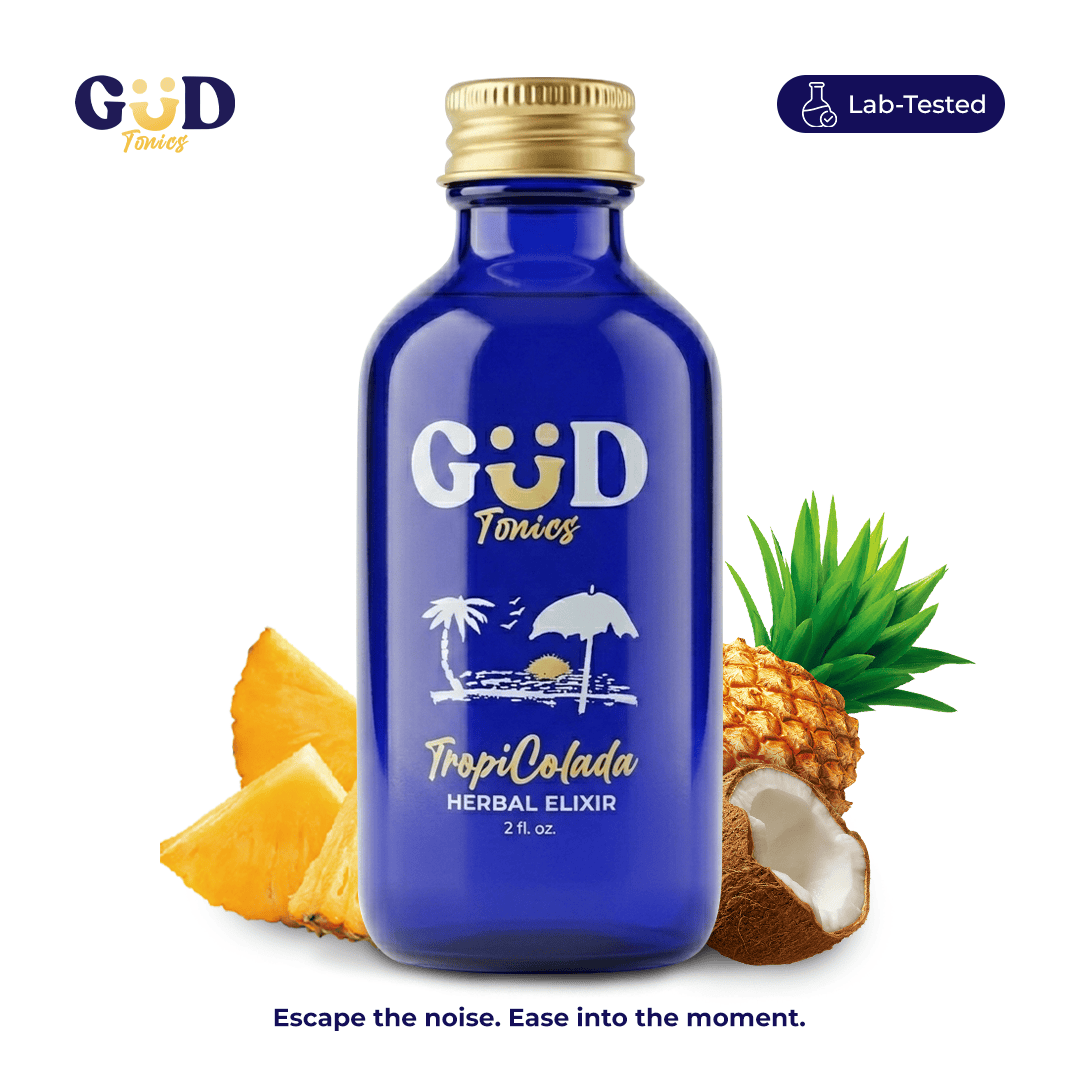
A quick note before going further. Many modern kava drinks, including GÜD Tonics, are blended with mitragynine (MIT, the compound from the kratom leaf), which makes them strictly for adults 21 and over. Kava is not appropriate for anyone who is pregnant or breastfeeding, it should never be mixed with alcohol, and anyone with a liver condition or taking medication should talk with a healthcare provider first.
Table of Contents
- TL;DR
- What Kava Actually Is
- Kava Traditional Uses Across the South Pacific
- What the Research on Kava Does and Does Not Show
- Why the Pain and Swelling Claim Does Not Hold Up
- Kava Facts vs the Internet Headlines
- The Honest Safety Picture, Including the Liver
- How People Actually Enjoy Kava Today
- A GÜD Tonics Approach to Kava
- Final Thoughts
- Frequently Asked Questions
TL;DR
- Kava research is still limited, and the current evidence does not support claims that kava treats pain, reduces inflammation, or relieves swelling. Kava is not a medical treatment for any condition.
- Kava is the prepared root of the South Pacific plant Piper methysticum. It has traditionally been used as a calming, social beverage, not as a remedy for pain or swelling.
- Most of what people study and discuss about kava relates to relaxation and the kavalactones in the root, not to inflammation pathways.
- The FDA has issued a consumer advisory linking kava to rare liver effects. Avoid alcohol, use caution with medications, and talk with a healthcare provider if you have any liver concern.
- Kava drinks that contain mitragynine (MIT) are for adults 21 and over only and are not for anyone who is pregnant or breastfeeding.
- The responsible way to enjoy kava is as a traditional, relaxing drink, with honest expectations and no medical promises attached.
What Kava Actually Is
Before anyone can fairly judge the claims about kava, it helps to be clear on what the plant is. Kava comes from the root of Piper methysticum, a shrub native to the islands of the South Pacific. For generations, communities have harvested the root, ground or pounded it, and steeped it in water to make a drink with a distinctive earthy taste and a calming character. The drink has gone by many names across different islands, but the basic preparation has stayed remarkably consistent.
The active compounds in the root are a family of molecules called kavalactones. These are what give kava its signature relaxed, easygoing feel. According to the National Center for Complementary and Integrative Health, kava has been used traditionally as a calming beverage, and the kavalactones are the compounds most often associated with that effect. Different cultivars contain different ratios of kavalactones, which is part of why traditional growers have long distinguished between noble kava strains, prized for a pleasant and balanced character, and harsher varieties used less often for drinking.
Separate the plant itself from the marketing that surrounds it. Kava is a beverage with a long cultural history and a calming reputation. A very different thing from a clinically proven treatment. When you see a product or article promising that kava cures, treats, or manages a specific medical problem, you're looking at a claim that goes well beyond what kava actually is. The plant is a traditional drink, and the most accurate way to describe it is exactly that.
Modern kava products come in several forms. Traditional preparations made fresh from ground root, instant kava powders that dissolve in water, concentrated extracts, ready-to-drink beverages. Some newer drinks, including GÜD Tonics, blend kava with other botanicals and with mitragynine for a particular feel. The format changes the convenience and the taste, but it doesn't turn a calming traditional drink into a medicine.
Kava Traditional Uses Across the South Pacific
To understand kava honestly, you have to understand how it's actually been used, rather than how the internet sometimes reframes it. The traditional uses of kava are social and ceremonial far more than they are medicinal. For centuries, kava has been the centerpiece of community gatherings across Fiji, Vanuatu, Tonga, Samoa, and many other island nations. People sit together, share the drink from a communal bowl, and settle into an unhurried, conversational mood.
Kava played a role in welcoming guests, marking important occasions, sealing agreements, and bringing communities together for discussion and decision-making. The drink was a way to create a calm, respectful atmosphere where people could connect. In that sense, the traditional value of kava has always been tied to relaxation, hospitality, and social bonding rather than to fixing a particular ailment.
There are, of course, folk traditions in various cultures that associate kava with a range of uses, as is true of many botanicals. That's part of the historical record and worth acknowledging. But folk tradition is not the same as scientific evidence, and it would be misleading to treat centuries-old custom as proof that kava does anything specific to pain or swelling in the body. Respecting the tradition means describing it accurately, not stretching it to support modern marketing claims.
What carries over most clearly into today is the social, calming role. Kava has found a new audience among the sober-curious precisely because of this heritage. People are drawn to a drink that helps a gathering relax without alcohol. That use is consistent with the tradition and with what kava is known for. It's honest, and it doesn't require any medical promise to be appealing.
What the Research on Kava Does and Does Not Show
This is the heart of the matter, so it deserves careful, honest treatment. The body of kava research is real but limited, and it's important not to overstate it. Most scientific interest in kava has centered on its calming properties and on understanding the kavalactones. There's been some study of kava in the context of relaxation, but the overall evidence base is smaller and less conclusive than the confident claims online would suggest.
A responsible summary looks like this. Researchers have examined how kavalactones interact with the body, and kava has a long traditional reputation as a relaxing drink. At the same time, large, high-quality, repeated clinical trials are not abundant, and findings are not strong or consistent enough to support specific medical claims. Look at neutral, authoritative sources rather than vendor pages and the tone turns cautious. The NCCIH kava fact sheet, maintained by the National Institutes of Health, reflects that careful framing and also flags safety considerations that any honest discussion has to include.
Crucially, the available research does not establish kava as a treatment for pain, inflammation, or swelling. There is no solid scientific basis for promoting kava as an anti-inflammatory or pain remedy. The studies that exist simply do not support that conclusion, and presenting kava that way misrepresents the evidence. This is not a small caveat. It's the central, honest point of this entire article.
Worth understanding too is why the research is limited. Botanical products like kava are complex, with many compounds and natural variation between batches and cultivars. Funding for large trials of traditional plants is harder to come by than for pharmaceutical drugs. And kava's safety history, including the liver advisory discussed below, has shaped how and where research has proceeded. All of this means the responsible stance is humility. We know kava is a calming traditional drink. We don't have evidence that it treats medical conditions, and you should be skeptical of anyone who says otherwise.
Why the Pain and Swelling Claim Does Not Hold Up
Given the title that brought many readers here, let's address the pain and swelling claim head-on. The clearest, most honest thing to say is this. Kava is not proven to relieve pain, reduce swelling, or fight inflammation, and it should not be used as a treatment for any of those things. If you're dealing with pain or swelling, those can be signs of an underlying issue that deserves real medical attention, not a beverage marketed with bold promises.
Where do these claims come from? Often they're extrapolated loosely from kava's calming reputation, or borrowed from preliminary laboratory observations that haven't translated into reliable evidence in people. A compound showing some activity in a dish or in early-stage work is a long way from a proven, safe, effective treatment in humans. Marketers sometimes blur that distinction to make a product sound more impressive. The result is a claim that sounds scientific but isn't actually supported.
There's a real safety reason to be cautious here too. People who turn to an unproven remedy for pain or swelling may delay seeing a healthcare provider about something that needs proper care. Pain and swelling have many causes, some of them serious, and they are not problems to self-treat with a beverage. The most responsible advice is straightforward. If you have ongoing or significant pain or swelling, talk with a qualified healthcare professional rather than relying on kava.
None of this means kava has no place. It means kava's place is as a traditional, calming drink that people enjoy for relaxation and social connection, not as a medical product. Holding that line is what keeps both expectations and people safe. Enjoy kava for what it actually is, rather than what some headlines claim, and you've found the honest, sensible approach.
Kava Facts vs the Internet Headlines
Telling solid kava facts from clickbait can be hard, so a side-by-side comparison helps. The table below contrasts common online claims with the more accurate, evidence-aware version. The aim isn't to dismiss kava, but to describe it truthfully.
| Common online claim | The honest, evidence-aware version |
|---|---|
| Kava is a natural cure for pain and swelling | Kava is not proven to treat pain, swelling, or inflammation, and is not a medical treatment |
| Kava is a fully studied, proven remedy | Kava research is limited; most interest relates to its calming character, not disease treatment |
| Kava is risk-free because it is natural | Natural does not mean risk-free; the FDA has issued a liver advisory and there are real cautions |
| Kava works instantly | The relaxed feel of a kava drink tends to come on gradually, often within roughly 15 to 30 minutes |
| Anyone can use kava freely | Kava drinks with MIT are for adults 21 and over, not for pregnancy or breastfeeding, and need provider input if you take medication |
Reading claims with this lens is a useful habit for any wellness product, not just kava. When a botanical is described as a cure for a specific condition, treat it as a signal to slow down and check neutral sources. Authoritative, non-commercial references like the National Institutes of Health are far more reliable than a product page with something to sell.
The encouraging news? Kava doesn't need exaggerated claims to be worthwhile. As a calming, alcohol-free, traditional drink with deep cultural roots, it already offers something many people are looking for. The most appealing version of kava is the honest one, and that version stands on its own without any medical promises attached.
The Honest Safety Picture, Including the Liver
Any responsible discussion of kava has to include safety, and the most important point concerns the liver. The U.S. Food and Drug Administration has issued a consumer advisory noting that kava use has been associated, in rare cases, with serious liver effects. This advisory is the single most important safety fact to know about kava, and it should never be hidden or downplayed. It doesn't mean kava harms everyone who drinks it, but it does mean caution is warranted and that "natural" never automatically means "safe."
Because of the liver advisory, anyone with a liver condition, or anyone taking medication that affects the liver, should talk with a healthcare provider before using kava at all. The same goes for anyone taking other medications, since interactions are possible. Moderation matters, and a sensible approach avoids heavy or steadily escalating use. If you ever feel unwell after drinking kava, especially with any symptoms that could relate to the liver, stop and seek medical attention.
Alcohol deserves a clear, separate warning. Kava should never be combined with alcohol. Both are calming, and pairing them can compound their effects unpredictably and place extra strain on the liver. Because kava, and the MIT in some kava drinks, are both relaxing, you should also avoid driving, operating machinery, or swimming after drinking a kava beverage. These are simple rules, and following them is part of using kava responsibly.
There are also firm lines on who should not use kava drinks at all. Products that contain mitragynine (MIT) are for adults 21 and over only, and they are not appropriate for anyone who is pregnant or breastfeeding. If you have an existing health condition or take any medication, the safest path is a conversation with your provider before you begin. Kava is a traditional drink to be enjoyed thoughtfully, not a treatment, and keeping that perspective is what keeps it in its proper place.
How People Actually Enjoy Kava Today
Set aside the inflated medical claims and kava becomes easy to appreciate for what it is. People reach for kava today mostly to relax, to add a calming ritual to the day, and to share an alcohol-free drink in social settings. That use is fully consistent with kava's tradition and with what the plant is known for, and it doesn't depend on any unproven promise.
A common rhythm is to treat a kava drink as an intentional pause. Many people enjoy one in the late afternoon, when the day's pace starts to wear, or in the early evening as a signal that work is finished and rest is allowed. The relaxed feel comes on gradually, so the experience rewards slowing down rather than rushing. Served chilled or over ice, a kava drink turns a few unhurried minutes into a small ritual worth looking forward to.
Kava's social side is just as important. Its heritage as a communal drink makes it a natural fit for gatherings where people want to stay present and clear-headed. For anyone cutting back on alcohol, a kava drink offers a way to raise a glass and join the moment without the hangover. Curious where to start? A low-commitment option like the GÜD Tonics 3-Bottle Flavor Sampler lets you try a few flavors and find the one that suits your moment.
Prefer to mix your own? Traditional and instant formats give plenty of room to experiment. A concentrated option such as Raw Kava Extract Powder can be prepared at home and adjusted to taste, while ready-to-drink bottles like Kava Oasis offer convenience when time is short. Whichever format you choose, the spirit is the same. Kava is a calming, traditional beverage to be enjoyed in moderation, with realistic expectations and respect for the safety guidance above.
A GÜD Tonics Approach to Kava
If a calming, honest version of kava appeals to you, that's the spirit behind GÜD Tonics. Each tonic blends premium kava extract with mitragynine (MIT, from the kratom leaf) and supporting botanicals to deliver a calm, feel-good lift in an alcohol-free format made for slow, present sipping. The goal isn't to make medical promises. It's to offer an enjoyable, relaxing drink rooted in kava's social tradition.
What makes the lineup easy to enjoy is how it fits real life. The tonics are ready to drink chilled over ice, so the ritual takes minutes rather than effort, and they come in flavors that make a calm pause something to look forward to. Because they're alcohol-free, they suit a quiet solo moment and a social gathering equally well, precisely the kind of role kava has always played. Want to explore the full range and find a flavor that matches your moment? Browse the GÜD Tonics shop and choose what fits.
As always, enjoy them the responsible way. Keep your use moderate, never pair them with alcohol or with driving, and remember they are for adults 21 and over and not for anyone pregnant or breastfeeding. GÜD Tonics are a calming traditional-style drink to enjoy, not a remedy for any condition, and that honest framing is the whole point.
Final Thoughts
The most useful thing you can take from this guide is a sense of proportion. Kava is a calming, traditional drink with a rich cultural history and a genuine place in modern, alcohol-free social life. It is not a proven treatment for pain, swelling, or inflammation, and the current research does not support those claims. Holding both of those truths at once is what makes for an honest, healthy relationship with kava.
When you see a bold promise about a botanical curing a medical problem, treat it as a prompt to check neutral, authoritative sources and to stay skeptical. With kava specifically, remember the FDA liver advisory, avoid alcohol, respect the 21-and-over guidance for drinks containing MIT, and talk with a healthcare provider if you have any concern or take medication. Pain and swelling, in particular, are things to discuss with a qualified professional rather than self-treat with a drink.
Enjoyed for what it actually is, kava can be a pleasant, calming ritual and a warm, social tradition. More than enough reason to appreciate it. The honest version of kava doesn't need exaggeration to be worth a place in your day.
Frequently Asked Questions
Does kava research prove it relieves pain or inflammation?
No. The available kava research does not establish that kava treats pain, reduces swelling, or fights inflammation, and kava should not be used as a treatment for any of those things. Most scientific and traditional interest in kava relates to its calming character, not to inflammation pathways. If you are dealing with pain or swelling, those deserve attention from a qualified healthcare provider rather than reliance on a beverage.
What is kava traditionally used for?
Kava has traditionally been used across the South Pacific as a calming, social, and ceremonial drink. It was central to welcoming guests, marking occasions, and bringing communities together in an unhurried, conversational mood. That social and relaxing role is what carries over most clearly into how people enjoy kava today, and it doesn't depend on any medical claim.
Is kava safe to drink?
Kava is a traditional drink, but "natural" does not mean risk-free. The FDA has issued a consumer advisory linking kava to rare liver effects, so caution matters. Kava should never be combined with alcohol, and anyone with a liver condition, taking medication, pregnant, or breastfeeding should not use it without speaking to a healthcare provider. Kava drinks containing MIT are for adults 21 and over only. Use it in moderation and stop if you feel unwell.
Why do so many websites claim kava treats pain and swelling?
Many of these claims are loosely extrapolated from kava's calming reputation or from preliminary lab observations that have not held up as reliable evidence in people. Some marketing blurs the line between early-stage findings and proven results to make a product sound more impressive. The honest, evidence-aware position is that kava is not a proven treatment for pain or swelling, and neutral sources like the National Institutes of Health reflect that caution.
How should I enjoy kava responsibly?
Treat kava as a calming, traditional drink rather than a remedy. Enjoy it in moderation, served chilled, as an intentional pause or a social, alcohol-free alternative. Never mix it with alcohol, don't drive or operate machinery after drinking it, and keep it to adults 21 and over for drinks with MIT. If you have any health condition or take medication, check with a healthcare provider first, and stop using kava if you feel unwell.