Revised 18 September 2026. This guide replaces an earlier version that described how kava makes people feel. We removed all of it. What's left is what we can show you: what's in the bottle, who tested it, when, what it costs, and where we can ship it. For adults 21 and over.
GÜD Tonics drinks are made with noble kava root extract and Mitragyna speciosa, the kratom leaf. Both are on the label, and the kratom content is why these are 21 and over. If you came here looking for what kava does, we can't tell you, and neither can anyone else selling it. What we can do is hand you the paperwork.
Table of Contents
- The short version
- What kava is
- What's in the bottle
- What we stock right now
- What changed since the last version of this guide
- Who tests it and when
- Safety, and who should skip it
- Where we can ship
- How we revise this guide
- Frequently asked questions
- Summary
The short version
- Kava is the root of Piper methysticum, a pepper-family plant native to the South Pacific.
- Our three ready-to-drink flavors pair noble kava root extract with Mitragyna speciosa. That combination makes them 21 and over.
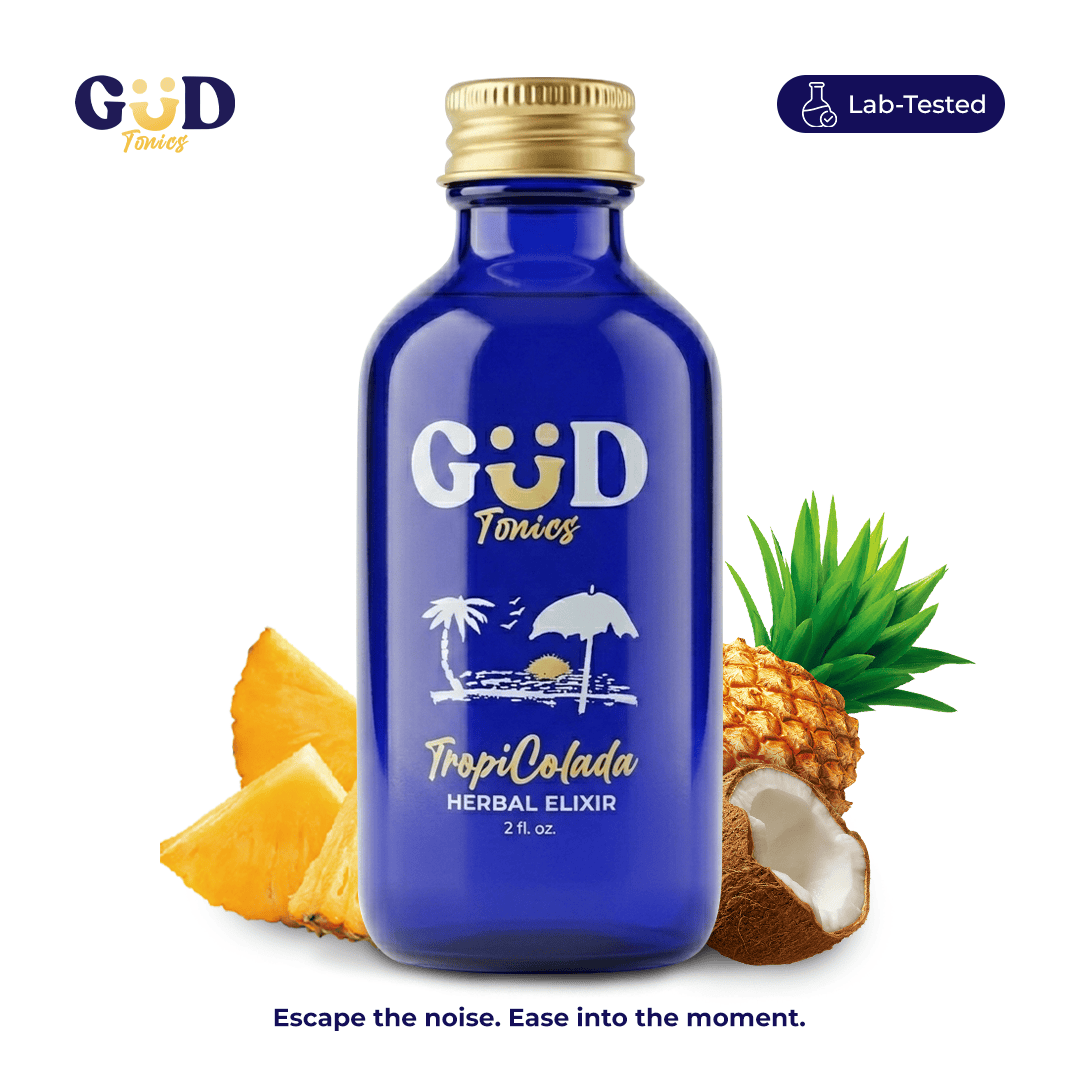
- Flavors: Baja Bliss is guava. Pink Sunset is cherry, strawberry and lime. TropiColada is pineapple and coconut. All three are alcohol-free and lightly sweetened with stevia.
- One bottle is $10.99. A 3-pack is $29.00. A box of 12 is $115.00. The Bundle, one of each flavor, is $27.99.
- The current lot of all three flavors, Lot 082026, was tested by Cora Science, LLC and the report was completed 6 August 2026. Every report is posted on our Lab Results page.
- Kava products have been linked to rare cases of liver injury. Never mix kava with alcohol. Details in the safety section, which you should read.
What kava is
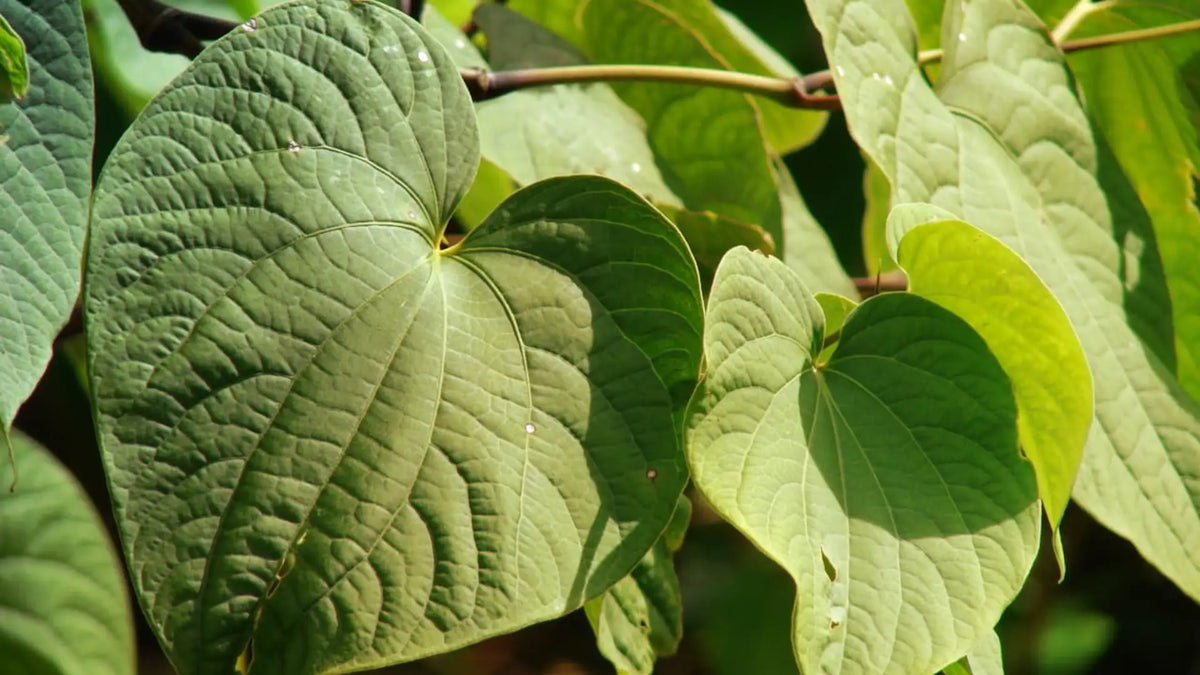
Kava is a drink made from the root of Piper methysticum. The National Center for Complementary and Integrative Health describes it as native to the South Pacific and a member of the pepper family, traditionally used by Pacific Islanders for ceremonial and social purposes. NCCIH publishes a plain overview that is worth reading before you buy from anyone, including us.
The compounds people measure in kava are called kavalactones. Kavain, dihydrokavain, methysticin, dihydromethysticin, yangonin and desmethoxyyangonin are the six that appear on our lab reports. We are not going to tell you what they do. We will tell you that they're measured in every lot we sell, and we'll show you the number.
What's in the bottle
Two plants, not one. Noble kava root extract, and Mitragyna speciosa, which is kratom. That second ingredient is the part most kava brands bury, so here it is up front: our ready-to-drink tonics contain kratom, and that's why they're restricted to adults 21 and over.
If you only want kava, we sell the raw extract powder with no kratom in it. Its lab report covers kava compounds only. That's a real difference between two products on the same shelf, and it's worth knowing which one you're holding.
Our write-up on Minnesota's age 21 rule goes into why the ingredient panel matters more than the front of the label when a law is written around a compound rather than a plant.
What we stock right now
Five products, verified against our catalog on 18 September 2026. If a flavor or format isn't in this table, we don't sell it.
| Product | Flavor | Contains kratom | Sizes and price | Lot on file | Report date |
|---|---|---|---|---|---|
| Baja Bliss | Guava | Yes | 1 bottle $10.99 · 3-pack $29.00 · box of 12 $115.00 | 082026 | 6 Aug 2026 |
| Pink Sunset | Cherry, strawberry, lime | Yes | 1 bottle $10.99 · 3-pack $29.00 · box of 12 $115.00 | 082026 | 6 Aug 2026 |
| TropiColada | Pineapple, coconut | Yes | 1 bottle $10.99 · 3-pack $29.00 · box of 12 $115.00 | 082026 | 6 Aug 2026 |
| Bundle | One of each of the three above | Yes | $27.99 | 082026 | 6 Aug 2026 |
| Raw Kava Extract Powder | Unflavored powder | No | 1 oz $60.00 · 3 oz $160.00 | CKW-C-A508380 | 18 Aug 2025 |
The label on each ready-to-drink bottle declares two servings. The whole lineup is on the shop page.
What changed since the last version of this guide
The old version of this page sent you to products and descriptions that were wrong. We'd rather say so than quietly fix the links.
- The 3-Bottle Flavor Sampler is gone as its own product. It's now the Bundle, one bottle each of Baja Bliss, Pink Sunset and TropiColada, at $27.99. The old link still lands in the right place, but the name on your receipt is different.
- We described Baja Bliss as lime. It's guava. Pink Sunset is the one with lime in it. That error has been on this site and in our older posts for a long time, and it's in a few post titles we haven't gotten to yet.
- The old page cited research to explain how kava feels. All three of those citations were defective. One was a bare database homepage. One pointed at a commercial health site while being labeled as a government agency. One pointed at a general FDA index page while being labeled a consumer advisory. All three are removed, and we're not citing a study to support a feeling.
- The raw powder's report is older than the tonics' reports, and it comes from the kava supplier rather than the independent lab we use for the drinks. It's dated 18 August 2025. We've listed it that way in the table above instead of rounding it off.
Who tests it and when
The three ready-to-drink flavors are tested by Cora Science, LLC. The current lot across all three is 082026. The Baja Bliss sample was received 5 August 2026 and the report was completed 6 August 2026.
The panel covers the Mitragyna alkaloids, the six individual kavalactones plus a total, three flavokawains, and density. Every report is on the Lab Results page, and you can pull the PDF for the lot printed on your bottle.
The Raw Kava Extract Powder is different, and we're not going to blur it. Its posted report is from Shaanxi Jiahe Pharmaceutical Co., Ltd, the kava supplier, for Lot CKW-C-A508380, dated 18 August 2025. It covers kava compounds only, because there's no kratom in that product.
If you've got a bottle in front of you and want to know what the numbers on the report mean, we wrote a walkthrough of how to read one.
Safety, and who should skip it
This is the part of the page we'd keep if we had to delete everything else.
The liver question. NCCIH states that "various kava products have been linked to rare cases of liver injury, some of which have been serious or even fatal." It points to possible contributors including the use of undesirable cultivars of the kava plant, use of inappropriate parts of the plant, and consuming kava together with alcohol. FDA lists kava in its dietary supplement ingredient directory and links a safety communication on the subject dated March 2002.
Never with alcohol. NCCIH names consuming kava together with alcohol as one of the possible contributors to liver injury. This isn't a brand preference.
Who should not drink it. Anyone under 21. Anyone pregnant or breastfeeding. Anyone with a liver condition, anyone who drinks regularly, and anyone on medication should talk with a healthcare provider before trying kava at all.
Don't drive after. Don't operate machinery or swim either.
It is not a medicine. Kava does not diagnose, treat, cure or prevent any disease or condition, and nothing on this page should be read as saying it does. If you're looking for help with a health problem, a provider is the right destination and we're not.
Where we can ship
We can't ship everywhere. The restricted states and counties are listed on each product page, and that list moves as laws change, so the product page is the accurate one rather than anything we could write here. Check it before you order.
How we revise this guide
This page has a date on it because the date is the point. Our content isn't static. We revise it as new information arrives and as we learn things we didn't know before, and we'd rather show you a page that visibly changed than one that pretends it was always right.
When a lot changes, the table above changes. When a lab report is renewed, the date changes. When we find an error, we say what it was instead of deleting it, which is what the "what changed" section above is for.
If something on this page is wrong, tell us. Send us the correction and name the sentence. We'll fix it and date it, and if you caught something real, that becomes a revision-history line other people can read.
Frequently asked questions
Do GÜD Tonics drinks contain kratom?
The three ready-to-drink flavors do. Baja Bliss, Pink Sunset and TropiColada are made with noble kava root extract and Mitragyna speciosa, which is kratom. The Raw Kava Extract Powder does not. That's why the drinks are 21 and over.
What flavor is each one?
Baja Bliss is guava. Pink Sunset is cherry, strawberry and lime. TropiColada is pineapple and coconut. All three are alcohol-free and lightly sweetened with stevia.
What does it cost?
A single bottle is $10.99, a 3-pack is $29.00 and a box of 12 is $115.00. The Bundle, one bottle of each flavor, is $27.99. The Raw Kava Extract Powder is $60.00 for 1 oz and $160.00 for 3 oz.
Where can I see the lab report for my bottle?
On the Lab Results page. Match the lot number printed on your bottle to the lot in the file name. The current lot for all three drinks is 082026, tested by Cora Science, LLC, report completed 6 August 2026.
Why is the powder's report older than the drinks' reports?
Because it is a supplier document for the kava raw material rather than a finished-beverage test, and it's dated 18 August 2025. We'd rather tell you that than present the two as equivalent.
Can I drink this with alcohol?
No. NCCIH names consuming kava together with alcohol as a possible contributor to liver injury. Don't combine them.
Is kava legal where I live?
That depends on your state and sometimes your county, and it changes. Rather than publish a count that goes stale, we keep the current restricted list on each product page. Check the product page for the item you want.
Does kava help with anxiety, sleep, pain or stress?
We're not able to answer that, and you should be skeptical of any seller who does. Kava is not a medicine and we don't sell it as one. Talk to a healthcare provider about a health concern.
Summary
Kava is the root of a Pacific pepper-family plant. Our ready-to-drink tonics combine it with kratom, which is on the label and is why they're 21 and over. There are three flavors and one powder, five products total, priced from $10.99 to $160.00.
The current drink lot, 082026, was tested by Cora Science, LLC with the report completed 6 August 2026, and the report is posted. The powder's report is a supplier document from 18 August 2025. Kava products have been linked to rare cases of liver injury, it should never be combined with alcohol, and it is not a treatment for anything.
That's the whole honest picture we can give you. If part of it is wrong, tell us and we'll date the fix.
Revision history
- 18 September 2026. Full rewrite. Removed all descriptions of how kava feels, all onset and serving guidance, and the GABA pharmacology section. Removed all three external research citations, each of which was either mislabeled or pointed at a generic index page, and all of which existed only to support feeling-based statements. Rebuilt the product section against the live catalog: corrected Baja Bliss from lime to guava, replaced the discontinued 3-Bottle Flavor Sampler with the Bundle, and added current lot numbers and report dates for all five products. Disclosed that the Raw Kava Extract Powder report is a supplier document from August 2025 rather than a finished-beverage test. Added the liver-safety section with NCCIH and FDA sourcing, a "how we revise this guide" section, and this revision history. Retitled the H1. URL unchanged.
- 24 June 2026. Original version published, imported from the previous site.